
Benefits of consistent label content output for UK labels
Discover the benefits of consistent label content output. Boost audience growth, improve engagement, and turn listeners into fans today!

Benefits of consistent label content output for UK labels
Consistent label content output is the single most reliable way to grow an artist’s discoverability, deepen audience trust, and convert casual listeners into paying fans. Labels that publish on a predictable schedule, with a coherent visual and editorial voice, compound their reach over time in ways that one-off campaigns simply cannot replicate.
The three outcomes that show up most reliably when labels commit to regular output:
- Audience growth accelerates because platforms reward publishers who post consistently, surfacing their content to new listeners through algorithmic recommendations.
- View-to-stream conversion improves as audiences who recognise a label’s aesthetic and tone are more likely to click through and complete a listen.
- Playlist adds and engagement rates rise when an artist’s presence feels active and credible rather than sporadic.
The rest of this article covers how to build that output, what to measure, and how to scale it without losing quality.
Pro Tip: Before committing to any publishing schedule, audit your last three months of content. If the voice, visuals, or posting rhythm changed more than twice, that is the problem to fix first, not the volume.
Table of Contents
- Why does consistent output actually move the needle?
- What are the concrete benefits for labels and artists?
- How do you build a repeatable content production system?
- Which KPIs should UK labels actually track?
- How do you scale output without losing quality?
- Key takeaways
- Why the conventional wisdom on content consistency gets it wrong
- Musicvideomarketplace gives labels a faster path to consistent video output
Why does consistent output actually move the needle?
The mechanism is not mysterious. Audiences form habits around creators they can predict. When a label drops content on a reliable schedule, with a recognisable look and tone, listeners begin to anticipate it. That anticipation is the foundation of trust, and trust is the foundation of long-term brand value.
Platform algorithms on YouTube, TikTok, Instagram, and Spotify’s artist tools all reward this behaviour in their own way. YouTube’s recommendation engine favours channels with regular upload patterns. TikTok’s For You page amplifies accounts that post frequently enough to generate engagement signals. Instagram’s reach drops sharply for accounts that go quiet for weeks, then spike a post. Spotify’s editorial team and algorithmic playlists both factor in release activity when deciding which artists to surface. Inconsistency does not just stall growth; it actively signals to these systems that an account is dormant.
The psychological dimension matters too. A uniform voice, tone, and visual style across channels reduces the cognitive friction a listener feels when encountering an artist’s content. Recognition happens faster. The decision to follow, save, or share requires less effort.
Consistency beats frequency: a sustainable publishing cadence produces better long-term results than high-volume, low-quality posting that burns out the team and confuses the audience.
Pro Tip: Write a one-page brand guardrail document: three adjectives that describe the artist’s voice, two colour codes, one approved font. Give it to every contractor. It takes an hour to write and saves weeks of rework.
What are the concrete benefits for labels and artists?
The advantages of consistent label content output are both commercial and operational. They compound over time in ways that are easy to underestimate at the start.
- Search and discovery lift. Regular uploads create more entry points for new listeners. Each video, clip, or post is an indexed asset that can surface in search results on YouTube, Google, and TikTok’s own search bar. Consistency compounds into a durable competitive advantage as those assets accumulate.
The operational gains are often larger than labels expect. Centralising templates and metadata as a single source of truth eliminates a large class of versioning errors and speeds up every approval cycle. Think of it the way a manufacturing operation treats its labelling infrastructure: standardised governance reduces reprints, compliance failures, and downstream operational risk. The same logic applies to a label’s content pipeline.
A mid-sized UK independent label that moved from ad-hoc releases to a structured bi-weekly content calendar reported that their average engagement rate per post rose within the first quarter, and their Spotify monthly listener count stabilised rather than spiking and crashing around single releases. The consistency created a floor, not just a ceiling.
Key metrics to watch: engagement rate per post, view-to-stream conversion rate, playlist adds per release cycle, subscriber or follower growth rate, and click-through rate on paid promotional content.
Pro Tip: Track view-to-stream conversion by comparing YouTube view counts for a release video against Spotify streams in the same 14-day window. The gap tells you how much work your content is doing, and how much is being left on the table.
How do you build a repeatable content production system?
The importance of consistent content is well understood; the failure point is almost always operational. Teams overcommit, burn out, and revert to ad-hoc posting. The fix is a system, not willpower.
Prerequisites before you start:
- A content calendar with publishing slots locked in for at least eight weeks ahead.
- A brand style guide covering voice, tone, colour palette, typography, and approved visual treatments.
- A single source of truth for all assets: video files, artwork, metadata, and approved copy, stored in one shared location with clear version control.
Workflow from brief to distribution:
- Campaign brief — define the release, the audience, and the content objectives for each platform.
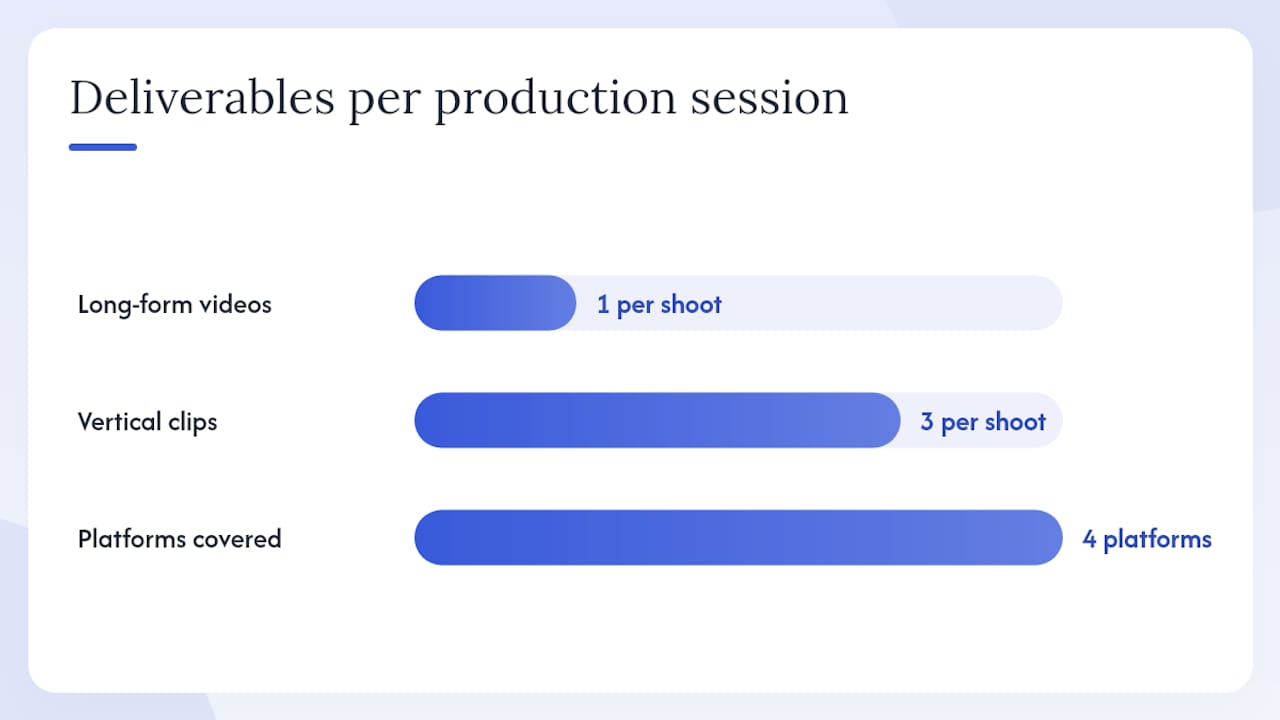
- Batch production — record or commission multiple pieces of content in one session. A single shoot can yield a long-form YouTube video, three vertical TikTok or Instagram Reels clips, and a set of teaser stills.
- Editing and formatting — apply templates for each format. Long-form YouTube cuts differ from short-form vertical clips; treat them as separate deliverables from the same source material.
- Approval gate — one designated approver, a 48-hour turnaround window, and a checklist against the brand guardrail document.
- Scheduled distribution — use platform-native scheduling tools or a third-party scheduler to queue content across YouTube, TikTok, Instagram, and Spotify for Artists.
Choosing the right format for each platform is as important as the content itself. A long-form YouTube documentary and a 30-second TikTok clip serve different discovery functions; both are needed, and both should come from the same production session wherever possible.
Engineering your content formats with the same rigour you would apply to any production deliverable prevents the quality failures that erode brand trust at scale.
Pro Tip: Batch production is the single biggest lever for small teams. Block one full day per month for filming and recording. You will produce more usable content in that day than in four weeks of reactive, one-at-a-time sessions.
Which KPIs should UK labels actually track?
| KPI | What it measures | How to set a baseline |
|---|---|---|
| Engagement rate | Likes, comments, shares divided by reach | Calculate your average across the last 12 posts before changing cadence |
| View-to-stream conversion | YouTube views vs Spotify streams in the same 14-day window | Track per release; aim to improve the ratio each cycle |
| Playlist adds | Algorithmic and editorial playlist inclusions per release | Monitor via Spotify for Artists dashboard |
| Subscriber / follower growth | Net new followers per month across channels | Set a monthly target based on your current growth rate |
| CTR on paid promos | Click-through rate on YouTube or Meta ad campaigns | Industry averages vary; your own historical CTR is the most useful benchmark |
Short-term indicators, reach and impressions, tell you whether content is being seen. Long-term indicators, retention, saves, and playlist adds, tell you whether it is building anything durable. Small-audience labels should resist reading too much into individual post performance; look at rolling four-week averages instead of week-on-week swings.
Connect content metrics to commercial outcomes by mapping them: a playlist add leads to a stream, a stream contributes to royalty income, a YouTube view can be retargeted in a paid campaign that drives ticket or merchandise sales. The chain is traceable if you set up the tracking correctly from the start.
How do you scale output without losing quality?
Scaling content production without diluting the brand requires clear roles and explicit guardrails, not just more resource.
Role checklist for a label content team:
- Creative producer — owns the brief, the creative direction, and the final sign-off on brand alignment.
- Editor — cuts and formats content for each platform; works from approved templates.
- Metadata manager — owns titles, descriptions, tags, and release data across all platforms.
- Distribution lead — schedules and publishes, monitors initial performance, and flags anomalies.
Outsourcing guidelines:
- Keep creative direction and brand approval in-house.
- Brief contractors on editing, transcoding, and templated clip generation using detailed written briefs and your brand guardrail document.
- Run a mandatory style check on every piece of outsourced content before it goes live.
A template-driven, data-sourced production approach reduces errors and speeds time-to-market. Start with templates, then layer in automation for transcoding and scheduling once the workflow is stable. Extended content formats allow you to carry more information on the same creative footprint, which is exactly the principle behind repurposing one shoot into multiple platform-specific assets.
Pro Tip: Create a limited-change approval matrix: a short list of the five things that must never change without senior sign-off (logo treatment, artist name spelling, release date, key visual). Everything else can be approved by the editor. This stops bottlenecks without opening the door to brand drift.
Key takeaways
Consistent label content output is a production discipline, not a marketing afterthought. Labels that treat it as such build compounding discoverability, stronger algorithmic signals, and more loyal fanbases than those that rely on campaign spikes.
Immediate actions:
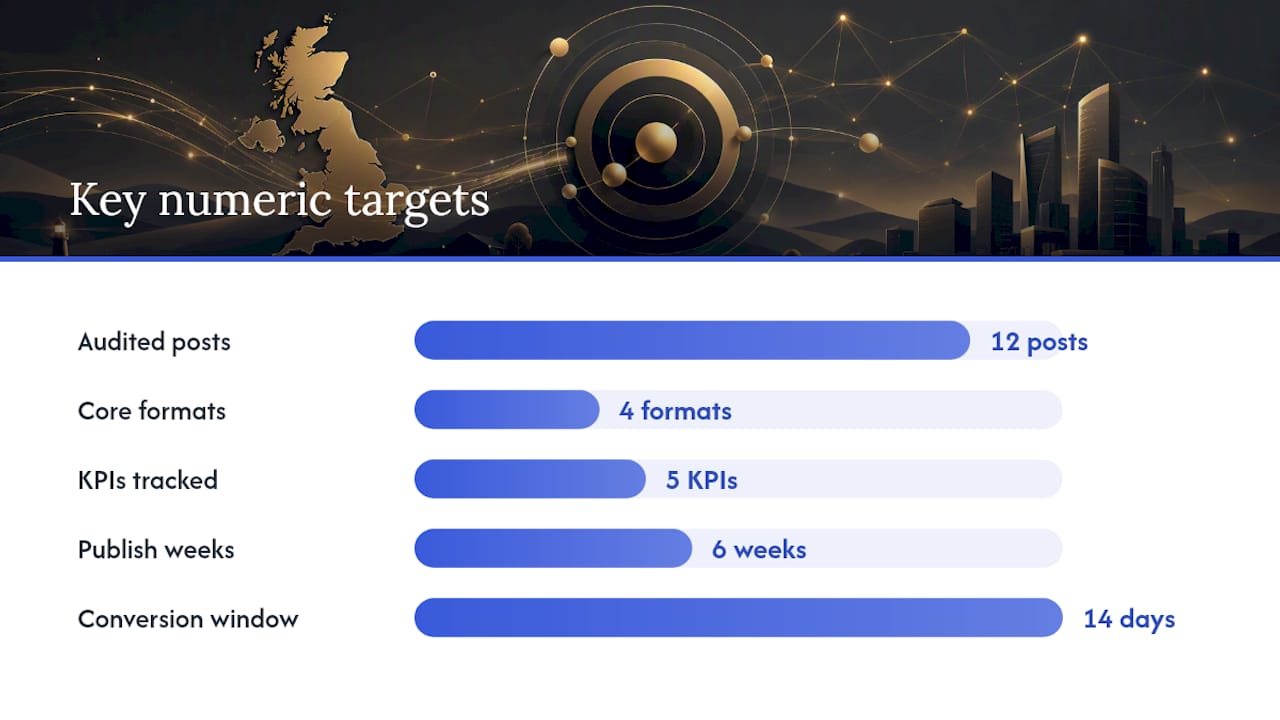
- Audit your last 12 posts for voice, visual, and cadence consistency.
- Write a one-page brand guardrail document and share it with every contributor.
- Set up a single shared asset library with version control before the next release cycle.
30/60/90-day plan:
- Days 1–30: Establish the content calendar, brand guardrail, and asset library. Identify your four core content formats (long-form YouTube, short vertical clip, teaser still, email snippet).
- Days 31–60: Run your first batch production session. Publish on the new schedule for six consecutive weeks and track the five KPIs in the table above.
- Days 61–90: Review rolling four-week averages, adjust cadence if needed, and begin briefing one outsourced contributor using your templates and guardrail document.
The first metric to track is view-to-stream conversion. It is the clearest signal that your content is doing commercial work, not just generating impressions.
| Point | Details |
|---|---|
| Consistency beats frequency | A sustainable bi-weekly or weekly cadence outperforms unsustainable daily posting every time. |
| Single source of truth | Centralising assets, templates, and metadata eliminates versioning errors and speeds approvals. |
| Batch production | One monthly production day yields more usable content than four weeks of reactive, one-at-a-time sessions. |
| View-to-stream conversion | Track YouTube views against Spotify streams in the same 14-day window to measure commercial impact. |
| Musicvideomarketplace | Provides ready-to-edit full-length videos and short-form clip exports that slot directly into a label’s consistent publishing workflow. |
Why the conventional wisdom on content consistency gets it wrong
Most advice on consistent content output focuses on posting frequency. Post every day. Post three times a week. Hit the algorithm. That framing misses the point entirely, and in practice it produces exactly the burnout and brand drift that kills a label’s content programme within six months.
The labels that actually build durable fanbases treat content output as a production discipline with the same rigour they apply to a recording session. They do not ask “how often should we post?” They ask “what is the minimum viable output that keeps our audience engaged and our platforms active, and how do we make that output repeatable without depending on a single person’s energy?”
That shift in framing changes everything. It moves the conversation from creative inspiration to operational design. It makes music branding through video a system rather than a series of one-off decisions. And it means that when a key team member leaves or an artist goes quiet between releases, the content machine does not stop.
The other thing most articles get wrong: they treat consistency as a short-term tactic. It is not. The compounding effect of a coherent, persistent content presence takes months to show up in the numbers, and years to become a genuine competitive moat. Labels that understand this invest in the infrastructure early and reap the rewards when rivals are still scrambling to catch up.
Musicvideomarketplace gives labels a faster path to consistent video output
Producing a full-length music video for every release, plus short-form clips for TikTok and Instagram, plus a YouTube-ready export, is the content stack a label needs. Doing all of that from scratch for every release is where most teams stall.
Musicvideomarketplace solves the production bottleneck directly. The platform gives labels and artist teams access to a library of human-made, ready-to-edit full-length music videos. Upload the audio and branding, export a YouTube-ready video, generate short vertical clips for social, and launch an ad campaign for the song, all from one place. That is the entire content production cycle for a release, compressed into minutes rather than weeks.

For labels building a consistent content strategy across multiple artists, the subscription model means the per-release cost drops as volume increases, which is exactly the economics that make a repeatable publishing cadence viable for independent labels.
Browse the video catalogue and licence a ready-to-edit video for your next release today.
Recommended
- Why labels invest in video content: a label marketer’s guide | Music Video Marketplace Blog
- Common challenges in label video production: 2026 guide | Music Video Marketplace Blog
- Create standout explainer videos for your record label | Music Video Marketplace Blog
- Pourquoi les labels misent sur la vidéo pour booster leur visibilité | Music Video Marketplace Blog
Read next
 Benefits of YouTube promotion for musicians in 2026Discover the benefits of YouTube promotion for musicians in 2026. Unlock your music's potential and gain the audience you deserve!
 Boost your music promotion with visuals on YouTube in 2026Discover how strategic visual content on YouTube drives clicks, retention, and conversions for independent musicians in 2026. Master thumbnails, video formats, and smart links to grow your audience.
 Boost music video engagement: proven tips for 28% reachDiscover proven strategies to boost music video engagement on YouTube, including optimisation tips, ad targeting, and content tactics that increase views by 35%.
 Artist video content strategy for YouTube success 2026Discover how independent musicians can develop an effective video content strategy for YouTube in 2026, maximising engagement, visibility, and audience growth through strategic planning and execution.
Turn the idea into a finished music video.
Drop your track into the Studio and build your visual in minutes.