
Music Video Revision Policy: What to Agree Before You Start
How music video revision policies work in the UK: rounds, scope changes, sign-off and deemed acceptance, plus how ready-made videos cut the need for revisions.

Music Video Revision Policy: What to Agree Before You Start
A music video revision policy is the part of a contract that says how many rounds of changes you get, what counts as a change, who can ask for one and when the work is deemed finished. In the UK, the typical answer on a commissioned video is two or three rounds of editorial revisions, with anything beyond the approved brief billed as extra. Get that wording right before the first cut arrives and most disputes never happen.
This guide is for artists, managers, labels and producers who are either commissioning a video or buying one that is already made. It covers what a sound policy contains, how to run feedback so rounds are not wasted, and how a ready-made catalogue changes the whole question.
MusicvideomarketplaceCreate a YouTube Video for Your SongMusicvideomarketplace helps musicians create a long-form video in minutes to upload to YouTube and create an ad campaign for their song.Visit MusicvideomarketplaceTL;DR
- Two or three countable rounds of editorial revisions is the usual UK standard for a commissioned video. “Until you are happy” wording is a red flag.
- New concepts, added scenes or re-editing after picture lock are scope changes, and are normally charged separately.
- Name one final approver before work starts. Conflicting notes from several people are what stall projects.
- Many contracts treat a deliverable as accepted if you do not reject it in writing within a set period, often 10 working days.
- A ready-made, customisable video moves most decisions to before you buy, so there is far less to revise. Rights clearance for your audio is a separate job either way.
Table of Contents
- What a music video revision policy actually covers
- How many rounds is normal in the UK?
- Revision or scope change?
- Stage-by-stage approval beats one big review
- One signer, one set of notes
- Work backwards from your release date
- Deemed acceptance: the clause people skim
- Things revision rounds cannot fix: the music rights
- Our view on revisions
- Commissioned or ready-made: which suits your release?
- Where our offer fits
- A checklist before you sign any video terms
- FAQ
- Sources
What a music video revision policy actually covers
A revision is a change to work that already matches the brief you approved: trimming a shot, swapping the order of two verses, fixing a colour grade, correcting a lyric caption. It is not a new idea. That distinction is the centre of every policy.
A workable policy answers six questions:
- How many rounds are included?
- What counts as a revision and what counts as a scope change?
- How is feedback delivered, and by whom?
- How long does each side have to respond?
- What happens to extra requests?
- When is the work deemed accepted?
If any of these is left to goodwill, it will be tested at the worst moment, usually the week before release.
How many rounds is normal in the UK?
The common figure is two to three. One UK production company’s terms state that the budget includes two reasonable editorial revision rounds, with further revisions charged at rates agreed in advance. The Production Brief’s guidance on sign-off describes the same standard of two to three rounds and treats requests that alter the original brief after picture lock as chargeable scope changes.
The key word is countable. Sprintlaw’s UK guidance on video production terms warns that phrases such as “edits as required” or “until client satisfaction” effectively grant unlimited free work. That protects the maker, but it protects you too: a defined number of rounds forces everyone to give considered notes rather than drip-feeding opinions.
What a “round” means
A round is one consolidated set of notes on one version. It is not every email. If you send eight messages across a week about the same cut, that should be one round, which is exactly why a policy should say notes must arrive together, from one person, in one document.
Revision or scope change?
This is where most arguments start. A simple test: would the change have been possible within the brief you signed?
| Request | Usually a revision | Usually a scope change |
|---|---|---|
| Shorten the intro by four seconds | Yes | |
| Correct a spelling in the lyric captions | Yes | |
| Adjust colour or brightness | Yes, before colour approval | After colour sign-off |
| Reorder existing scenes | Yes, at rough cut | After picture lock |
| Add a new location or scene | Yes | |
| Change the concept or story | Yes | |
| Replace the track with a different mix | Often, if it changes timings |
UK production terms tend to be explicit here. Aquarius Creative’s published terms say that when a client asks for changes beyond the agreed scope, they issue a revised quotation or change order and do not proceed until it is approved in writing. That is a sensible pattern to look for in any contract: price first, work second.
Stage-by-stage approval beats one big review
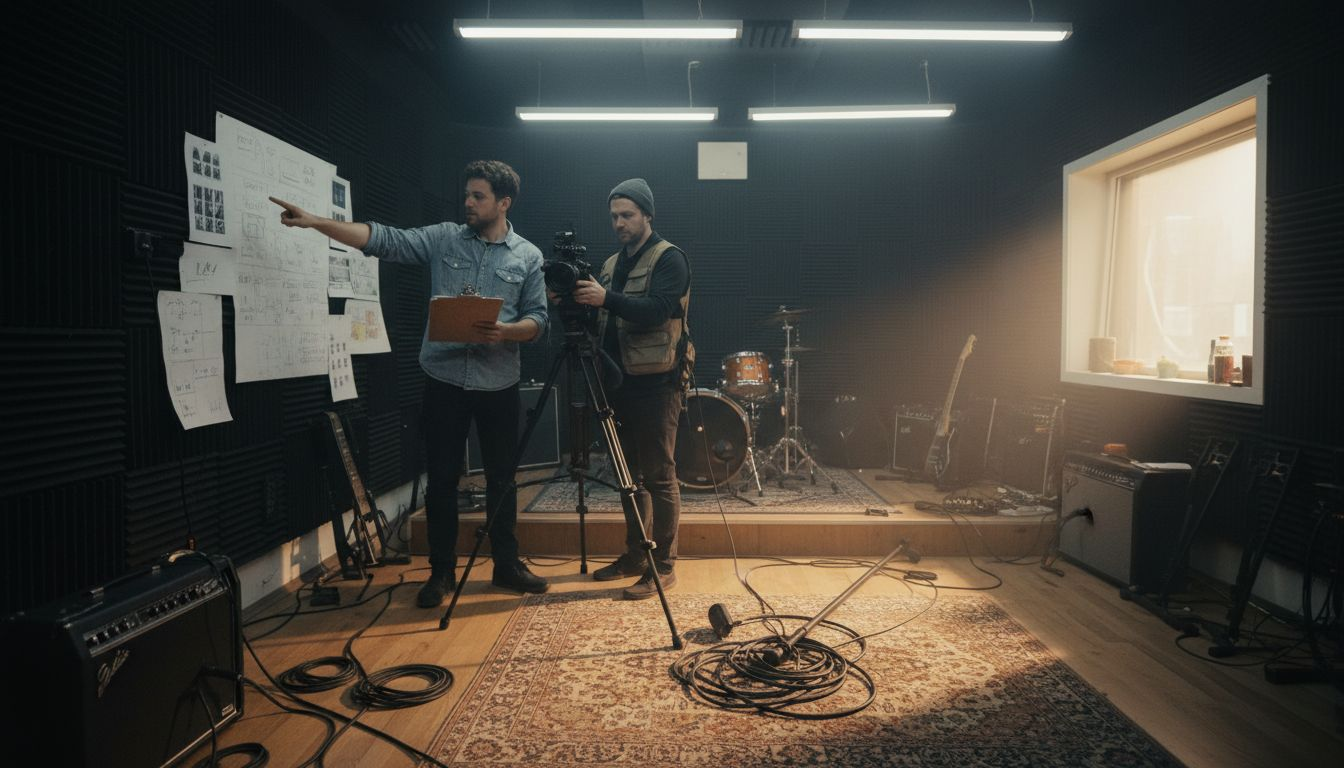
The most useful idea in any revision policy is that each review has a single purpose. The Production Brief recommends that each stage has a specific outcome, such as structural approval at rough cut and colour approval after picture lock.
In practice, that looks like this:
- Rough cut: you comment only on structure, pacing and shot choice.
- Fine cut: you comment on timing against the music, captions and transitions.
- Picture lock: the edit is frozen. Only technical fixes from here.
- Colour and finish: you approve grade and final export.
A round spent on colour while the structure is still moving is a wasted round. If your policy gives you three rounds, map them onto these stages and you will rarely need a fourth.
One signer, one set of notes
Music videos often have many stakeholders: the artist, a manager, a label A&R, sometimes a distributor or a featured guest. Left alone, they produce contradictory notes. The Production Brief’s advice is that the final approver should be one named person agreed before the treatment is signed: the artist, someone at the label or the manager. Everyone else sees cuts at agreed moments and sends notes through that person.

Put the name in the contract. If the label later wants a change the artist does not, the policy has already decided who wins.
Work backwards from your release date
Feedback time is production time. The same source points out that a round which waits four days for your response uses four days of the post-production schedule. So a good policy sets review windows for you as well as for the editor.
Try this:
- Fix the premiere date and any ad campaign start date.
- Subtract time for upload, YouTube processing and scheduling.
- Subtract final export and QC.
- Allocate each review round a fixed window, say two working days, with a named reviewer.
- Add a buffer day for the unexpected.
If the plan does not fit, you have learned that before the shoot rather than after it.
Deemed acceptance: the clause people skim
Many UK contracts say the deliverable is accepted unless you reject it in writing within a set time. In the Quite Frankly Productions terms, deliverables are deemed accepted if no specified rejection arrives within 10 working days. Others set shorter windows, and some tie minor edits to deadlines: London Filmed, for instance, applies its revisions clause only where complete instructions arrive at least 48 hours before the deadline.
Before you sign, check three things:
- Does silence count as acceptance?
- Does “rejection” need to be specific, or will “not quite right” do?
- Does acceptance close the revision window for good, even if you spot a typo after release?
The numbers differ between companies, so read the actual terms of whoever you hire rather than assuming the figures above apply.
Things revision rounds cannot fix: the music rights
A revision policy deals with the picture. It does not clear your audio. If your video uses a recording or composition you do not fully control, no round of edits will make it safe to publish.
The UK Intellectual Property Office explains that using music with moving images needs a synchronisation licence, and that you should not assume owning a recording or holding a general performance licence covers it. Publishing rights and master rights may sit with different parties. PRS for Music is explicit that some of its licences, such as Tariff EX, do not include synchronisation rights for corporate or promotional videos.
The often-quoted idea that a few seconds is safe is also wrong. YouTube’s own help page on copyright myths says that using only a small amount of someone else’s content without permission can still cause problems. The UK Copyright Service adds that failing to respect other parties’ rights can lead to removal and strikes.
If it is your own original song and you own both the recording and the composition, this is simple. If you used samples, a producer’s beat with unclear terms, or a cover, sort the clearance first. A policy that lets you re-edit forever is no use if the video is taken down.

Our view on revisions
We think the best revision policy is the one you rarely have to use. On a bespoke commission, revisions exist because you are buying something that does not exist yet: you cannot see the video until it has been shot and cut, so you need rounds to steer it.
A ready-made video flips that. You watch the finished film before you pay, so the biggest decisions, the look, the mood, the story, the pacing, are made at the point of choosing rather than after the cameras have gone home. What is left is customisation: adding your audio and branding, and exporting for YouTube. Every video in our catalogue was originally produced by professional filmmakers specifically for music, not generated with AI or assembled from generic stock footage, so what you preview is what you build on.
That is not a reason to skip due diligence. Whatever you buy, ask what is customisable, what is fixed, who holds which rights, and what happens if something does not work. For our own licensing and subscription conditions, read the subscription terms and the licensing page rather than relying on a summary, including ours.
— Music
Commissioned or ready-made: which suits your release?
| Commissioned video | Ready-made, customisable video | |
|---|---|---|
| What you see before paying | A treatment and references | The finished video |
| Where revision rounds apply | Rough cut to colour | Mostly your own customisation |
| Scope-change risk | High if the concept shifts | Low, the concept is already fixed |
| Speed | Weeks, depending on shoot and edit | Built for fast release without a custom shoot |
| Best for | A singular, high-concept single | A catalogue of tracks, regular releases, ad campaigns |
Neither is better in every case. If your single depends on a specific story that only you can tell, commission it and negotiate the policy carefully. If you need consistent, professional visuals for several releases without a shoot each time, a catalogue is the more practical route.
Where our offer fits
If you want to skip the revision-round question for most of your releases, you can browse the music videos available to license and preview the finished films first. Membership is £19.99 per month, and recurring extra videos are £9.99 per month per video, as published on the pricing page. With a video in hand you can add your audio and branding, export a YouTube-ready version and use it as the basis of an ad campaign for the song.
A checklist before you sign any video terms
Whether you are commissioning or buying, run through this list:
- Rounds: is the number written down as a figure?
- Definition: does the contract say what is a revision and what is a scope change?
- Approver: is one person named to sign off?
- Windows: are your review times and theirs set out?
- Extras: is the rate for additional revisions agreed in advance?
- Acceptance: what triggers deemed acceptance, and how long do you have?
- Rights: who holds the video licence, and is your music cleared for sync?
- Formats: are YouTube exports and short social clips included, or extra?
That last point is easy to miss. If you also want short clips for social platforms, check whether they are a deliverable or a new job.
FAQ
How many revisions should a music video include?
Two to three rounds is the usual UK standard for a commissioned video, as set out in the production terms and guidance cited above. Each round should be one consolidated set of notes on a specific stage. Anything outside the approved brief is normally a scope change and charged separately.
Can I ask for unlimited revisions?
You can ask, but few professional makers will agree, and the wording “until you are satisfied” tends to leave projects open-ended and relationships strained. A defined number of rounds plus an agreed rate for extras is fairer to both sides and keeps your release date realistic.
What if I miss the feedback deadline?
Check the deemed acceptance clause. Some contracts treat the video as accepted after a fixed period without a written rejection, one UK example being 10 working days. Others simply pause the schedule, which may push your release date back. Ask which applies before you sign.
Does a revision policy cover music licensing?
No. Revisions deal with the picture. Using a song with moving images needs a sync licence covering both the recording and the composition unless you own both, as the IPO guidance explains. Clear that before you pay for edits.
Do I need revisions with a ready-made video?
Usually far fewer, because you choose after watching the finished film. You still customise it with your audio and branding, so check what the licence lets you change.
Sources
- Who signs off on a music video? The Production Brief
- Terms of Trade for UK Video Production Businesses, Sprintlaw UK
- Terms & Conditions, Quite Frankly Productions
- Video Production Terms and Conditions, Aquarius Creative
- Terms of Business, London Filmed
- Synchronise and commercialise, Intellectual Property Office blog
- Exhibitions, trade fairs, consumer and fashion shows, PRS for Music
- Common copyright myths, YouTube Help
- Copyright and YouTube videos, The UK Copyright Service
Read next
 Music Video Styles: Types, Aesthetics and How to ChooseThe main music video styles, what shapes a video's aesthetic, and how artists, labels and managers pick a look that fits the song and the release.
 Music Video Templates: When Free Beats a £500 UK ShootSee how music video template costs compare with UK production bands, when free assets work, and which licence fits a single, social clip, or ad campaign.
 Music Video Turnaround Time: How Long It Really TakesHow long does a music video take from commission to upload? Realistic UK timelines for custom shoots and ready-made videos, plus how to plan your release.
 Music Video Production Workflow for YouTube SuccessFollow this music video production workflow to efficiently create, edit, publish, and promote your long-form music video on YouTube for maximum impact.
Turn the idea into a finished music video.
Drop your track into the Studio and build your visual in minutes.