
 Try the Workspace
Stock Footage vs Custom Video for Your Music Release
Stock footage, custom video or a ready-made music video? Compare cost, speed, licensing and YouTube fit to choose the right visuals for your next release.

Stock Footage vs Custom Video for Your Music Release
Stock footage is pre-filmed material you license for any project. Custom video is filmed for your song alone. Stock is quick but generic, and custom is distinctive but slow and costly. For most independent releases there is a third route: a ready-made music video, shot by filmmakers specifically for music, which you customise with your own audio and branding. This guide compares the three on cost, speed, originality, licensing and YouTube use, so you can pick the right one for your next release.
MusicvideomarketplaceCreate a Music Video in MinutesMusicvideomarketplace helps musicians create a long-form video for YouTube and an ad campaign for their song.Visit MusicvideomarketplaceTL;DR
- Stock footage is generic by design: it is made without a specific project in mind, so the same clips can appear in other people’s videos.
- Custom video gives you full creative control, but it needs planning, a shoot and an edit, which means more time, people and budget.
- A ready-made, filmmaker-produced music video sits between the two: finished visuals made for music, customised to your track in minutes rather than weeks.
- Whichever you choose, check the licence for commercial use, platform and territory limits, and make sure the song itself is cleared for the way you publish it.
- For YouTube and ad campaigns, what matters most is a full-length video that fits your artist image, not how it was sourced.
Table of Contents
- What stock footage and custom video actually mean
- Stock footage vs custom video at a glance
- Where stock footage works for music
- Where custom video earns its cost
- The third option: ready-made, human-made music videos
- Licensing: what to check whatever you choose
- Using the video on YouTube and in ad campaigns
- How to choose: a short checklist
- Perspective
- Get a music video without a shoot
- FAQ
- Sources
What stock footage and custom video actually mean
Stock footage is also called stock video or B-roll. It is pre-filmed footage that can be licensed and used in projects, typically captured without a particular end project in mind. Think city timelapses, waves, crowds, neon signs, a person walking down a street.
Custom video is the opposite: footage planned, shot and edited for one specific purpose. For a musician that means a music video built around one song, with locations, costumes, performance shots and an edit that follows the beat. People also use “custom” loosely for a tailored version of existing material, such as a template with your name and artwork dropped in. That is a different thing, and we come back to it below.

The distinction matters because the two solve different problems. Stock answers “I need visuals today”. Custom answers “I need visuals that are unmistakably mine”.
Stock footage vs custom video at a glance
| Factor | Stock footage | Custom video | Ready-made music video |
|---|---|---|---|
| Made for | Any project | Your song only | Music releases in general, then tailored by you |
| Speed | Clips can be downloaded in seconds, but you still have to edit them into a video | Weeks, from concept to final edit | Minutes to customise with your audio and branding |
| Originality | Low: others can license the same clips | Highest: nobody else has it | Distinctive footage, personalised with your track and branding |
| Creative control | Limited to what exists | Total | Choose and customise within the video |
| Effort from you | Search, select, edit, sequence | Plan, shoot, direct, edit | Browse, pick, upload audio, export |
| Best for | Abstract moments, filler, tight deadlines | Flagship singles, brand-defining releases | Regular releases, catalogue, lyric or visualiser-style uploads, ad campaigns |
The table simplifies, of course. Costs and timelines vary with the clips, the crew and the edit. But the pattern holds: the more of the work you take on yourself, the more control you get, and the more time it takes.
Where stock footage works for music
Stock footage can be a sensible choice when budgets are limited, deadlines are tight, or you need visuals for an abstract idea. A few situations where that is true:
- A release that needs to go out this week. You have a finished track and a slot on a playlist or a radio plugger’s schedule, and no time to shoot.
- A single moment in a longer video. A drone shot of a coastline for the bridge, or a night-sky clip for an intro, can lift a video you have mostly filmed yourself.
- Atmospheric or conceptual tracks. Ambient, electronic and lo-fi releases often lean on abstract visuals rather than a narrative or a face.
The same source notes that stock footage should be selected to match the artist’s image and brand. That is the real craft. A clip is not good because it is high resolution. It is good if it looks like it belongs to your sound, your artwork and your colour palette.
The practical limits of stock
Stock has some built-in constraints that musicians tend to find out the hard way:
- Sameness. Because licensed clips are available to many buyers, you may find your visuals echo someone else’s video.
- Fit. Clips were not filmed with your tempo, mood or lyrics in mind, so you do the work of making them feel connected.
- Assembly. A full-length video built from dozens of unrelated clips needs a sequence, transitions and colour matching. Downloading is quick. Editing it into something coherent is where the hours go.
- Rules. Each licence has terms about where and how the footage can be used, which we cover below.
None of that rules stock out. It just means stock works best as a supporting ingredient or a stopgap, not as the identity of a release.
Where custom video earns its cost
Original footage offers creative control and can match the song’s message and mood, but it typically takes more time, resources and budget. If your release is a defining moment, such as a debut single, a lead single from an album or a video you want press and fans to talk about, a bespoke shoot is worth considering.
How a custom music video is made
Adobe’s guide to music video production lays out the standard process. In outline:
- Vision. The process starts with a discussion of the artist’s vision, followed by a storyboard and shot list covering locations, design, lighting, costumes and camera angles.
- Filming. Each musician is filmed performing the song in a full-song take, and the playback is checked.
- Edit. The clips are synced with the audio and cut to the beat, and the colours are adjusted.
The guide treats planning as the main control on a custom shoot: storyboards and shot lists clarify the shots, time and resources you need before anyone picks up a camera. That is a useful way to see the cost. Most of the effort sits before and after filming, not in the shoot day itself.
Questions to ask before you commit
- Do I have a concept strong enough to justify a bespoke shoot?
- Is there a release date that the edit has to hit, and what happens if it slips?
- Will I use this video enough, across YouTube, social clips and ads, to spread the cost?
- If I do this for every release, can I sustain it?
That last question is where many independent artists, managers and labels get stuck. Releasing regularly matters for algorithms and audiences, but a full custom shoot per track rarely scales.
The third option: ready-made, human-made music videos
The stock-versus-custom framing leaves out a middle route, and it is the one we built Musicvideomarketplace around. Instead of assembling random clips or commissioning a shoot, you browse full-length music videos that professional filmmakers produced specifically for music. You then add your own audio and branding, and export a YouTube-ready video.
What is different from generic stock:
- Made for music. Every video is originally produced by filmmakers for music use, not generic stock footage and not AI-generated.
- Full length. You get a complete video to build on, not a folder of unconnected clips.
- Customisation built in. You upload your track and branding, so the result carries your identity.
- No shoot required. The catalogue is focused on fast release without a custom shoot.
If you want to go deeper on how the premade route compares with commissioning, our journal covers premade versus custom music videos. If you are weighing human-made footage against machine-generated visuals, there is also a piece on AI versus human music videos.
A quick way to decide
| Your situation | Likely best fit |
|---|---|
| One-off flagship single, clear concept, time and budget to match | Custom video |
| Regular releases, a catalogue to publish, limited time | Ready-made music video |
| A single scene or transition inside a video you already have | Stock clip |
| Need full-length YouTube uploads and ad creative quickly | Ready-made music video |
| Abstract track and an urgent deadline, comfortable editing | Stock footage |
These are not exclusive. Plenty of artists use a custom video for the lead single and ready-made videos for everything else.
Licensing: what to check whatever you choose
Licensing is where a quick visual decision can turn into a takedown or a dispute later. Three checks cover most of it.
1. Does the licence cover commercial use?
The terms to read are whether the licence permits commercial use and whether it restricts the medium, platform, duration or geographical region. Footage marked editorial-use is limited to non-commercial, news-related or educational purposes, so it is not suitable for a promotional music video or an ad.
A music release on streaming platforms, with monetised uploads and paid promotion, is commercial use. Make sure the licence says so in plain terms.
2. Do you have permission, not just access?
Being able to download or screenshot something does not give you the right to use it. In the UK, the government’s guidance on copyright exceptions states that most uses of copyright material require permission from the copyright owner. It also advises caution when relying on an exception and suggests seeking legal advice if in doubt. Do not treat “fair use” ideas from other countries as a safety net for a commercial release.
3. Is the music itself cleared?
This one catches people out. Pairing music with visuals is a separate rights question from licensing the visuals. A synchronisation licence is required in the UK to pair copyrighted music with visual media such as a music video, online content or commercial advertisements. If the song is your own and you control the rights, this is simple. If it includes samples, a cover, or a track controlled by a label or publisher, check who has to sign off before you publish.
For our own catalogue, the terms of use are set out on our music video licensing page. Read them as you would any licence: confirm what is covered for your release before you publish.

Using the video on YouTube and in ad campaigns
A music video’s job after release is to be found, watched and shared. A few practical points for stock, custom and ready-made alike.
Upload a full-length video. For YouTube, a complete video with your audio, title cards and branding gives viewers something to watch and gives you something to promote. A loose montage of clips seldom does either well.
Expect Content ID to scan your upload. YouTube’s Content ID system scans uploads against a database of music, and rights owners choose whether to monetise, block or track matching material. If your track is distributed through a distributor or label, your own upload may be matched to your own recording. Know who controls the claim settings for your song so a match does not stop your release.
Cut short clips from the long video. A full-length video can be broken into vertical clips for social platforms. It is easier to do this from one coherent video than from a patchwork of stock clips.
Plan the ad around the video. Paid promotion works best when the creative matches what the viewer lands on. If you are setting a budget, our journal piece on music ad budgets is a useful starting point.
How to choose: a short checklist
Work through these in order.
- Define the job. Is this a headline release, a catalogue upload, a lyric-style video or an ad creative?
- Set the deadline. If you need it live within days, a shoot is out, and the decision is between stock and ready-made.
- Check your image. Whatever you pick, the visuals should look like your artwork and your sound.
- Count the edits. Stock asks you to assemble and edit many clips. Ready-made asks you to customise one video.
- Read the licence. Confirm commercial use, platform, duration and territory, and clear the music.
- Plan the reuse. Think about the long video, the short clips and the ad cut before you commit.
Perspective
We built Musicvideomarketplace because we saw musicians stuck between two bad options. Stock footage is fast, but it was never made for your song, and a video made from generic clips tends to feel like it. A custom shoot is brilliant, but it is slow and out of reach as a routine for most artists, labels and managers who release often.
Our view is that the answer is to start from real craft. Every video in our catalogue is originally produced by professional filmmakers specifically for music. We do not use AI-generated footage and we do not use generic stock. You then make it yours: upload your audio and your branding, export for YouTube, cut short clips for social and take it into an ad campaign.
We think that is what serious independent music needs: human-made visuals, ready when the song is, without a shoot standing between you and your release date.
Music
Get a music video without a shoot
If you release regularly and want finished, human-made visuals for each track, a ready-made video is the quickest way to get from audio to upload. Our membership is £19.99 per month, and extra videos can be added as recurring items at £9.99 per month per video. See the details on our membership and pricing page.

You can also browse the catalogue and artist workspace to see what a customised video looks like before you decide.
FAQ
What are stock videos called?
Stock videos are usually called stock footage, stock video or B-roll. They are pre-recorded clips made without a specific project in mind, which anyone can license under the provider’s terms.
What does “custom video” mean?
It means video planned and produced for one specific project, such as a music video built around a single song. It can also describe a tailored version of existing footage, for example a video customised with your own audio, text and branding.
Is stock footage cheaper than a custom music video?
Usually, yes, because licensing existing clips avoids the cost of a shoot, and clips can be downloaded in seconds. Remember the editing time needed to turn clips into a full-length video. A ready-made music video can reduce both the licensing and the editing effort.
Can I use any stock footage in a commercial music video?
No. Check that the licence allows commercial use and note any limits on platform, duration or region. Editorial-use footage is limited to non-commercial, news-related or educational purposes. If you are unsure about a particular use, take legal advice before you publish.
Do I need a licence for my own song on YouTube?
If you own the rights to the song, you do not need to license it from anyone else. If it involves other rights holders, such as a label, publisher or sampled material, a synchronisation licence may be required in the UK to pair it with video, so confirm who controls what first.
Sources
- Stock footage definition and use, Getty Images UK
- When and how to get stock footage for music videos, Dartmoor Studios
- How to make and edit a music video, Adobe
- Exceptions to copyright: guidance for consumers, UK Government
- Commercial music licence UK guide, Foxi Music
- Content ID for music partners, YouTube Help
Recommended
Read next
 Storytelling in Music Videos: Boost Viewer Retention by 40%Discover how storytelling in music videos increases viewer retention by 40% and sharing by 30%. Proven techniques for independent musicians to boost engagement in 2026.
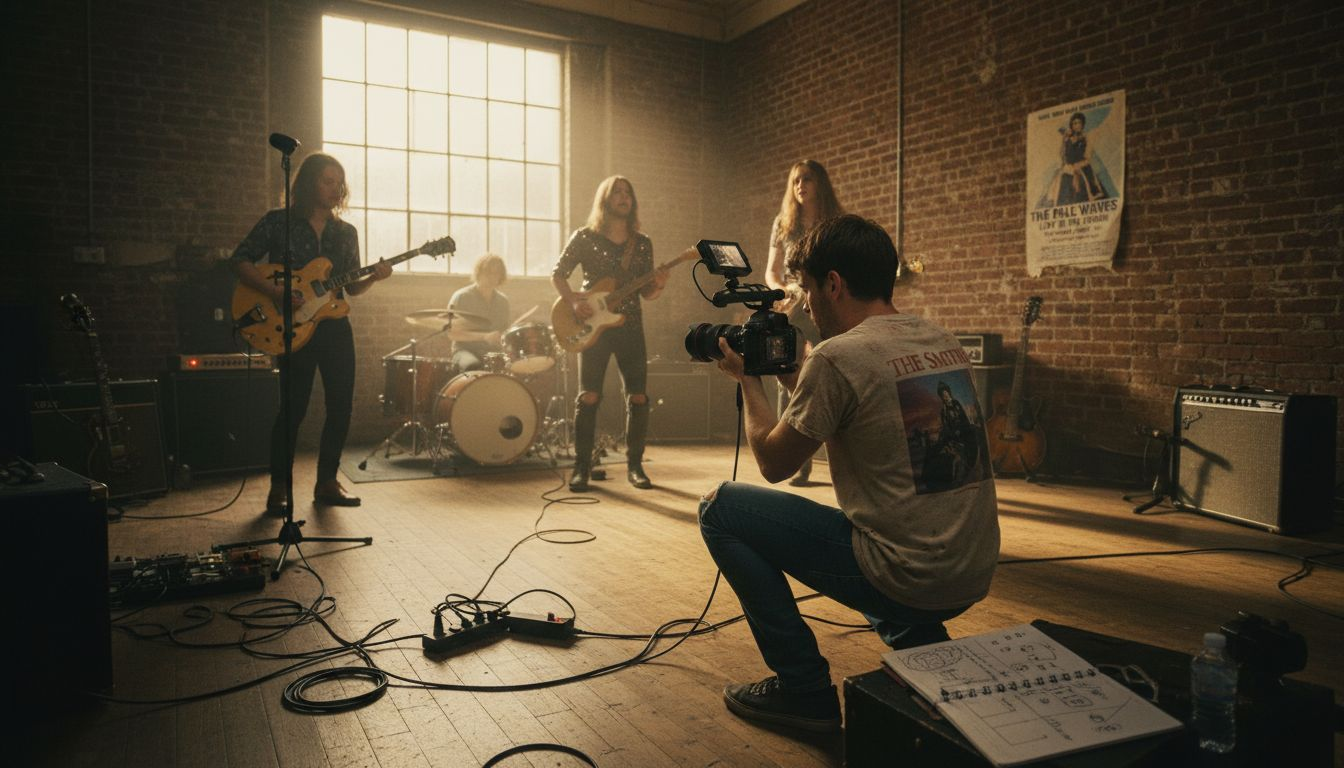 7 Essential Types of Music Video Formats for MusiciansDiscover 7 types of music video formats to boost your YouTube presence and ad campaigns. Learn practical strategies tailored for independent musicians.
 What is a DJ mix video? A complete beginner's guideDiscover what a DJ mix video is and how it combines audio with captivating visuals. Learn to create engaging content for online platforms!
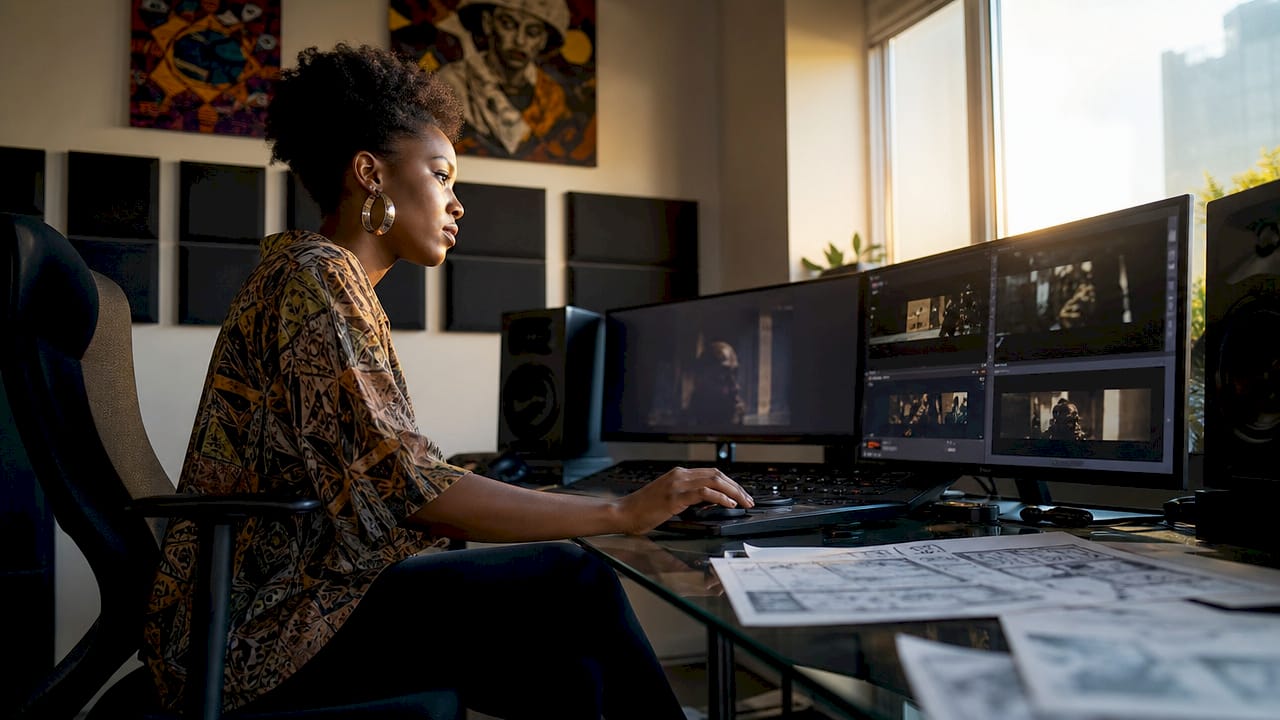 Stock footage in music videos: a creator's guideDiscover the ultimate guide to using stock footage in music videos. Transform your projects with stunning visuals and expert tips for seamless integration.
Turn the idea into a finished music video.
Drop your track into the Workspace and build your visual in minutes.