
 Open Workspace
Music Ad Budget: How to Plan Your Release Spend in the UK
Plan a music ad budget for your next release: what to include, what £250, £1,000 and £5,000 can achieve, platform costs and when to scale.

Music Ad Budget: How to Plan Your Release Spend in the UK
There is no single right music ad budget. Set a ceiling from the cash you can afford to lose, split it between assets, ads and measurement, and test small before you scale. For most independent UK artists that means a first test of around £250 to £1,000 per release. Anything beyond that should be earned by results, not hope.
This guide shows what to count as advertising spend and what to leave in the wider marketing pot. It covers what each budget level can realistically buy, how Meta, YouTube and Spotify charge, and the rules for deciding when to spend more.
MusicvideomarketplacePlan Your Release Video SpendCreate a long-form video for YouTube in minutes, then use it to create an ad campaign for your song.Explore the video marketplaceTL;DR
- Pick one goal and one signal (saves, follows, repeat listens) before you spend anything. Reach alone does not show that people care.
- Separate your costs into assets, reach, conversion tools and measurement, so you know what the ads themselves are costing.
- Budget bands from a UK-focused guide: up to £250 for simple tests, £250 to £1,000 for channel testing, £1,000 to £5,000 for professional video, sustained paid social and retargeting.
- On UK Meta ads, remember 20% VAT on top of your ad spend, and give each ad set enough budget to learn.
- Write your scale, hold and pause rules before the campaign starts.
Table of Contents
- Start with a ceiling, not a target
- What belongs in a music ad budget
- What different budgets can achieve
- What the platforms charge in the UK
- How to divide the budget across platforms and stages
- Choose a goal and one signal
- Test small, then scale by rules
- Perspective: where video fits in the budget
- Promo: a predictable video line for your budget
- Common budgeting mistakes
- A worked example: £600 for a single
- FAQ
- Sources
Start with a ceiling, not a target
Most artists ask “how much should I spend?” and look for a number. The better question is “how much can I lose without hurting the next release?” One music marketing guide puts it plainly: there is no universal figure for a promotion budget, so you set a ceiling from the cash available and the priorities of the release.
That ceiling is the most you will put into the campaign in total, including the video, the ads and the tools. Everything after it is a decision about where the money goes.
Rules of thumb based only on what you spent recording the track are also unreliable. A rule tied to recording costs ignores audience size, how the song is already performing in your territory and what the campaign is meant to achieve. A £200 bedroom demo and a £4,000 studio single may deserve the same ad budget if the goal and the audience are the same.
A simple way to set the ceiling:
- Write down what you can spend over the next three months without touching rent, gear repayments or other bills.
- Take away fixed release costs: mixing, mastering, distribution, artwork.
- Divide what is left across the releases you plan in that period, weighting the single you most want to push.
If the remainder is under £250, you still have options, but they are small tests and organic work, not a paid push.
What belongs in a music ad budget
Before you compare costs, decide what counts as advertising. Mixing everything into one number makes it impossible to judge whether the ads worked.
A useful split comes from a UK distributor’s guide for independent artists, which separates four groups:
| Group | What it covers | Examples |
|---|---|---|
| Assets | Material the campaign is built from | Photography, video, artwork |
| Reach | Paying to get in front of people | Ads, PR |
| Conversion tools | Turning attention into action | Smart links, landing pages |
| Measurement | Knowing what happened | Tracking pixels, analytics |
Your ad budget is the reach line. Your marketing budget is all four lines plus the wider costs of releasing music. Another UK guide lists those wider costs as recording, mixing, mastering, pressing and sleeves, merch design and stock, website design and publicist fees. None of those are ad spend, but all of them draw on the same pot.
Why video sits in assets, not ads
Video is the line artists most often forget. Paid social and YouTube campaigns need something to show, and a single static image wears out quickly. Even outside the artist world, music businesses have told the UK government that complex campaigns on new media channels call for a proliferation of promotional assets, including video content.
That has a practical effect on your budget. If a bespoke shoot takes £1,500 of a £2,000 ceiling, you have £500 left to get it seen. Treat the video as an asset you can reuse across ads, YouTube, Shorts, Reels and TikTok, and pick a route that leaves enough money to promote it.

What different budgets can achieve
The same UK distributor guide describes three bands. Treat them as guides, not guarantees, because results depend on your genre, audience and creative.
| Budget per release | What it can realistically cover |
|---|---|
| £0 to £250 | Simple infrastructure (a smart link, a pixel) and small ad tests |
| £250 to £1,000 | Testing a few channels against each other |
| £1,000 to £5,000 | Professional video or content, sustained paid social and retargeting |
Up to £250: prove the creative
At this level the point is to learn whether anyone reacts to the song and the visuals. Set up your tracking, run one small campaign on one platform, and look at what people do after they click. Spreading £250 across three platforms gives you three results too thin to read.
£250 to £1,000: compare channels
Now you can run two channels side by side, for example a short-form video ad on Meta and a YouTube campaign using your full-length video. Keep the creative and audience as similar as you can so that the difference in results comes from the channel.
£1,000 to £5,000: build a funnel
Here you can afford polished video, several creatives, and retargeting: showing ads again to people who watched your video or visited your link, with a message pushing them to save, follow or buy a ticket. This only makes sense once an earlier test has shown that a particular audience and creative work.

What the platforms charge in the UK
Platform costs move constantly, so use the figures below to size a test and check each platform’s own pages before you commit.
Meta (Facebook and Instagram)
Two UK points matter. First, VAT: a 2026 UK playbook notes that Ads Manager billing adds 20% VAT on top of ad spend, so a £1,000 budget becomes a £1,200 invoice. If your ceiling is a hard cap, divide it by 1.2 to find your real ad budget. A £600 ceiling buys £500 of ads.
Second, learning. Meta’s delivery system generally needs roughly 50 optimisation events per ad set within seven days to leave the learning phase and stabilise. Advertisers in that guide warn that spending below that threshold often produces volatile results. For a musician, that points to fewer ad sets with more money in each, rather than many tiny ones.
The client’s own article on why music ads matter quotes typical Meta cost per stream ranges for independent artists. Read them as a rough benchmark for planning, not a promise for your release.
YouTube
YouTube ads run through Google Ads, which handles budgets in a particular way. You set an average daily budget, and on any single day Google may spend up to twice that amount, but your monthly charge will not exceed the daily budget multiplied by 30.4. A £10 daily budget can therefore show £20 on a strong day, but the month stays at or under £304.
This suits a full-length music video. People who choose to watch rather than skip are a warmer audience than someone passing a six-second ad, and you can follow them up later.
Spotify
Spotify’s ad tool is built around listener behaviour on the free tier. One music-industry guide reports a minimum campaign budget of £250 with CPMs of roughly £15 to £25, so a first campaign sits at the bottom of the second band above. Check Spotify’s own pricing page for current minimums before you plan around that figure.
How to divide the budget across platforms and stages
No source gives a magic split, so use a staged approach that follows the logic of the funnel. The percentages below are our suggested starting points, not industry standards.
| Stage | Share of ad budget | Purpose |
|---|---|---|
| Test | 20% to 30% | Find the creative and audience that earn your chosen signal |
| Scale | 50% to 60% | Put money behind what the test proved |
| Retarget | 10% to 20% | Bring back people who engaged but did not act |
In practice:
- Under £500: one platform, test and scale only. Skip retargeting until you have an audience big enough to retarget.
- £500 to £2,000: one main platform and one secondary. Put most of the money on the platform where your first test performed best.
- Over £2,000: run test, scale and retarget at the same time, with separate ad sets for each.
Remember to remove VAT from your Meta figure and keep a small reserve, around 10% of the ceiling, for a creative refresh when ads start to tire.
Choose a goal and one signal
A campaign that tries to deliver streams, follows, ticket sales and merch is a campaign that proves nothing. Choose one goal, then one primary signal. Useful signals include saves, repeat listening, follows or meaningful profile actions. Reach and views are weak evidence on their own. As one test-and-scale guide says, reach does not show that listeners care.
Match the signal to the stage:
- New release, cold audience: saves per 100 clicks, video view-through rate.
- Warm audience: follows, pre-saves, email sign-ups.
- Touring: ticket-page visits and sales.
Test small, then scale by rules
The same guide recommends testing with the smallest budget that gives a readable signal and scaling only on pre-agreed rules for when to hold, pause or increase. It also advises tracking one primary signal over a fixed review window and scaling only when it stays stable.
A practical version for a UK independent:
- Fix the window. Seven days per test fits Meta’s learning period.
- Set the pass mark before you launch. For example: cost per save under a number you can afford.
- Hold if the signal is near your pass mark but unsteady.
- Pause any ad that misses the signal after the full window, or when the ceiling is reached.
- Raise spend in modest steps, only if the signal has stayed stable, and then wait for a new window before the next step.
Write these rules down. When a campaign has a good day, it is tempting to double the budget. A rule stops that.
Perspective: where video fits in the budget
At Music Video Marketplace we see the same pattern again and again: artists spend months on a song, then run out of budget before anyone sees it. The video is usually the culprit, because a custom shoot can swallow the whole ceiling.
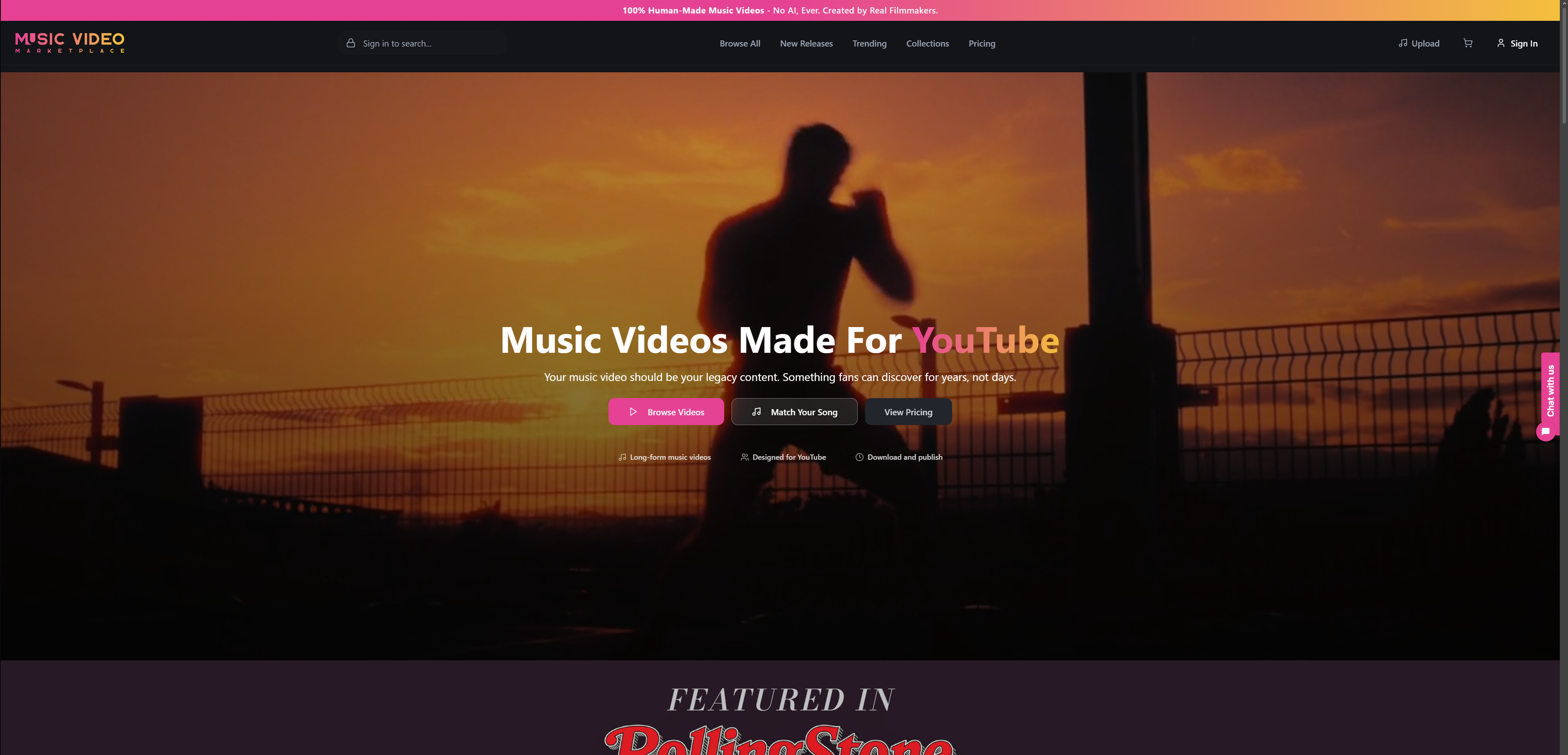
Our approach is to treat video as a fixed, predictable asset line, so the rest of the money can go on reach. Every video in our catalogue is originally produced by professional filmmakers specifically for music, never created with AI or generic stock footage. You customise it, add your audio and branding, and export a YouTube-ready version without commissioning a shoot.
That matters for ad budgets because a full-length video gives you something to run as a YouTube ad, cut into short clips, and reuse for retargeting. One asset feeds every stage of the funnel, and you can spend your cash on testing rather than production.
Music
Promo: a predictable video line for your budget
If you want the asset line of your budget to stay fixed, our membership costs £19.99 per month, and extra videos on a recurring basis cost £9.99 per month per video. You choose a ready-to-edit, human-made music video, add your track and branding, export for YouTube, and cut short clips for social ads. You can also read about licensing for our music videos before you decide.
That leaves the rest of your ceiling for the part that finds listeners. If you have £500 to spend, a fixed monthly video cost means more of it goes on testing the song rather than producing the film.
Common budgeting mistakes
- Forgetting VAT. On Meta, your £500 plan becomes £600 on the invoice.
- Splitting too thin. Five ad sets with £2 a day each will not give Meta enough data to learn.
- Counting every cost as advertising. Mastering and merch are important, but they hide what your ads actually cost.
- Chasing reach. Impressions are cheap. Saves and follows are what turn into a career.
- Scaling on one good day. Wait for a stable signal across your review window.
- No tracking. Without a pixel and a smart link, you cannot tell which ad did the work.
A worked example: £600 for a single
Suppose you have a £600 ceiling for a single, which includes VAT on Meta.
- Asset: a ready-to-edit video from a catalogue, so the production cost is a monthly fee rather than a shoot. Say £20.
- Tools: a free smart link and pixel set up before launch. £0.
- Ads: £580 remaining. Divide by 1.2 to cover VAT on Meta spend: about £483 of actual ad budget.
- Test (25%): about £120 across two creatives on one platform, for seven days.
- Scale (60%): about £290 on the winning creative.
- Retarget (15%): about £73 to people who watched most of the video.
The figures are our illustration, not a forecast of results. The point is that every pound has a job, and you decide up front what a good result looks like.
FAQ
How much should an independent artist spend on music ads?
Start with what you can afford to lose, not with a target. A UK distributor’s guide suggests that up to £250 covers simple tests, £250 to £1,000 allows channel testing, and £1,000 to £5,000 can fund professional video, sustained paid social and retargeting. Pick the band that matches your ceiling and work up only when results justify it.
Does the music ad budget include the music video?
It is better to keep them apart. The video is an asset, while the ad budget is the money you pay for reach. Counting them separately lets you see what your ads cost per save or follow, and it stops a production bill from hiding in your results.
Do I pay VAT on Meta ads in the UK?
Yes. A 2026 UK playbook says Meta Ads Manager billing adds 20% VAT on top of the ad spend. If your total cap is fixed, divide it by 1.2 to find the amount that actually reaches the ads. Check your own invoices, especially if you are VAT-registered.
When should I increase my ad spend?
Increase it only when your chosen signal, such as saves or follows, has stayed stable across a full review window. Agree your scale, hold and pause rules before you launch, and raise spend in modest steps. Pause anything that misses the signal or reaches your ceiling.
Sources
- Music Promotion Budget: Test and Scale Guide
- Music Marketing Budget for Independent Artists
- How Much Should an Independent Artist Spend on Music Marketing
- How To Set Music Marketing Budget
- A Music Company (3), UK government publication
- Meta Ads UK Playbook 2026
- Meta Ads Minimum Budget Requirements 2026
- Choose your bid and budget, Google Ads Help
- Spotify Ad Studio for Artists
Read next
 Smart bidding para anuncios de música: qué estrategia elegirDescubre cómo utilizar Smart Bidding en anuncios de música para optimizar tus campañas y alcanzar mejores conversiones. ¡Mejora tus resultados ahora!
 Audio video maker para músicos: guía práctica de licenciasDescubre cómo un audio video maker te ayuda a lanzar tus canciones en YouTube Ads. Aprende a elegir licencias y preparar tus materiales. ¡Actúa hoy!
 Cuánto cuestan los anuncios de YouTube en Reino UnidoDescubre cuánto cuestan los anuncios de YouTube en el Reino Unido. Conoce factores clave como formato, segmentación y calidad creativa.
 Music video ad campaign templates for UK indie artistsExplore effective music video ad campaign templates for UK indie artists, boosting visibility and engagement across platforms like YouTube and TikTok.
Turn the idea into a finished music video.
Drop your track into the Workspace and build your visual in minutes.