
Top video ad campaign tips for independent musicians
Discover proven video ad campaign tips for independent musicians. Learn how to set goals, choose formats, and optimise spend to grow your YouTube audience.
Top video ad campaign tips for independent musicians

TL;DR:
- Effective YouTube promotion relies on clear goal setting and targeted ad campaigns.
- Choosing the right ad format and amplifying high-retention content enhances reach and engagement.
- Consistently analyze and optimize campaigns to improve results and maximize ad spend efficiency.
Great music alone will not cut through on YouTube. Independent artists are releasing more content than ever, yet most singles disappear within days of launch. The difference between a track that gains traction and one that fades is increasingly down to how well you run your video ad campaign. Guy Ferz’s single “thank u.” is a striking example: a targeted video ad campaign generated 592k YouTube views and 603k Spotify streams, achieving a 15% lower cost per acquisition than industry benchmarks. The tips below are drawn from real campaigns like this one, giving you a clear, actionable path to better reach and engagement.
Table of Contents
- Set clear goals for your video ad campaign
- Choose the right video ad format for your music
- Amplify your top-performing content with targeted ads
- Track, learn, and optimise for higher engagement
- Our perspective: Why smart ad spend beats big budgets for indie musicians
- Take your music video campaign further
- Frequently asked questions
Key Takeaways
| Point | Details |
|---|---|
| Goal clarity matters | Set specific targets for your music video ads to drive measurable results. |
| Choose formats strategically | Pair your creative and budget with the YouTube ad format that best fits your aims. |
| Leverage organic success | Use video ads to amplify your most engaging content for lower cost and greater reach. |
| Continuous optimisation wins | Small adjustments based on campaign data boost engagement and ROI. |
Set clear goals for your video ad campaign
With the power of video advertising established, it is essential to start with purpose. A campaign without a defined goal is like releasing a single without a release date. You are spending money, but you have no way of knowing whether it is working.
Before you set a budget or choose a format, decide exactly what you want your campaign to achieve. The most common goals for independent musicians include:
- Boosting YouTube views on a new or existing video
- Driving Spotify streams by linking your ad to your streaming profile
- Growing your subscriber count to build a long-term audience
- Increasing micro-engagement such as comments, shares, and likes
Each of these goals requires a different creative approach and a different set of key performance indicators (KPIs). A KPI is simply the number you track to know if your campaign is succeeding. For example, if your goal is streams, your KPI might be cost per stream. If your goal is subscribers, you track cost per subscriber.
Effective ad spend starts with setting results-focused, realistic goals. Without this foundation, even a generous budget will produce inconsistent results. Explore music ad campaign strategies to see how other artists have structured their objectives before spending a single penny.
You should also align your creative content to your goal. A campaign designed to drive streams needs a strong call to action pointing listeners to Spotify. A campaign built for engagement needs content that invites a reaction. Understanding the full range of YouTube Ads goals will help you match your ambitions to the platform’s capabilities.
Pro Tip: For early releases, prioritise micro-engagement over raw views. Comments and shares signal genuine interest to YouTube’s algorithm, which can organically extend your reach far beyond your paid audience.
Choose the right video ad format for your music
Once you know your goals, choosing the optimal ad format can dramatically enhance the impact and efficiency of your promotions. YouTube offers several distinct formats, and each one suits a different campaign objective and budget level.
Here is a quick comparison to help you decide:
| Format | Skippable? | Best for | Cost model |
|---|---|---|---|
| Skippable In-Stream | Yes (after 5s) | Streams, views, subscribers | Cost per view |
| Non-skippable In-Stream | No (15s max) | Brand awareness, hooks | Cost per thousand impressions |
| Bumper ads | No (6s max) | Rapid awareness, retargeting | Cost per thousand impressions |
| YouTube Shorts ads | Yes | Fast engagement, younger audiences | Cost per view |
Success stories have consistently used a mix of formats to maximise reach, producing substantial view and stream numbers without overspending on any single format.
For most independent artists, Skippable In-Stream is the workhorse format. It only charges you when a viewer watches at least 30 seconds or interacts with your ad, meaning you are paying for genuine interest. Bumper ads work brilliantly for retargeting people who have already seen your content, reinforcing your single with a punchy six-second reminder. Shorts ads are ideal for reaching a younger, mobile-first audience quickly.
Key considerations when choosing your format:
- Match the format to your creative. A cinematic music video suits In-Stream. A quick, energetic clip suits Shorts.
- Use Bumper ads as a follow-up tool, not a primary format.
- Non-skippable ads carry higher risk for musicians because a forced view can create negative associations if the content does not immediately connect.
Learn more about video ad types for musicians and how each format fits different release strategies. You can also explore approaches to boosting reach on YouTube using format combinations that have worked for other independent artists.
Pro Tip: Whatever format you choose, front-load your hook. You have roughly three seconds before a viewer decides to skip or scroll. Lead with the most compelling moment of your track, not a slow build.
Amplify your top-performing content with targeted ads
Having chosen your format, the next tip is about magnifying content that already resonates organically. Rather than guessing which video will perform, let your existing data tell you.
YouTube Analytics shows you exactly which videos hold viewer attention longest. High audience retention is a strong signal that the content connects. That is the video you should put your ad budget behind.
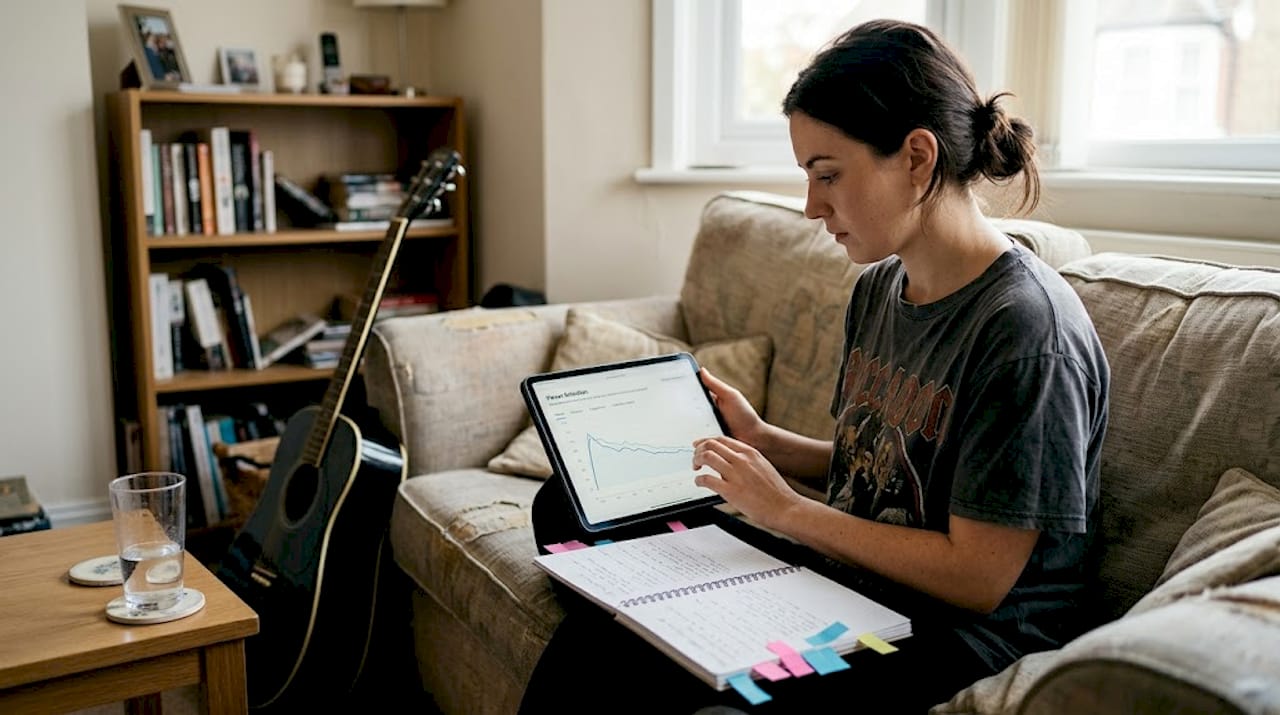
Promoting your top organic performers using video ads can drive a powerful growth flywheel, where paid reach generates organic momentum that continues long after the campaign ends. Guy Ferz’s campaign achieved a 15% lower cost per acquisition precisely by funnelling ad spend into best-performing content rather than spreading budget thinly.
Here is a simple process to follow:
- Analyse YouTube Analytics and identify your top one or two videos by audience retention and engagement rate.
- Select the highest-retention content as your primary ad creative.
- Build a targeted ad set using demographics (age, location), music interests, and relevant YouTube channels as audience signals.
- Monitor and scale by increasing budget on ad sets that hit your KPI targets and pausing those that do not.
| Content type | Organic retention | Ad CPA | Outcome |
|---|---|---|---|
| High-retention video | 60%+ | Lower | Strong stream and subscriber growth |
| Average-retention video | 30-50% | Medium | Moderate gains |
| Low-retention video | Under 30% | Higher | Poor return on spend |
Targeting is where many independent artists leave money on the table. Beyond basic demographics, you can target viewers of specific music channels, fans of similar artists, and even people who have previously interacted with your content. Browse independent campaign examples to see how targeted approaches have worked in practice, and discover the power for indie artists of combining organic and paid strategies.
Track, learn, and optimise for higher engagement
With amplification underway, the final piece is maintaining momentum through data-driven refinement. Running a campaign and leaving it untouched is one of the most common and costly mistakes independent artists make.
The metrics that matter most for music campaigns are:
- Watch time: Are viewers staying for the whole ad or dropping off early?
- Cost per view (CPV): Is your spend efficient relative to the views you are generating?
- Subscriber growth: Are new viewers converting into long-term followers?
- Spotify conversion: Are your streams increasing in line with your ad activity?
Careful measurement and optimisation consistently turn average ad spend into organic momentum. The artists who see the best long-term results are those who treat every campaign as a learning opportunity rather than a one-off event.
Common mistakes and how to fix them:
- Targeting too broadly: Narrow your audience by music genre, channel affiliation, or geography.
- Weak opening seconds: If retention drops in the first three seconds, recut your hook.
- Single creative fatigue: Rotate two or three versions of your ad to prevent audience burnout.
- Ignoring YouTube Ads performance data: Check your campaign dashboard every two to three days during active spend.
Review music ad best practices to build a solid optimisation routine that keeps your campaigns improving over time.
Regular optimisation delivers ever-higher engagement. Do not set and forget.
Pro Tip: Run small-budget A/B tests by changing just one variable at a time, whether that is the first five seconds of your video, the thumbnail, or the call-to-action text. Even a £20 test can reveal which version drives better results before you commit serious spend.
Our perspective: Why smart ad spend beats big budgets for indie musicians
After working with independent artists across dozens of campaigns, one pattern stands out clearly: strategy consistently outperforms budget. The myth that you need label-level spending to compete on YouTube is simply not supported by the evidence.
Indie artists actually have a structural advantage over major labels. You can pivot quickly, test new ideas without committee approval, and build genuine community connections that algorithms reward. A label running a campaign for a superstar is optimising for mass reach. You are optimising for your audience, which is a far more precise and efficient task.
The artists who see outsized results from modest budgets share three habits. They set specific goals before spending anything. They let organic performance data guide where they invest. And they treat every campaign as a feedback loop rather than a finished product. Understanding why video ads work for independent artists specifically will reinforce why this targeted, iterative approach is so effective. Small-scale, repeat testing is not a workaround for a limited budget. It is genuinely the smarter method.
Take your music video campaign further
The strategies above give you a clear framework, but execution depends on having strong visual content to work with. A compelling video is the engine behind every successful ad campaign.
Music Video Marketplace lets you create a professional long-form music video in minutes and launch a YouTube ad campaign for your single straight from the platform. No production team required. Whether you are releasing your first single or scaling up a proven track, you get everything you need in one place, from creative tools to campaign support. Read our guide on music video promotion on YouTube to see how artists are combining professional visuals with targeted ad strategies to grow their audiences faster.
Frequently asked questions
What is the best video ad format for independent music singles?
Skippable In-Stream and Shorts formats typically offer the best balance of cost and engagement for music singles. Mixing formats delivered high reach and reduced cost per acquisition in Guy Ferz’s campaign.
How much should I budget for a music video ad campaign?
Most successful indie campaigns start with small test budgets of £50 to £200, focusing spend on tightly targeted audiences to maximise returns before scaling.
Do YouTube ads help with gaining new subscribers or just views?
Optimising your ads for engagement encourages subscriber growth alongside video views. Goal-setting can include subscriber growth as a key KPI from the outset.
Should I use ads on every music video or just my best ones?
Amplifying your top organically performing videos with ads delivers far better results than advertising every upload. Promoting top organic content creates a growth flywheel and reduces acquisition costs significantly.
Recommended
- Creative video campaign examples for independent musicians | Music Video Marketplace Blog
- Video Ads in Music Promotion: Power for Indies | Music Video Marketplace Blog
- Types of Video Ads for Musicians: Boosting Reach | Music Video Marketplace Blog
- Music ad campaigns: expert strategies for real results | Music Video Marketplace Blog
Read next
 Video ads for producers: strategies to boost music exposureLearn how to plan, launch, and scale video ad campaigns for your music. A step-by-step guide for independent producers and emerging artists in 2026.
 Video Ads in Music Promotion: Power for IndiesVideo ads in music promotion boost reach and fan engagement. Learn formats, campaign strategies, common mistakes, and budget tips for independent artists.
 Top 4 vizzy.io Alternatives for Music Video Ads 2026Explore 4 vizzy.io alternatives to help decide on music video ad creation platforms for your creative needs and marketing efforts.
 Types of Video Ads for Musicians: Boosting ReachTypes of video ads for musicians, including YouTube, Meta, and TikTok formats. Learn best practices, real-world examples, and how to avoid common pitfalls.
Turn the idea into a finished music video.
Drop your track into the Studio and build your visual in minutes.