
Video ads for producers: strategies to boost music exposure
Learn how to plan, launch, and scale video ad campaigns for your music. A step-by-step guide for independent producers and emerging artists in 2026.
Video ads for producers: strategies to boost music exposure
TL;DR:
- Video ads target specific audiences, increasing music visibility in a crowded digital space.
- Start small with budgets around £40-£50, testing and refining before scaling campaigns.
- Combining paid ads with organic content accelerates listener growth and engagement.
Your song is finished, mixed, mastered, and ready for the world. But getting it heard is a different challenge entirely. Streaming platforms are saturated, social media algorithms are unpredictable, and organic reach alone rarely cuts through the noise. Video ads change that equation. They put your music in front of targeted listeners who actually match your genre, location, and taste profile. This guide walks you through everything you need to know, from setting up your first campaign to scaling it once you see results. Whether you’re a bedroom producer or an emerging artist, this is the roadmap you’ve been looking for.
Table of Contents
- Preparing your video ad campaign
- Steps to launch your video ad
- Troubleshooting and avoiding common mistakes
- Measuring success and scaling up
- Why video ads are a game-changer for producers
- Find professional music video resources
- Frequently asked questions
Key Takeaways
| Point | Details |
|---|---|
| Start with a small budget | Testing campaigns with a modest spend lets you optimise before scaling up. |
| Use targeted audience stacking | Stacking similar artists and genres ensures your ads reach the right people. |
| Make ads feel native | Ads designed to look organic perform much better with music fans. |
| Track and adapt quickly | Monitor metrics after launch and tweak your campaign for better results. |
| Balance organic and paid promotion | Combining both strategies maximises song exposure and fan engagement. |
Preparing your video ad campaign
Before you spend a single pound, you need the right assets in place. Think of this as your pre-flight checklist. Without it, even a generous budget will underperform.
The three core assets you need are a strong video clip (ideally 15 to 60 seconds), a clear call to action, and a working streaming link. Your call to action should be direct: “Stream now on Spotify” or “Watch the full video on YouTube.” Vague messaging kills conversions before they start.
Choosing your platform matters too. Here’s a quick comparison to help you decide where to start:
| Platform | Best for | Ad format |
|---|---|---|
| Meta (Facebook/Instagram) | Targeted reach, retargeting | Feed video, Stories, Reels |
| YouTube | Long-form discovery, pre-roll | Skippable, non-skippable |
| TikTok | Viral potential, younger audiences | In-feed video, TopView |
For audience research, go beyond basic demographics. Dig into which artists your ideal listener already follows, what genres they stream, and where they live. This is the foundation of effective targeting, and it directly affects your return on spend.
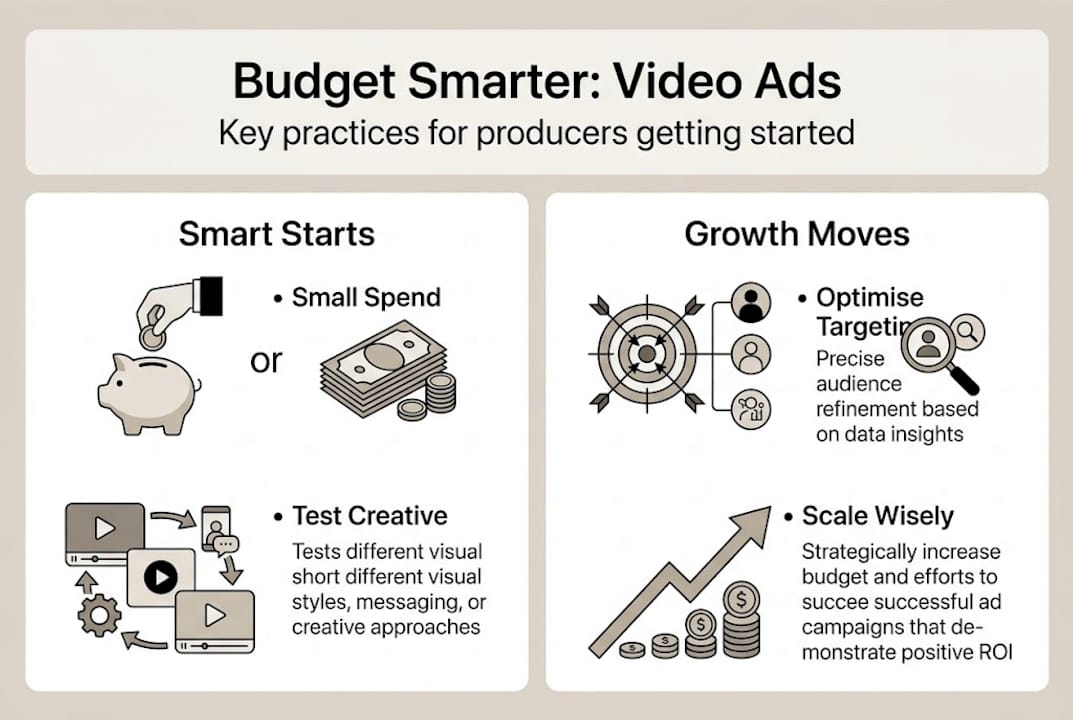
Budgeting is where many producers go wrong. The instinct is to go big, but restraint pays off early. Start ads small around $50, targeting by genre, similar artists, and location, and make sure your ads feel native rather than overly polished or corporate. Audiences scroll past anything that feels like an interruption.
Pro Tip: Before launching, watch your own ad as if you’re a stranger. Does it make you want to press play? If not, rework the hook in the first three seconds.
Understanding the video ad benefits early helps you set realistic expectations and choose the right format for your goals.
- Gather your video asset, streaming link, and call to action first
- Research 5 to 10 similar artists your target audience follows
- Set a test budget of £40 to £50 before committing more
- Choose one platform to start rather than spreading thin
- Ensure your video hook lands within the first three seconds
Steps to launch your video ad
Once your assets are ready, the actual launch process is more straightforward than most producers expect. Here’s how to do it properly.

Step 1: Choose your campaign objective. On Meta, this means selecting either Traffic (to drive clicks to your streaming link) or Conversions (to track specific actions like saves or follows). Traffic is simpler for beginners. Conversions require a pixel set up on your website or landing page, but they give you richer data over time.
Step 2: Define your audience. This is where the real work happens. For Meta ads, use artist stacking by selecting 3 to 5 similar artists, layering in demographic filters, and eventually building lookalike audiences from pixel data once you have enough traffic. Don’t skip the location filter. Targeting listeners in cities with active music scenes relevant to your genre can dramatically improve engagement.
Step 3: Upload your video creative. Keep it vertical for mobile placements. Add captions, because most people watch with sound off initially. Your first frame should be visually arresting, not a black screen or a slow fade-in.
Step 4: Write your ad copy. Short wins. One sentence that creates curiosity or urgency, followed by your call to action. Avoid listing every achievement. Listeners don’t care about your press quotes yet. They care about how the music makes them feel.
Step 5: Set placements and launch. Start with automatic placements on Meta to let the algorithm find efficiency. On YouTube, choose skippable in-stream ads for discovery. Review the types of video ads available so you match format to goal.
Here’s a quick reference for ad objectives:
| Objective | Best use case | Difficulty |
|---|---|---|
| Traffic | Drive streams, clicks | Beginner |
| Conversions | Track saves, follows | Intermediate |
| Reach | Brand awareness | Beginner |
| Engagement | Grow social following | Beginner |
Pro Tip: Run two versions of your ad with different hooks and let them compete for 48 hours. The winner tells you what your audience actually responds to, not what you think they like. Explore video ad promotion strategies for more creative testing ideas.
Troubleshooting and avoiding common mistakes
Your campaign is live. Now what? Most producers check results obsessively in the first hour, then panic when they don’t see immediate streams flooding in. That’s the wrong approach.
Give your ad at least 48 to 72 hours before drawing conclusions. Algorithms need time to learn who responds to your content. Pulling the plug too early is one of the most common and costly mistakes in music advertising.
Here are the pitfalls to watch out for:
- Spending too much too soon. A large budget on an untested creative is money lost. Test first, then scale.
- Overproduced ads that feel like commercials. Native-feeling content consistently outperforms polished corporate-style ads on social platforms.
- Ignoring frequency. If the same audience sees your ad more than 3 to 4 times without converting, they’ve made their decision. Refresh your creative.
- Targeting too broadly. “Everyone who likes music” is not an audience. Narrow targeting yields better data and lower costs per result.
- Neglecting organic content alongside paid. Ads amplify what’s already working. If your organic presence is weak, ads will struggle to compensate.
There’s a genuine debate in music marketing circles about this last point. Some prioritise organic content over paid ads entirely, arguing that authentic connection matters more than reach. That view has merit. But established marketing guidance consistently shows that paid ads, when paired with strong music and smart targeting, accelerate results that organic alone takes months to achieve.
“The best ad in the world can’t fix a song that doesn’t connect. But the best song in the world still needs to be heard.”
Monitor your cost per result daily in the first week. If your cost per click climbs sharply, your creative or targeting needs adjusting. Check proven video ad tips for practical fixes, and review how YouTube ad reach works if you’re running pre-roll campaigns.
Pro Tip: Screenshot your campaign data every 48 hours. Patterns become obvious when you compare snapshots side by side rather than staring at live dashboards.
Measuring success and scaling up
Once your campaign has run for at least a week, you have enough data to make informed decisions. Here’s what to look at.
| Metric | What it tells you | Target benchmark |
|---|---|---|
| Click-through rate (CTR) | How compelling your ad is | Above 1% is healthy |
| Cost per click (CPC) | Efficiency of spend | Lower is better; varies by platform |
| Video views (25%, 50%, 75%) | How engaging your content is | 50%+ view rate is strong |
| Stream conversions | Real-world music impact | Track via streaming platform stats |
| Engagement rate | Audience connection | Likes, shares, saves |
Beyond platform analytics, cross-reference your streaming stats. Did Spotify for Artists show a spike in listener numbers during your campaign window? Did your monthly listeners grow? These are the real-world signals that confirm your ad spend is translating into genuine music discovery.
When should you scale? Start ads small, then scale based on results once you identify a winning creative and audience combination. A good rule: if your cost per result is stable or falling and your engagement is growing, increase your daily budget by 20 to 30% every few days rather than doubling overnight. Sudden budget jumps reset the algorithm’s learning phase.
Things to track as you scale:
- Audience fatigue: watch for rising costs and falling CTR
- New audience segments worth testing (different cities, age brackets)
- Creative refresh cycles: swap in new video hooks every 2 to 3 weeks
- Lookalike audiences built from your most engaged viewers
Stay current with 2026 video marketing trends and draw inspiration from creative campaign examples from other independent musicians who’ve built real audiences through paid video.
Why video ads are a game-changer for producers
Here’s the uncomfortable truth most marketing guides won’t tell you: video ads are not a shortcut. They’re a multiplier. If your music doesn’t connect emotionally, no targeting strategy will save it. But if your music is genuinely good and you’ve done the groundwork, video ads compress years of slow organic growth into months.
The producers who struggle with ads usually make one of two mistakes. Either they treat ads as a replacement for artistry, or they treat them as an afterthought once a release has already lost momentum. The sweet spot is launching ads within the first week of a release, when streaming algorithms are also paying attention.
Organic and paid strategies are not rivals. They’re partners. A strong organic presence gives your paid ads social proof. Your paid ads bring new listeners back to your organic content. The importance of video content in 2026 cannot be overstated. Audiences expect it, platforms reward it, and ads built around genuine video content consistently outperform static image alternatives. Start small, learn fast, and scale what works.
Find professional music video resources
Putting great targeting behind a weak video is a waste of your budget. The quality of your visual asset matters as much as your audience strategy.
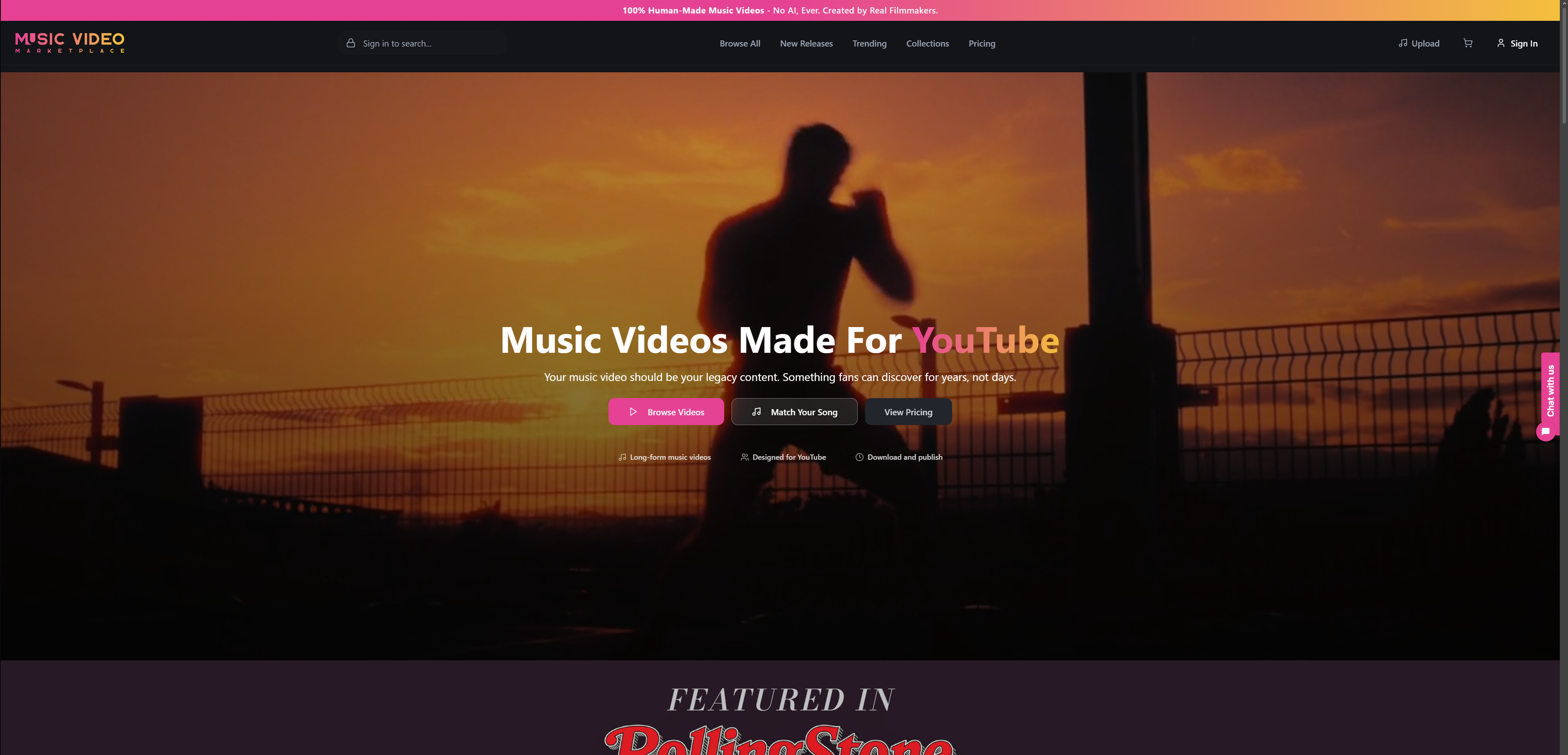
Music Video Marketplace gives independent producers and artists access to professional-grade music videos that are ready to use in ad campaigns. You can create a long-form video in minutes, upload it directly to YouTube, and build your ad campaign around it without the usual production headaches. If you’re serious about getting your music heard in 2026, having the right visual asset is the foundation everything else is built on. Browse the platform and take your campaign to the next level.
Frequently asked questions
How much should I spend on my first video ad as a producer?
Start with a small budget of around £40 to £50, test your targeting and creative, and only increase spend once you see consistent results.
What’s the best targeting approach for music ad campaigns?
Stack 3 to 5 similar artists in your targeting, apply genre and demographic filters, and layer in location targeting to reach the most relevant listeners.
Should I prioritise organic or paid video promotion?
Strong organic content builds genuine connection, but combining paid and organic accelerates visibility faster than either method alone. Test both and let your data guide the balance.
How do I measure a video ad’s success?
Track click-through rate, video view percentages, and streaming platform stats side by side. Steady growth in monthly listeners alongside campaign activity is the clearest sign your ads are working.
Where can I find professional music videos for my campaign?
Platforms such as Music Video Marketplace offer ready-made, high-quality music videos that are built for ad use and easy to deploy across YouTube and social platforms.
Recommended
- Types of Video Ads for Musicians: Boosting Reach | Music Video Marketplace Blog
- Video Ads in Music Promotion: Power for Indies | Music Video Marketplace Blog
- Digital marketing for producers: grow your audience fast | Music Video Marketplace Blog
- Creative video content ideas for producers: boost music promotion | Music Video Marketplace Blog
- Can I Monetize YouTube Channel With Relaxing Music: Tips And Tricks - Orchestral Meditations
Read next
 Video Ads in Music Promotion: Power for IndiesVideo ads in music promotion boost reach and fan engagement. Learn formats, campaign strategies, common mistakes, and budget tips for independent artists.
 Top 4 vizzy.io Alternatives for Music Video Ads 2026Explore 4 vizzy.io alternatives to help decide on music video ad creation platforms for your creative needs and marketing efforts.
 What YouTube ads cost UK advertisers in 2026Discover what YouTube ads cost for UK advertisers in 2026, including average rates, budgeting tips, and key factors affecting expenses.
 Top video ad campaign tips for independent musiciansDiscover proven video ad campaign tips for independent musicians. Learn how to set goals, choose formats, and optimise spend to grow your YouTube audience.
Turn the idea into a finished music video.
Drop your track into the Studio and build your visual in minutes.