
Types of Video Ads for Musicians: Boosting Reach
Types of video ads for musicians, including YouTube, Meta, and TikTok formats. Learn best practices, real-world examples, and how to avoid common pitfalls.
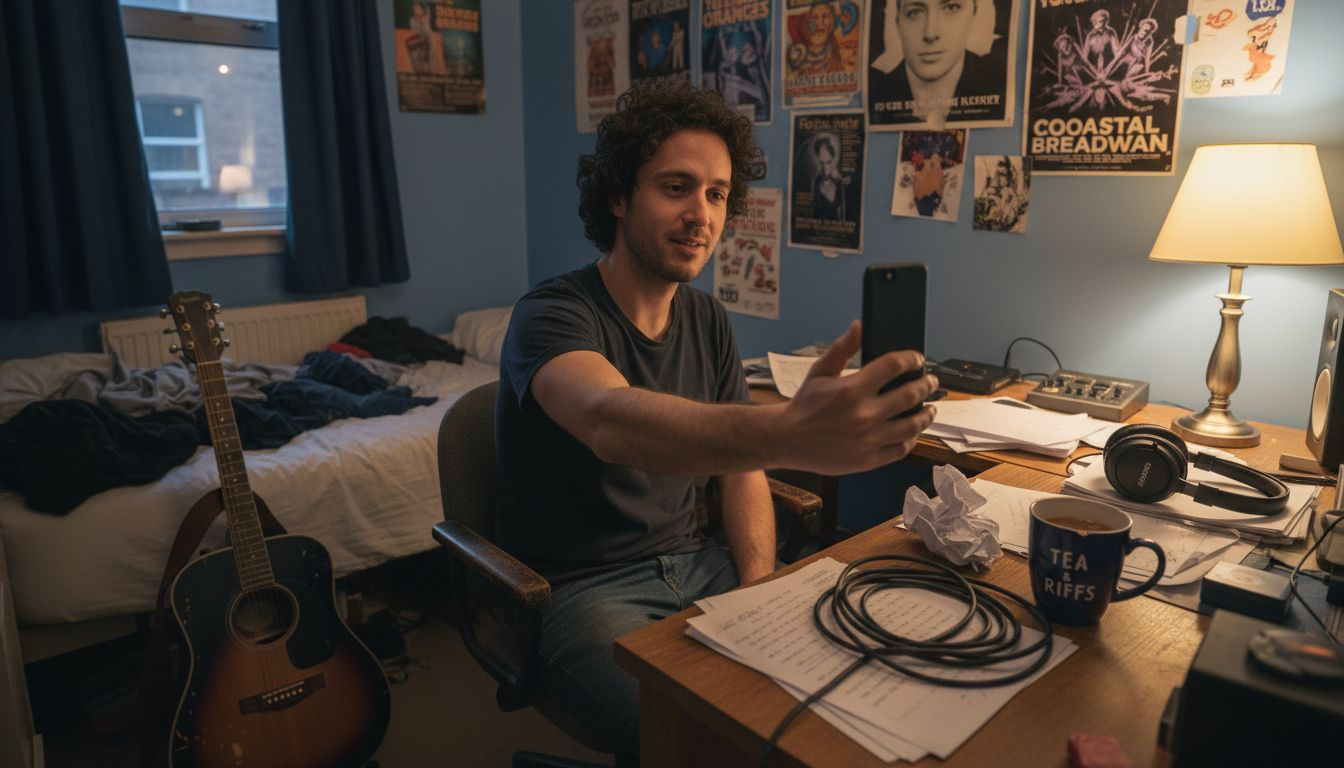
Types of Video Ads for Musicians: Boosting Reach
Reaching new listeners can feel elusive when your music competes in crowded digital spaces. For independent musicians from Brazil to Canada, the ability to create engaging video ads is now a fundamental skill—not a luxury. Platforms such as YouTube, Instagram, and TikTok offer targeted placements and measurable feedback, making video ads work by placing your music in front of listeners at precisely the right moment. This guide breaks down how strategic video ads help you connect authentically and grow your audience efficiently.
Table of Contents
- Video Ads For Musicians Explained
- How Video Ads Connect With Audiences
- Why This Matters For Independent Musicians
- Key Video Ad Formats And Variations
- In-Stream Ads: Captive Audiences
- Out-Stream And Social Media Ads
- Choosing Your Format Strategy
- Platform-Specific Video Ad Strategies
- YouTube And In-Stream Platforms
- TikTok And Short-Form Social Platforms
- Instagram And Facebook Approaches
- Testing And Optimisation Across Platforms
- Crafting Effective Ads: Best Practices
- The Foundation: Message And Identity
- Strategic Storytelling And Pacing
- Authenticity And Platform-Appropriate Content
- Testing And Iteration
- Costs, Pitfalls, And Common Mistakes
- Understanding True Advertising Costs
- Critical Pitfalls To Avoid
- Smart Budget Management Strategies
Key Takeaways
| Point | Details |
|---|---|
| Targeted Video Ads | Video ads strategically place your music in front of listeners most likely to engage based on data and algorithm insights, enhancing promotional effectiveness. |
| Engagement Metrics | Independent musicians can start with a low daily budget, test various ads, and optimise campaigns based on measurable engagement and click-through rates. |
| Platform-Specific Strategies | Tailor video content for each platform’s unique audience behaviour and expectations to maximise engagement and conversion rates. |
| Authenticity and Messaging | Your ads should feel genuine and connect emotionally with viewers while clearly conveying your identity and call to action. |
Video Ads for Musicians Explained
Video ads for musicians are promotional videos designed to reach listeners across digital platforms, driving awareness and engagement with your music. These aren’t traditional advertisements in the classic sense, but rather strategic video content that platforms like YouTube, Instagram, and TikTok use to promote your songs to targeted audiences who match your listener profile. Video ads serve to promote music and artists by combining visual storytelling with your music, creating a multi-sensory experience that catches attention in crowded digital spaces.
At their core, video ads work by placing your music in front of listeners at precisely the right moment. When someone watches a YouTube video or scrolls through social media, your ad appears, introducing them to your song before they’ve even searched for it. This targeted placement means you’re reaching people with genuine interest in music within your genre, rather than broadcasting to everyone blindly. The key difference from random promotion is that these ads use listener data, search behaviour, and platform algorithms to ensure your music reaches the ears most likely to connect with it.
How Video Ads Connect With Audiences
The magic of video ads lies in combining three essential elements:
- Visual content that captures attention within the first 3 seconds
- Your music playing throughout, making an emotional connection
- A clear call to action directing listeners to your streaming platform or website
Unlike passive social media posts, video ads actively interrupt someone’s digital experience, which means your content must work harder to hold attention. Music marketing for independent artists centres on consistency, identity building, and engaging audiences through strategic video ad releases, particularly when launching singles. This means your video ad must instantly convey who you are as an artist, why someone should care about your music, and what action you want them to take next.
When you upload a long-form video to YouTube and create an ad campaign for your song, the platform’s algorithm analyses viewer behaviour patterns, watch time, and engagement metrics. It then distributes your ad to audiences showing similar characteristics to your current listeners. Someone who frequently watches indie folk content will see your ad differently than someone who prefers electronic music, because the platform knows what engages each audience segment.
Why This Matters for Independent Musicians
Traditional radio and television advertising remain prohibitively expensive for most independent musicians. Video ads democratise music promotion by letting you control your budget, set your daily spend, and only pay when people actually engage with your content. You’re not locked into expensive packages or long-term commitments. Instead, you can start with a small campaign, measure results, and scale up what works.
Your video ad campaign only succeeds when it stops feeling like an advertisement and starts feeling like a preview of something worth discovering.
The statistics matter here: musicians who use video ads to launch singles see engagement rates ranging from 2-8%, depending on creative quality and audience targeting accuracy. That’s substantially higher than traditional email newsletters or social media posts, where engagement typically sits below 1%. When you combine this with minimal production costs using tools that generate long-form videos in minutes, the return on investment becomes genuinely compelling.
Another crucial advantage is measurable feedback. Within 48 hours of launching an ad campaign, you’ll know exactly how many people clicked through, how long they watched your video, whether they visited your streaming page, and what devices they used. This data reveals whether your creative approach resonates or needs adjustment. You’re not guessing at effectiveness; you’re watching real listener behaviour in real time.
Pro tip: Start your first video ad campaign with a budget of just £5-10 daily whilst testing different creative angles, then scale to higher budgets once you identify which video style and messaging generates the strongest click-through rates and listener conversions.
Key Video Ad Formats and Variations
Not all video ads work the same way. Different platforms, different audience behaviours, and different campaign goals call for different ad formats. Understanding which format suits your music and your target listeners makes the difference between an ad that gets ignored and one that sparks genuine interest. The good news is that you don’t need to master every format, just the ones that align with where your listeners spend their time.
The primary video ad formats fall into distinct categories based on how they appear to viewers. In-stream ads play before, during, or after someone watches video content—think YouTube ads that roll before a music video. Out-stream ads appear in non-video environments like news articles or social media feeds, embedded within other content. Video advertising formats include in-stream ads, out-stream ads, and social media reels, each with specific strengths depending on your goals. Then there are social media native ads, which appear directly in the feed of platforms like Instagram, TikTok, and Facebook, designed to feel like organic content rather than disruptive advertisements.
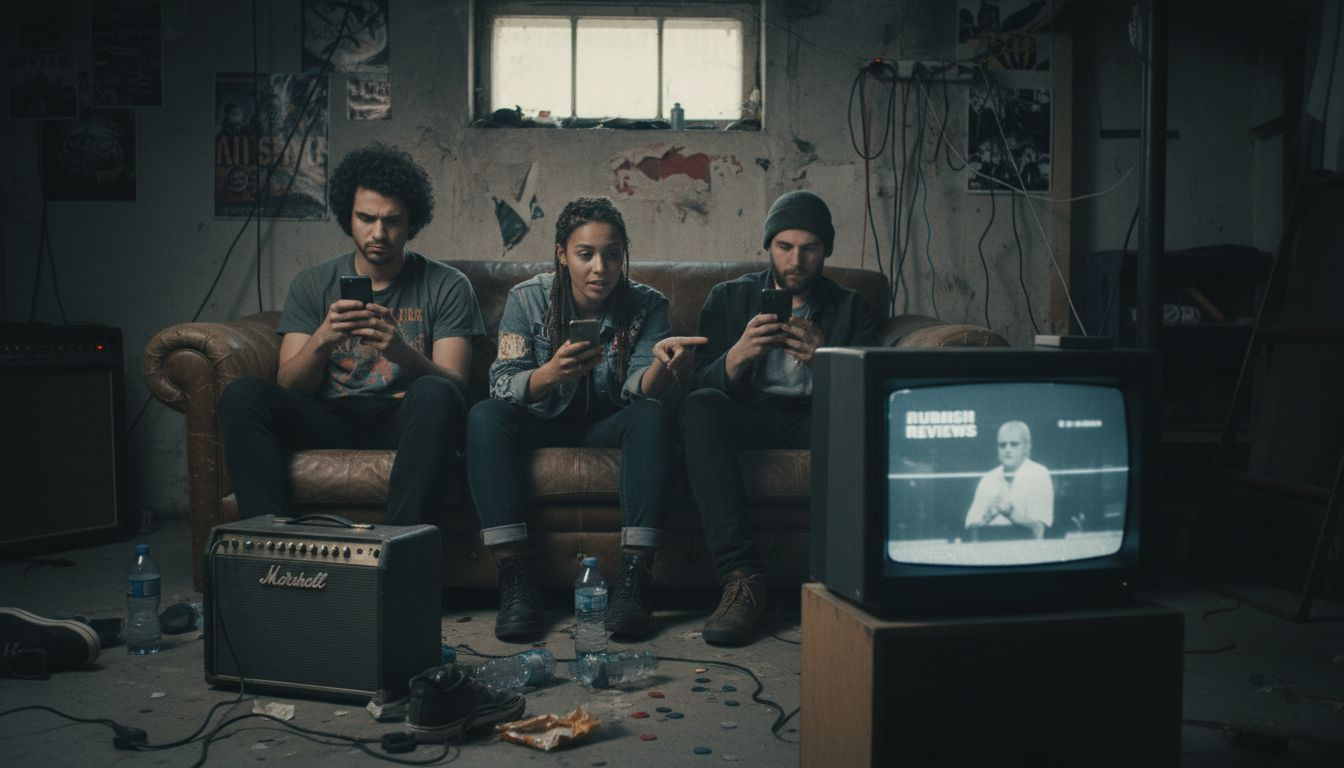
In-Stream Ads: Captive Audiences
In-stream ads work best when you’re targeting listeners already engaged with music content. Someone watching a music video on YouTube is primed to discover new artists—they’re actively seeking music, and your ad appears at precisely that moment. The listener hasn’t scrolled away or minimised the window; they’re watching voluntarily.
These ads come in two varieties:
- Skippable in-stream ads let viewers skip after 5 seconds, meaning your opening frames must hook them immediately
- Non-skippable in-stream ads run for 15-20 seconds, giving you more time to tell your story but risking viewer frustration
For independent musicians, skippable ads typically perform better. You only pay when someone watches at least 30 seconds or completes your ad, whichever comes first. This means poor ads don’t drain your budget—viewers simply skip them. Your job becomes making those first 5 seconds impossible to skip past. Most successful music ads open with a striking visual, a compelling hook in the music itself, or both simultaneously.
When you upload a long-form video to YouTube and create an ad campaign, in-stream placement gives you access to YouTube’s massive audience and sophisticated targeting capabilities. You can reach listeners based on their watch history, search behaviour, and even the specific videos they’ve watched recently.
Your first 5 seconds determine whether someone skips or watches—make them count by leading with your hook, not your chorus introduction.
Out-Stream and Social Media Ads
Out-stream ads live outside traditional video platforms, appearing in articles, mobile apps, or between social media content. These formats work differently because viewers didn’t seek out video content. Your ad must interrupt their activity and convince them to engage despite the distraction. This requires even stronger visual hooks and faster storytelling.
Social media native ads function as promotional content within the platforms where your audience already spends time. Video advertising tools for musicians include targeted social media ads and story ads tailored for platform algorithms. Instagram Stories ads, TikTok ads, and Facebook video ads use vertical video format, tight editing, and platform-native features like stickers or captions.
These platforms excel at micro-targeting. You can reach listeners who’ve interacted with similar artists, followed music-related accounts, or even engaged with your previous content. The algorithmic nature means the platform automatically shows your ad to users most likely to engage—machine learning does the targeting work for you.
Choosing Your Format Strategy
The decision comes down to three factors:
- Where your target listeners spend time – Are they watching YouTube videos, scrolling TikTok, or reading music blogs?
- Your budget constraints – In-stream YouTube ads often cost less per view than social media ads, but rates vary by region and season
- Your creative strengths – Do you have a 15-second banger moment, or do you need 30 seconds to build atmosphere?
Most successful independent musicians don’t pick just one format. They test across multiple formats simultaneously, measure which generates the strongest engagement and lowest cost per click, then allocate more budget to winners. A campaign might run skippable in-stream ads on YouTube whilst simultaneously testing TikTok ads and Instagram Stories, then double down on whichever format produces the cheapest listener conversions.
Pro tip: Start with in-stream YouTube ads using your 15-20 second song hook, then measure which viewer segments engage most, and expand into social media formats targeting those same listener demographics for reinforcement across multiple platforms.
Platform-Specific Video Ad Strategies
Every platform operates differently. What works brilliantly on YouTube falls flat on TikTok. What engages Instagram audiences might bore listeners on Facebook. Each platform has its own culture, algorithm, audience behaviour, and technical requirements. Rather than treating video ads as one-size-fits-all content, successful independent musicians customise their approach for each platform where they advertise. This doesn’t mean creating entirely new videos for each platform—it means understanding how to optimise the same core content for different environments.
The key distinction is how each platform’s algorithm prioritises content and what behaviours viewers expect. YouTube users arrive with explicit intent to watch video content, meaning they’re patient and receptive. TikTok users scroll rapidly through feeds, requiring immediate visual impact. Instagram users expect polished, aesthetically consistent content. Facebook users often consume content whilst multitasking, so ads need to work with sound off. Video ads in music promotion require understanding how each platform distributes content to listeners differently, affecting your creative approach and targeting strategy.
YouTube and In-Stream Platforms
YouTube’s algorithm prioritises watch time and engagement. Your video ad succeeds when viewers complete it, leave comments, or click through to your streaming pages. The platform rewards longer engagement, so you can use more narrative space than on TikTok.
Optimise your YouTube strategy with these specific tactics:
- Hook viewers in 3 seconds with your strongest visual or musical moment—the algorithm tracks when people skip, and early skips hurt your campaign performance
- Build atmosphere gradually if your song has a slow intro; YouTube viewers will wait for payoff if the opening shows promise
- Include clear calls to action at the end directing viewers to your Spotify, Apple Music, or official website
- Use keyword-rich titles and descriptions so YouTube’s system can match your ad to relevant audience searches
YouTube’s targeting capabilities run deeper than most platforms. You can target by viewing history, search queries, and even specific competitor artists. If listeners watch similar artists regularly, YouTube can find them. This precision targeting means your budget stretches further—you’re not paying to reach random people, but specifically those predisposed to your genre.
YouTube viewers arrived seeking music; TikTok viewers stumbled upon your content. Respect that difference in your creative approach.
TikTok and Short-Form Social Platforms
TikTok demands vertical video format, rapid editing, and visual novelty. Users swipe through content at speed, so static shots bore them immediately. Your opening frame has roughly one second to stop a scroll—longer than YouTube’s 3-second window feels sluggish here.
TikTok’s algorithm doesn’t care about your budget; it tests every ad with a small audience first, then amplifies content that generates genuine engagement. This means a low-budget, creative ad sometimes outperforms expensive production if the content resonates.
Key TikTok strategies include:
- Vertical video exclusively—horizontal videos perform worse because they don’t fill the screen
- Fast cuts and transitions every 1-2 seconds to maintain momentum
- Trending sounds and effects, but layered with your own music to create unique appeal
- Relatable hooks that connect emotionally rather than promotion-focused messaging
- Behind-the-scenes or authentic moments that feel less like advertisements
TikTok’s younger demographic skews towards artists with personality and authenticity. Over-produced ads feel corporate and get ignored. Your best TikTok ads often feel like content your listeners would share, not something a brand created.
Instagram and Facebook Approaches
Instagram emphasises visual aesthetics and community. Your ad should complement the platform’s feed visually whilst standing out. Instagram users expect polished content with consistent colour grading and composition.
Facebook’s older demographic and multitasking-heavy usage means your ad must work without sound. Include text overlays, captions, or visual storytelling that communicates your message even if viewers scroll past with audio muted.
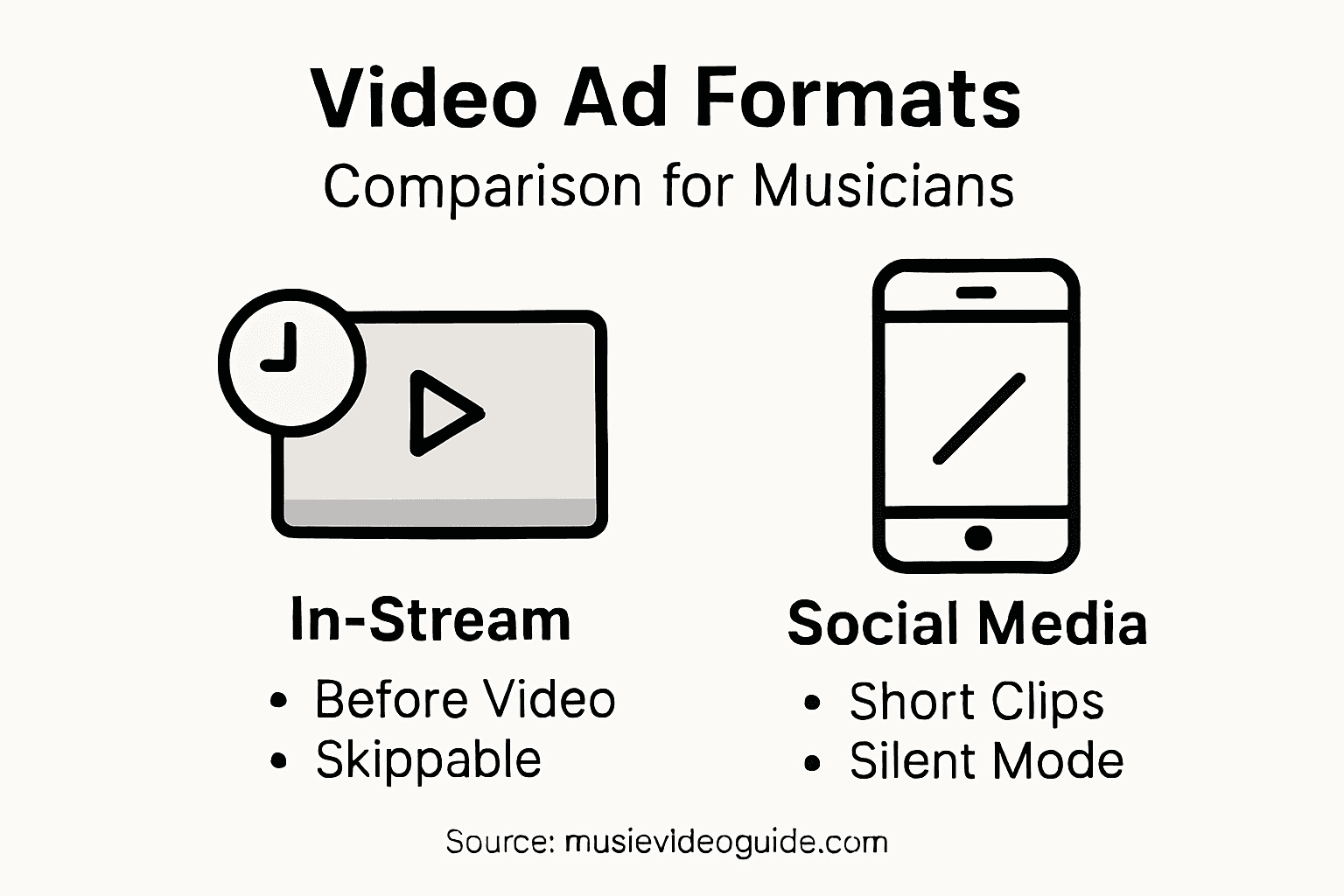
Both platforms offer sophisticated audience targeting based on interests, behaviours, and demographics. You can target by age, location, and interests in specific genres or competing artists. This precision helps you reach your ideal listener without wasting budget on uninterested audiences.
Here’s a comparison of major video ad platforms for musicians:
| Platform | Ideal Video Length | Audience Behaviour | Key Strength |
|---|---|---|---|
| YouTube | 15-30 seconds | Intent to discover music | Detailed targeting |
| TikTok | 6-15 seconds | Fast scrolling, casual | Viral potential |
| 10-30 seconds | Visual focus, social feed | Visual aesthetics | |
| 15-30 seconds | Multitasking, sound muted | Broad demographic |
Testing and Optimisation Across Platforms
Don’t assume one platform will dominate your results. Run small test campaigns simultaneously across YouTube, TikTok, and Instagram for 3-5 days, then measure which generated the lowest cost per click and strongest engagement. Shift budget toward winners and pause underperformers. Platform performance varies by song genre, target demographic, and even season.
Pro tip: Run simultaneous test campaigns across three platforms with identical daily budgets (£3-5 each), measure which platform generates the cheapest clicks and highest listener conversion rates within one week, then reallocate your full budget to the platform delivering results.
Crafting Effective Ads: Best Practices
Creating a video ad that stops scrolls and converts listeners requires understanding what actually works. Your ad isn’t a music video—it’s a persuasion tool disguised as content. The distinction matters. A music video tells your artistic story. An ad solves a problem for the viewer: discovering new music that resonates with them. When you upload a long-form video to YouTube and create an ad campaign, you’re selecting a portion of that content and reshaping it for promotional purposes. The best ads feel natural, not forced.
Start with clarity. Your viewer has three seconds before they skip or scroll past. Within those three seconds, they need to understand three things: that this is music content, who you are as an artist, and why they should care. This doesn’t mean cramming information—it means choosing visuals and opening moments that communicate instantly. Building emotional connections through music in video ads enhances audience engagement and brand recall, so your opening should trigger an emotional response rather than a rational one. A striking visual paired with your song’s hook works better than text overlays explaining who you are.
The Foundation: Message and Identity
Every effective ad rests on a single clear message. Not multiple messages—one. Are you promoting a single track, an album, or your artist brand generally? Choose one focus. When you dilute messaging across different angles, nothing lands effectively. Your listener remembers nothing instead of remembering something.
Consistent branding makes this clearer. Your ad should reflect your artist identity across visual style, colour palette, and tone. If your music feels moody and introspective, your ad shouldn’t look bright and chaotic. If you’re promoting upbeat pop, static shots feel wrong. This consistency builds recognition—when someone encounters your ad multiple times across different platforms, they immediately know it’s you.
Message clarity includes:
- One primary call to action (stream on Spotify, pre-order album, visit website)
- Visual consistency with your existing artist brand and social media presence
- Authentic representation of your actual music and artistic identity
- Clear value proposition explaining why this listener should invest their time
Your ad succeeds when viewers feel they discovered something, not when they feel sold something.
Strategic Storytelling and Pacing
Storytelling doesn’t require a narrative arc with characters and plot points. It means taking viewers on a journey emotionally. The journey might be: curiosity (opening hook), investment (building atmosphere), payoff (satisfying moment), action (clear next step). This structure works whether your ad is 6 seconds or 30 seconds.
Pacing matters intensely. Your ad’s energy should match your music’s energy. A slow, atmospheric track works poorly cut to rapid editing. A high-energy dance track feels sluggish with long static shots. When you edit your ad, let the music dictate the rhythm. Changes in camera angle, cuts, and transitions should align with musical moments—a beat drop, a vocal entry, a chord change.
Editing techniques that improve performance:
- Cut on musical beats to create visual synchronisation with your audio
- Vary shot types (wide, medium, close-up) every 2-3 seconds to maintain visual interest
- Use colour grading to establish mood and maintain visual consistency
- Layer text sparingly only to reinforce key messages, not explain them
- End with clear branding showing your artist name, song title, and where to listen
Authenticity and Platform-Appropriate Content
Effective music marketing strategies maintain artistic authenticity whilst achieving promotional goals. Your listeners can sense when you’re trying too hard. The best ads show something genuine—a live moment, a studio session, behind-the-scenes footage, or you simply enjoying your own music. This authenticity builds trust and connection that slick, corporate-feeling ads never achieve.
However, authenticity varies by platform. YouTube audiences accept more polished production. TikTok audiences prefer rougher, more candid content. Instagram values aesthetic consistency. Your ad should feel authentic to your actual self, but formatted appropriately for where it appears.
Conversely, avoid these common mistakes:
- Overexplaining your music through dialogue or text overlays
- Misaligning visuals with audio (slow visuals paired with fast music feels discordant)
- Using generic stock footage that could promote any artist
- Lengthy introductions before your actual song begins
- Unclear calls to action leaving viewers uncertain what to do next
Testing and Iteration
Your first ad won’t be perfect. Successful independent musicians treat their first campaign as a test. Launch your ad, monitor performance metrics (click-through rates, view duration, cost per click), identify what worked and what didn’t, then create variations addressing weak points. If viewers skip within the first 5 seconds, your opening needs work. If they click through but don’t stream your song, your landing page or messaging needs adjustment.
Measurable improvements compound. A small increase in click-through rate (from 1.5% to 2.2%) might seem minor but represents 47% better performance. Over thousands of ad impressions, that difference transforms your campaign results dramatically.
Pro tip: Create three variations of your ad with different opening moments (hook first, visual first, character moment first), run them simultaneously for one week, then double the budget for whichever variation generates the lowest cost per click.
Costs, Pitfalls, and Common Mistakes
Video advertising isn’t free, but it doesn’t require a major budget either. Many independent musicians stumble not because they spent too much money, but because they spent poorly. Understanding where costs hide and which mistakes drain budgets without generating results transforms your campaign from expensive experiment into efficient investment.
The most expensive mistake isn’t overspending—it’s spending without measurement. You could budget £500 monthly and waste every penny by targeting too broadly, using weak creative, or running ads on the wrong platform for your music. Conversely, you could spend £50 monthly strategically and generate meaningful listener growth. The difference lies in understanding common pitfalls before they drain your resources. Common pitfalls in music advertising campaigns include misallocating budgets, targeting too broadly, and neglecting platform-specific nuances that cause costs to escalate without strategic planning.
Understanding True Advertising Costs
Video ad costs vary dramatically by platform, geography, and season. YouTube in-stream ads might cost £0.10-0.30 per view in Western markets, whilst TikTok ads average £0.50-2.00 per thousand impressions. Instagram and Facebook typically fall between these, around £0.50-1.50 per thousand impressions. These figures fluctuate constantly based on demand and competition.
What matters more than the absolute cost is cost per result—how much you pay for each listener who actually clicks through to your streaming page. A £500 campaign generating 50 listener clicks costs £10 per click. A £100 campaign generating 5 clicks also costs £10 per click. Budget size matters less than efficiency.
Budget allocation typically breaks down as:
- Daily spend starting point: £5-15 daily for testing new ads or platforms
- Scaling threshold: Once you identify high-performing ads, increase to £25-50 daily
- Mature campaigns: Successful musicians often maintain £50-200 daily across multiple platforms
- Seasonal spikes: Pre-release campaigns may justify temporary increases to £100-300 daily
These aren’t requirements—they’re starting points. Even £2-3 daily teaches you valuable data if you measure carefully.
Here is a summary of common video ad cost metrics for independent musicians:
| Metric | Typical Range (GBP) | What It Measures |
|---|---|---|
| Cost per View | £0.10–0.30 (YouTube) | Each time an ad is viewed |
| Cost per 1,000 Impressions | £0.50–2.00 (TikTok, IG, FB) | Cost to reach 1,000 people |
| Cost per Click | £8–15 (varies widely) | Average cost per platform click |
| Daily Testing Budget | £5–15 | Suggested minimum during testing |
The costliest mistake isn’t spending money; it’s spending money without tracking what returns it generates.
Critical Pitfalls to Avoid
Targeting too broadly destroys efficiency. When you target “all music lovers” or set age ranges spanning 18-65, you’re wasting impressions on people unlikely to stream your specific genre. Narrow targeting costs less because fewer people see your ad, but those who do are genuinely interested. Tight targeting typically outperforms broad targeting by 200-400% in conversion rates.
Platform mismatch wastes money instantly. Running a 30-second narrative ad on TikTok where users expect 6-15 second content feels foreign and gets skipped. Running vertical video on YouTube where horizontal performs better underutilises screen space. Each platform demands format alignment. Testing ads on every platform without platform-specific optimisation burns budget without learning.
Weak creative compounds costs exponentially. An ad with poor opening hooks, unclear messaging, or misaligned visuals generates low click-through rates. You pay the same cost-per-view whether viewers skip at 2 seconds or watch completely. Poor creative means paying premium prices for minimal results.
Neglecting audience overlap causes wasted spending. If you run identical ads to identical audiences across YouTube and Instagram simultaneously, you’re probably showing the same listeners your ad multiple times. That repetition either converts them (good) or annoys them (expensive). Coordinate platforms strategically rather than throwing ads everywhere simultaneously.
Additional common mistakes include:
- Setting budgets and forgetting to monitor – allocate time weekly to check performance data
- Running ads indefinitely – pause underperforming ads after 3-5 days, don’t let them drain budget
- Single platform reliance – over-reliance on one platform and misunderstanding advertising costs constrains growth potential
- Inconsistent messaging – jumping between different creative angles confuses audiences
- Ignoring negative feedback – if viewers skip immediately, your opening needs rework
Smart Budget Management Strategies
Start small and scale strategically. Launch with £5-10 daily across one platform for 3-5 days. Measure which ads generate clicks most cheaply. Pause ads underperforming by 50% compared to your best performer. Double the daily budget on top performers. This cycle—test, measure, scale winners, pause losers—repeats continuously.
Allocate budget proportionally to results. If YouTube generates clicks at £8 each whilst TikTok costs £15 per click, shift 60% of budget to YouTube and 40% to TikTok, not 50-50. Let data guide allocation, not assumptions.
Track metrics obsessively:
- Cost per view – total spend divided by ad views
- Click-through rate – clicks divided by views
- Cost per click – total spend divided by clicks
- Conversion rate – clicks that result in streams divided by total clicks
- Cost per conversion – total spend divided by streams generated
These five metrics tell you everything about campaign health.
Pro tip: Set a maximum “cost per click” threshold (typically £5-15 depending on your budget) before launching campaigns, then pause any ad exceeding that threshold within 24 hours, even if it’s early to judge, because ads that perform poorly early rarely improve with time.
Transform Your Music Reach with Powerful Video Ads
Many independent musicians struggle with creating engaging video ads that capture attention quickly and convert viewers into listeners. As explained in “Types of Video Ads for Musicians: Boosting Reach,” the challenge lies in crafting compelling long-form videos that hook audiences within seconds and resonate across platforms like YouTube and social media. With key pain points such as the need for targeted placement, emotional connection through visuals and music, and measuring ad performance, musicians require a streamlined way to produce effective video content without excessive cost or complexity.
Our platform at Music Video Marketplace enables you to create a professional long-form video in minutes that is perfectly suited for launching YouTube ad campaigns. This solution directly addresses the common hurdles of video production, providing you with:
- Fast video creation tailored for music promotion
- Optimisation for in-stream and social media ad formats
- Affordable access without the need for high budgets or specialised skills

Ready to turn your songs into captivating video ads that truly engage listeners and maximise your budget? Visit Music Video Marketplace now and start producing your next campaign with ease. Don’t miss the opportunity to watch your music reach grow with targeted, measurable video advertising that works for you.
Find out how to create and launch your video ad here Create Your Music Video Ad and take control of your music promotion today.
Frequently Asked Questions
What are video ads for musicians?
Video ads for musicians are promotional videos designed to reach listeners across digital platforms, combining visual storytelling with music to create engaging content that promotes songs or artists.
How do video ads effectively connect with audiences?
Video ads connect with audiences by using compelling visuals, emotional music, and clear calls to action that prompt viewers to discover more about the artist or song being promoted.
What are the main types of video ad formats musicians can use?
The primary video ad formats include in-stream ads, which play before or during video content; out-stream ads, which appear in non-video environments; and social media native ads, which are integrated into users’ feeds on platforms like Instagram and TikTok.
Why are video ads beneficial for independent musicians?
Video ads are beneficial for independent musicians because they offer cost-effective promotion, precise targeting based on listener behaviour, and measurable feedback, allowing artists to adjust their strategies based on real-time data.
Recommended
Read next
 Top video ad campaign tips for independent musiciansDiscover proven video ad campaign tips for independent musicians. Learn how to set goals, choose formats, and optimise spend to grow your YouTube audience.
 Video ads for producers: strategies to boost music exposureLearn how to plan, launch, and scale video ad campaigns for your music. A step-by-step guide for independent producers and emerging artists in 2026.
 Video Ads in Music Promotion: Power for IndiesVideo ads in music promotion boost reach and fan engagement. Learn formats, campaign strategies, common mistakes, and budget tips for independent artists.
 Tips for effective song ads: your 2026 guideUnlock success with tips for effective song ads! Learn how to amplify your music through strategic ad spending and organic engagement.
Turn the idea into a finished music video.
Drop your track into the Studio and build your visual in minutes.