
Music promotion in 2026: how the industry evolved
Discover the evolution of music promotion 2026, focusing on algorithmic discovery and community engagement for artists to thrive in a saturated market.

Music promotion in 2026: how the industry evolved
TL;DR:
- Music promotion in 2026 relies heavily on algorithmic discovery, with platforms like TikTok and Spotify shaping engagement strategies. Success depends on creating authentic community connections, consistent releases, and data-informed content, while avoiding inauthentic tactics that risk reputation and discoverability. Building genuine streaming engagement and targeted micro-communities are essential for long-term career growth in the saturated market.
The evolution of music promotion in 2026 is defined by algorithmic discovery, tiered platform strategies, and a decisive shift toward authentic community engagement. Radio play and press coverage no longer determine a song’s fate. Platforms like TikTok, Spotify, and Instagram now control the discovery pipeline, and the rules governing each one are distinct. With 120,000 new songs uploaded daily, the market is saturated beyond anything the industry has previously seen. Artists and labels who understand the new mechanics will reach audiences. Those who rely on outdated methods will not.
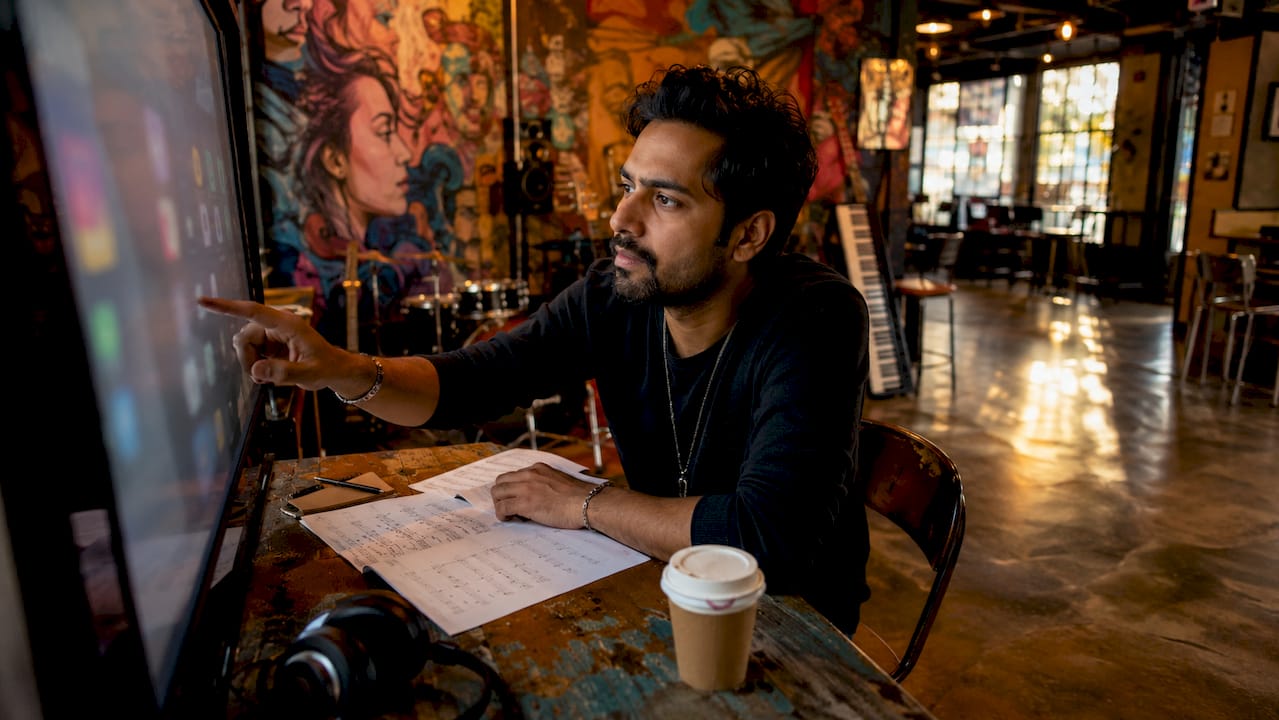
How has the evolution of music promotion in 2026 changed discovery?
The most significant structural shift in music marketing is the replacement of human gatekeepers with algorithmic recommendation systems. Radio programmers, A&R scouts, and music journalists once controlled which songs reached listeners. Algorithms now perform that function at scale, and the implications are profound.
43% of consumers discover music through algorithmic feeds rather than active searching. That figure means nearly half your potential audience will never look for you directly. They will encounter your music only if the algorithm decides to surface it. This changes everything about how you structure a release.
Streaming platforms reward consistency and engagement signals above all else. A track that accumulates saves, playlist adds, and completion rates within its first 48 hours receives a significant algorithmic boost. A track that launches quietly and gains nothing in the first week is effectively buried. The window is narrow and unforgiving.
| Signal | Why It Matters | How to Influence It |
|---|---|---|
| Save rate | Indicates intent to return | Prompt saves in short-form video captions |
| Completion rate | Shows listener satisfaction | Front-load the hook within the first 7 seconds |
| Playlist adds | Signals cultural relevance | Pitch to editorial playlists 3–4 weeks before release |
| Follower growth | Builds long-term algorithmic weight | Cross-promote across platforms consistently |
Record labels have adapted accordingly. Labels now operate as content hubs focused on social media ecosystem participation rather than traditional promotional machines. The A&R process itself has changed. Labels monitor stream engagement thresholds via automated triggers from distributor performance data, meaning an independent artist can attract label interest purely through organic streaming numbers.
Pro Tip: Pitch your track to Spotify editorial playlists at least 7 days before release, with 3–4 weeks being the standard for serious editorial consideration. Submit through Spotify for Artists and include detailed mood, genre, and instrumentation data to give curators the context they need.
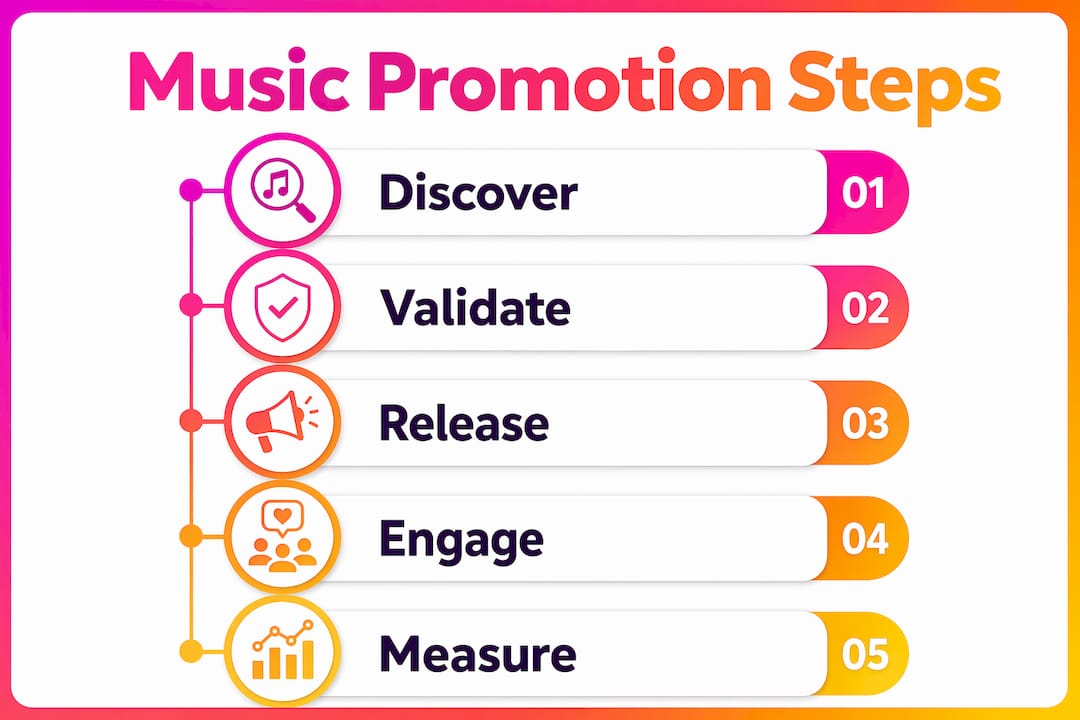
Which platforms drive music promotion trends in 2026?
The tiered platform strategy is the defining framework for music promotion in 2026. TikTok handles discovery, Spotify builds habit and depth, and Instagram converts listeners into community members. Treating all three platforms identically is the most common and costly mistake artists make.
TikTok: Discovery Engine
TikTok operates on audio hooks. A 7–15 second clip that triggers an emotional or physical response is the entry point for viral discovery. The platform’s algorithm does not care about your follower count. A new account with a compelling audio moment can reach millions within 24 hours. Your job on TikTok is to create the moment, not to broadcast your biography.
Spotify: Depth and Habit
Once a listener discovers you on TikTok, Spotify is where the relationship deepens. Playlist placement, radio features, and algorithmic recommendations like Discover Weekly and Release Radar compound over time. Spotify rewards artists who release consistently. The 5–6 week release cycle is the industry standard for maintaining algorithmic favour on the platform.
Instagram: Community Conversion
Instagram turns passive listeners into active fans. Stories, Reels, and direct engagement build the personal connection that sustains a career beyond a single viral moment. The platform’s strength is intimacy, not reach. Use it to show process, share context, and respond directly to the people who already care about your work.
- Post TikTok content natively to TikTok first, then repurpose to Instagram Reels with adjusted aspect ratios
- Use Instagram Stories polls and questions to gather feedback before a release
- Pin your Spotify link in your Instagram bio and update it with every new release
- Avoid cross-posting identical captions across platforms; each platform has a distinct voice and audience expectation
Pro Tip: Validate your hook on TikTok organically before spending a single pound on paid promotion. Paid ads amplify existing traction but cannot manufacture it. A track with zero organic engagement will produce zero return on ad spend.
Why has mass marketing been replaced by micro-communities?
The mass market for music no longer exists as a single addressable audience. Marketing expert Bradford, cited in analysis of 2026 music and film marketing trends, describes the current environment as thousands of micro-communities replacing the broad market. Success now depends on deep engagement within specialised audience clusters rather than shouting at the widest possible crowd.
This shift has practical consequences for how you allocate time and budget. A campaign targeting 10,000 highly engaged listeners within a specific genre community will outperform a campaign targeting 500,000 indifferent general users. Algorithms read engagement quality, not just volume. Genuine interactions from real, identifiable users carry more weight than inflated view counts.
Here is how to build a micro-community strategy that works in practice:
- Identify your cluster. Define the specific genre, mood, or cultural identity your music belongs to. Be precise. “Indie” is not a community. “Lo-fi bedroom pop for late-night study sessions” is.
- Seed, do not broadcast. Share your music within existing communities before you ask them to follow you. Contribute to conversations. Comment on other artists’ work. Earn presence before you claim it.
- Use data to locate your cluster. Spotify for Artists and TikTok Analytics both show you where your existing listeners are geographically and demographically. Use that data to find adjacent communities you have not yet reached.
- Prioritise depth over breadth. One listener who saves every track, attends shows, and shares your music with friends is worth more than 1,000 passive streams. Design your engagement strategy around converting the former, not accumulating the latter.
The impact of social media on music has fundamentally altered the label model too. Signing an artist now requires evidence of community, not just talent. A strong micro-community is the new demo tape.
What are the risks of fake engagement and stealth marketing?
Stealth marketing in music involves creating artificial buzz through bots, fake accounts, and manufactured trend simulations. The appeal is obvious. Inflated numbers look credible, and early momentum can trigger real algorithmic responses. The problem is that fake engagement does not translate to sustainable revenue, and the long-term costs outweigh any short-term gain.
Algorithms on Spotify and TikTok are increasingly sophisticated at identifying inauthentic engagement patterns. Accounts that generate high view counts with low save rates, low comment rates, and no follower conversion are flagged and deprioritised. The result is a track that appears to have momentum but receives no further algorithmic distribution.
“Authentic community building is weighted more heavily by algorithms than stealth marketing views. Engagement from real, identifiable users is what drives recommendation systems forward.” — The Fader, 2026
There is also a cultural dimension to this risk. A growing backlash against manufactured buzz is emerging among listeners and industry professionals alike. Artists who are known to use fake tactics face reputational damage that is difficult to recover from. Conversely, artists who build genuine followings are increasingly celebrated and supported by communities who value authenticity.
- Never purchase streams, followers, or playlist placements from unverified third-party services
- Avoid coordinated inauthentic behaviour such as asking friends to stream a track on repeat from multiple devices
- Report suspicious engagement spikes to your distributor to protect your account standing
- Focus campaign spend on genuine discovery tools such as Spotify Ad Studio or Meta Ads with precise audience targeting
What are the best practical promotion strategies for musicians in 2026?
The most effective approach to music promotion in 2026 combines consistent release scheduling, pre-validated hooks, and data-informed decision-making. Each element reinforces the others, and neglecting any one of them weakens the whole campaign.
| Strategy | Old Approach | 2026 Approach |
|---|---|---|
| Release timing | Album drops every 1–2 years | Singles every 5–6 weeks to maintain algorithmic favour |
| Playlist pitching | Submit at release | Pitch to Spotify editorial 3–4 weeks before release date |
| Paid promotion | Run ads at launch regardless of organic data | Validate hook organically first, then amplify with paid spend |
| A&R discovery | Submit demos to labels directly | Build streaming engagement; labels scout via data thresholds automatically |
| Content strategy | One music video per release | Multiple short-form clips testing different hooks before release |
The pre-validation step deserves particular attention. Posting three to five short-form videos using different moments from your track before the official release date tells you which hook resonates before you spend money amplifying it. The clip that generates the highest save and share rate is the one you build your paid campaign around. This approach eliminates guesswork and protects your budget.
Balancing data with creative instinct remains the central tension in modern music marketing. Data tells you what is working. It does not tell you what is worth making. The artists who succeed long-term are those who use analytics to inform distribution decisions while protecting the creative process from being dictated by metrics. For a deeper look at proven promotion techniques aligned with these principles, the Musicvideomarketplace blog offers practical guidance built for independent artists.
Key takeaways
The evolution of music promotion in 2026 requires algorithmic literacy, platform-specific content strategies, and genuine community engagement to build a sustainable career.
| Point | Details |
|---|---|
| Algorithms replaced gatekeepers | 43% of listeners discover music via feeds, so optimise for engagement signals from day one. |
| Tiered platform strategy is standard | Use TikTok for discovery, Spotify for depth, and Instagram to convert listeners into community. |
| Micro-communities outperform mass reach | Deep engagement within niche clusters drives stronger algorithmic and commercial results. |
| Fake engagement carries real risk | Bot-driven views are flagged by algorithms and damage long-term discoverability and reputation. |
| Validate before you spend | Test hooks organically on short-form video before committing paid budget to any campaign. |
What i have learned from watching promotion evolve in real time
The artists I have seen build lasting careers in this environment share one trait: they treat data as a compass, not a script. They check their Spotify for Artists dashboard and TikTok Analytics every week, but they do not let a low-performing post convince them to abandon a creative direction they believe in. That balance is harder to maintain than it sounds.
The most counterintuitive lesson from 2026 is that slowing down often produces better results than accelerating. Artists who release every 5–6 weeks with genuine creative intent outperform those who flood platforms with content purely to feed the algorithm. Quantity without quality trains your audience to ignore you. The algorithm notices that too.
Viral moments are largely random. I have watched meticulously planned campaigns underperform and throwaway clips reach millions. What separates artists who sustain careers from those who chase moments is the community they build between the spikes. That community is what converts a viral moment into a career. For independent artists looking at music marketing trends with a long-term lens, the fundamentals have not changed: make something real, put it in front of the right people, and keep showing up.
— Music
How Musicvideomarketplace supports your 2026 promotion strategy
The strategies in this article require content, and content requires production. Musicvideomarketplace removes the production barrier entirely.

The platform enables musicians to create a long-form video in minutes, upload it directly to YouTube, and launch an ad campaign for their song without needing a production team or a marketing agency. That means you can validate hooks, test audiences, and run paid campaigns from a single workflow. For artists operating on the 5–6 week release cycle, that speed is not a convenience. It is a competitive necessity. Explore video promotion tools built specifically for the 2026 music industry on Musicvideomarketplace and see how quickly a professional campaign comes together.
FAQ
What is the biggest change in music promotion in 2026?
The shift from human gatekeepers to algorithmic discovery is the defining change. With 120,000 songs uploaded daily, algorithms on Spotify and TikTok now determine which music reaches listeners.
How often should musicians release music in 2026?
The industry standard is every 5–6 weeks. This release cadence maintains algorithmic favour on Spotify and keeps audiences engaged without sacrificing creative quality.
How do i promote music on TikTok effectively?
Focus on the first 7–15 seconds of your track and create short clips that trigger an emotional response. Test multiple hooks before your release date to identify which one generates the strongest save and share rate.
Does paid advertising work for music promotion?
Paid promotion amplifies existing organic engagement but cannot replace it. Validate your hook organically on short-form platforms first, then use tools like Spotify Ad Studio or Meta Ads to scale what is already working.
How are record labels discovering new artists in 2026?
Labels now use automated data triggers from third-party distributors to monitor stream engagement thresholds. Building genuine streaming numbers is the most direct route to attracting label attention today.
Recommended
- 2026 trends in music promotion: what works now | Music Video Marketplace Blog
- Best practices for song promotion in 2026 | Music Video Marketplace Blog
- Music marketing trends shaping success for independent artists | Music Video Marketplace Blog
- Tendances marketing musical 2026 : guide pour pros | Music Video Marketplace Blog
Read next
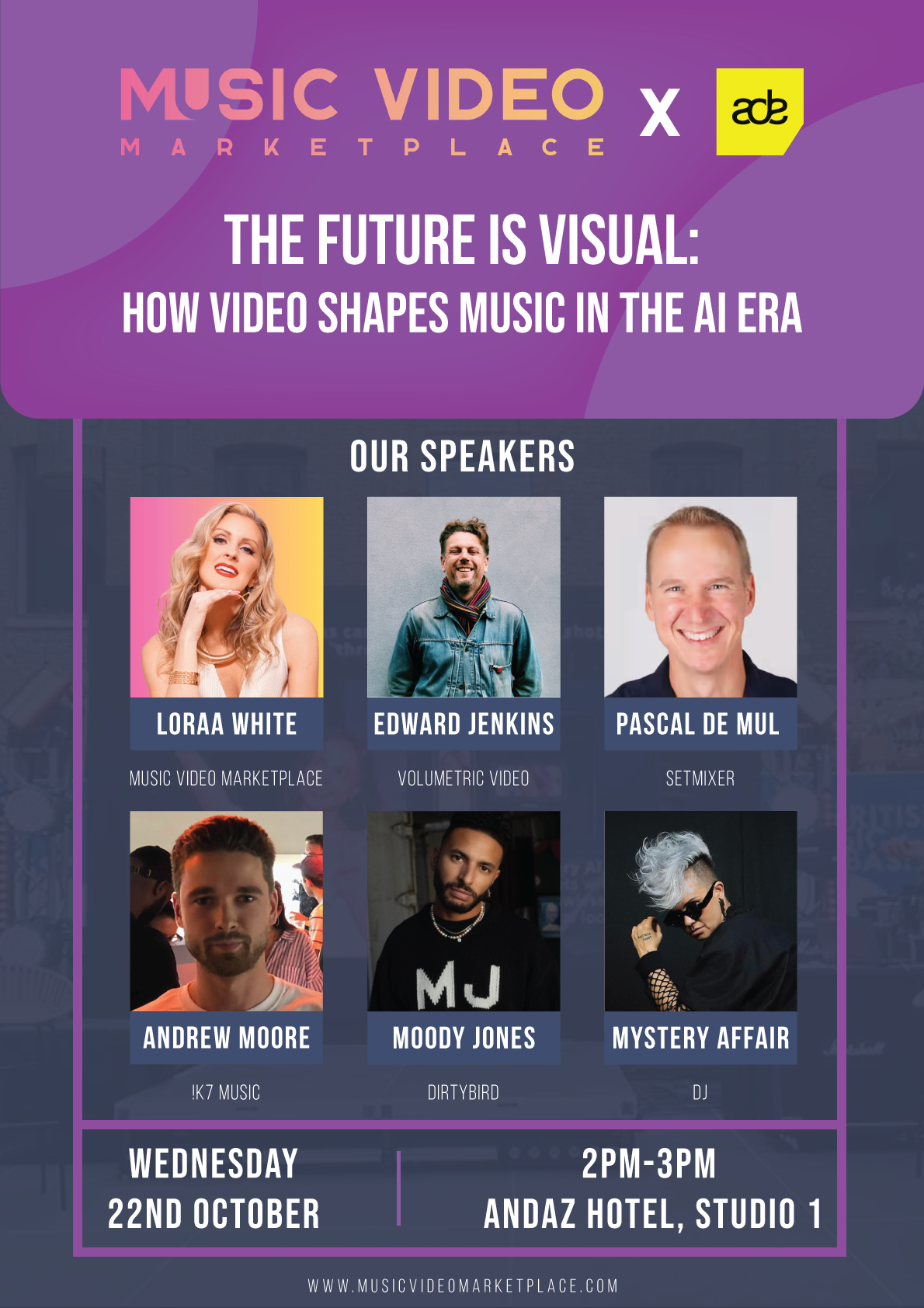 Music Video Marketplace Takes the Stage at ADE AmsterdamMusic Video Marketplace made waves at ADE Amsterdam, hosting a panel on AI, creativity, and the power of human-made music videos. CEO Loraa White and industry experts shared insights, live demos, and inspiration at the Andaz Hotel during the four-day event.
 7 Essential Music Video Trends 2026 for Indie ArtistsExplore 7 crucial music video trends 2026. Discover tips to help independent musicians create standout YouTube campaigns and boost their music promotions.
 Role of video in beat marketing: 2026 guideDiscover the role of video in beat marketing. Boost sales and engagement with effective video strategies that drive conversions in 2026.
 Music marketing trends shaping success for independent artistsDiscover the top music marketing trends shaping success for independent artists in 2026, from video strategies to AI tools and fan community building.
Turn the idea into a finished music video.
Drop your track into the Studio and build your visual in minutes.