
 Try the Workspace
Proven strategies to promote your songs online in 2026
Learn proven strategies to promote your songs online in 2026. A step-by-step guide covering branding, campaign planning, organic tactics, and paid ads for indie artists.
Proven strategies to promote your songs online in 2026
TL;DR:
- Successful music promotion requires consistent branding, verified profiles, and a focused online presence.
- A multi-phase, 30-day campaign builds momentum and improves algorithm support and listener retention.
- Organic growth combined with targeted paid ads and community engagement leads to sustainable success.
You spend months crafting a song, hit upload, and then nothing. No streams, no shares, just silence. It is one of the most demoralising experiences in music, and it happens to thousands of artists every week. The problem is rarely the music itself. Releasing music with no plan almost guarantees it gets buried by algorithms and drowned out by competition. This guide walks you through a proven, step-by-step system covering everything you need to do before, during, and after your release to drive real listener growth and build a fanbase that actually sticks around.
Table of Contents
- Lay the groundwork: brand, channels, and essentials
- Plan your campaign: the multi-phase song release roadmap
- Organic tactics: social media, playlists, and community growth
- Fuel momentum: paid ads and hybrid strategy for real ROI
- Why most indie promotion fails—and what actually moves the needle
- Next steps: boost your releases with Music Video Marketplace
- Frequently asked questions
Key Takeaways
| Point | Details |
|---|---|
| Campaigns need planning | Effective song releases are built around a multi-week campaign, not one-off posts. |
| Focus platforms wisely | Pick two or three channels where your fans are active for maximum impact with less effort. |
| Hybrid approach wins | Combining organic and paid tactics delivers more reliable reach and better fan engagement. |
| Measure and optimise | Track save rates, listens, and conversions to continually refine your strategy for each release. |
Lay the groundwork: brand, channels, and essentials
Before you promote a single note, your online presence needs to be solid. Think of it like a shop window. If it looks inconsistent or unfinished, people walk past. The first step is claiming and verifying your artist profiles on every major platform, starting with Spotify for Artists and YouTube Studio. Verified profiles unlock analytics, allow you to pitch to editorial playlists, and signal to listeners that you are the real deal.
Consistency across platforms matters more than most artists realise. Your cover art, bio, and social handles should look and feel like they belong to the same person. Consistent branding and claimed profiles raise your credibility significantly, and email lists deliver 30 to 50% open rates compared to just 2 to 5% for social media posts. That gap is enormous. An email list is one of the most underused tools in independent music promotion.
When it comes to social channels, spreading yourself thin is a trap. Pick two or three platforms where your target listeners actually spend time, and focus your energy there. For most independent artists in 2026, that means some combination of TikTok, Instagram, and YouTube. The music promotion essentials you need to lock in before launch include:
- A verified Spotify for Artists and YouTube channel
- Matching profile photos, bios, and cover art across all platforms
- A simple email sign-up landing page or link in bio
- Two or three active social channels with recent posts
- A press photo and a short artist bio ready to share
| Foundation element | Why it matters |
|---|---|
| Verified artist profiles | Unlocks analytics and editorial pitching |
| Consistent visual branding | Builds trust and recognition |
| Email list | 30 to 50% open rates vs 2 to 5% on social |
| Focused platform selection | Deeper engagement over shallow reach |
Pro Tip: Set up your email list before your release date. Even 50 subscribers who genuinely want your music are worth more than 5,000 passive social followers.
Plan your campaign: the multi-phase song release roadmap
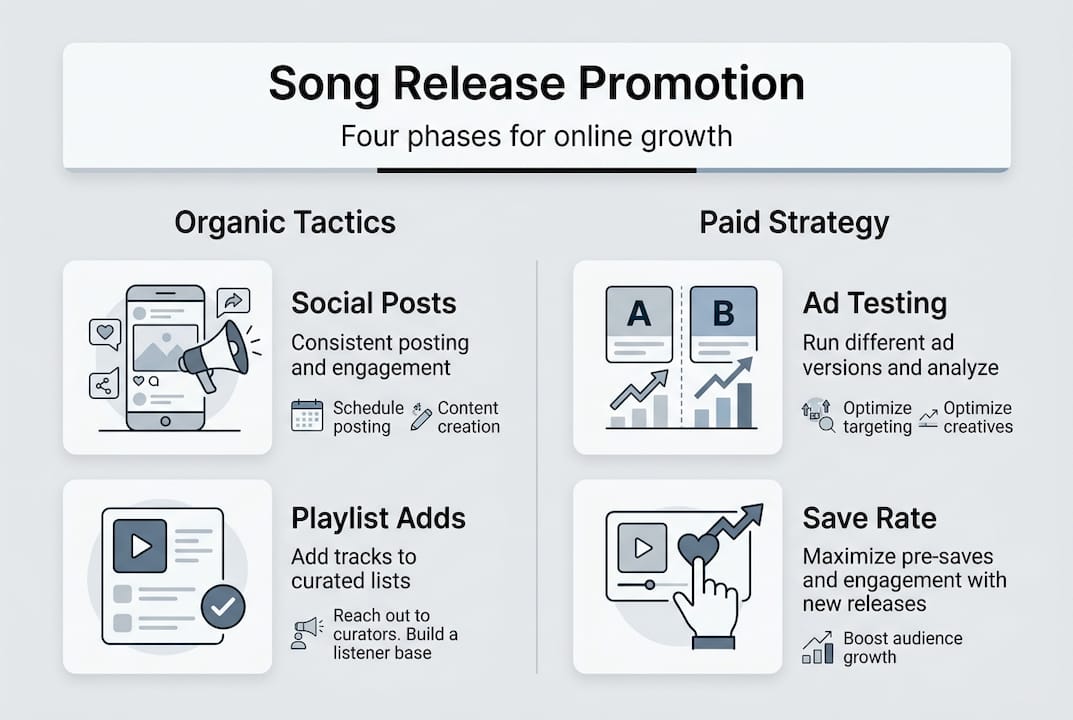
Releasing a song without a campaign plan is like throwing a party and forgetting to send invitations. A structured timeline creates momentum, feeds algorithms, and gives your audience multiple touchpoints to connect with your music. A 30-day release campaign broken into four phases consistently performs best for streaming algorithms.
Here is how those phases break down in practice:
- Awareness phase (weeks one and two before release): Share teasers, short clips, and behind-the-scenes content. Build curiosity without revealing everything.
- Pre-save phase (one week before release): Push pre-save links hard across all channels. Ask your email list first, then social followers.
- Release phase (launch day and the following three days): Post across every platform, engage with every comment, and encourage shares actively.
- Post-release phase (weeks two to four after release): Repurpose content, pitch to playlist curators, and keep the conversation alive with new angles on the song.
The difference between a rushed and a planned campaign is stark. Artists who post once on release day and go quiet rarely see algorithmic support. Platforms like Spotify and TikTok reward sustained engagement over time, not a single spike.
| Campaign type | Algorithm support | Listener retention | Typical result |
|---|---|---|---|
| Rushed, single-day push | Low | Poor | Minimal streams |
| Planned, multi-phase | High | Strong | Sustained growth |
Exploring digital marketing steps and studying creative campaign examples from other independent artists can spark ideas for your own timeline.
Pro Tip: Allow at least four weeks from your first teaser post to your release date. Anything shorter rarely gives algorithms enough time to build meaningful momentum.
Organic tactics: social media, playlists, and community growth
Organic promotion is the foundation of any sustainable music career. It costs time rather than money, and when done well, it builds genuine fans rather than passive listeners. The key is focus. Trying to be everywhere at once leads to burnout and mediocre content on every channel.
Posting three to five times per week, split between music clips, behind-the-scenes content, and promotional posts, keeps your audience engaged without overwhelming them. A practical content split to follow is 40% music clips, 40% behind-the-scenes or personal content, and 20% direct promotional posts. Repurpose the same content across platforms by adjusting the format rather than creating everything from scratch.
Playlist pitching is one of the highest-leverage activities for streaming growth. Spotify editorial pitching works best when submitted at least seven days before your release date, and pre-saves on that same day signal popularity to the algorithm. For independent playlist curators, platforms like SubmitHub and Groover let you pitch directly to real humans who run genre-specific playlists.
“The artists who grow fastest are not necessarily the most talented. They are the most consistent and the most willing to engage directly with their community.”
Community engagement is often overlooked. Replying to comments, sending personalised DMs to new followers, and collaborating with artists in your genre all compound over time. Tips for growing your YouTube audience and YouTube distribution tips are worth studying if video is part of your strategy. For maximising engagement once your videos are live, video engagement tips can help you get more from every upload.
- Pitch to Spotify editorial at least seven days pre-release
- Use SubmitHub or Groover for independent playlist placements
- Reply to every comment in the first 24 hours after posting
- Collaborate with artists in adjacent genres for cross-promotion
- Repurpose video clips, lyrics cards, and behind-the-scenes reels
Fuel momentum: paid ads and hybrid strategy for real ROI
Organic promotion builds the foundation, but paid advertising can accelerate your reach dramatically when timed correctly. The mistake most artists make is running paid ads before they have any organic traction. Algorithms use engagement signals to decide who to show your ads to. Without those signals, your budget gets wasted on cold audiences who have no context for your music.
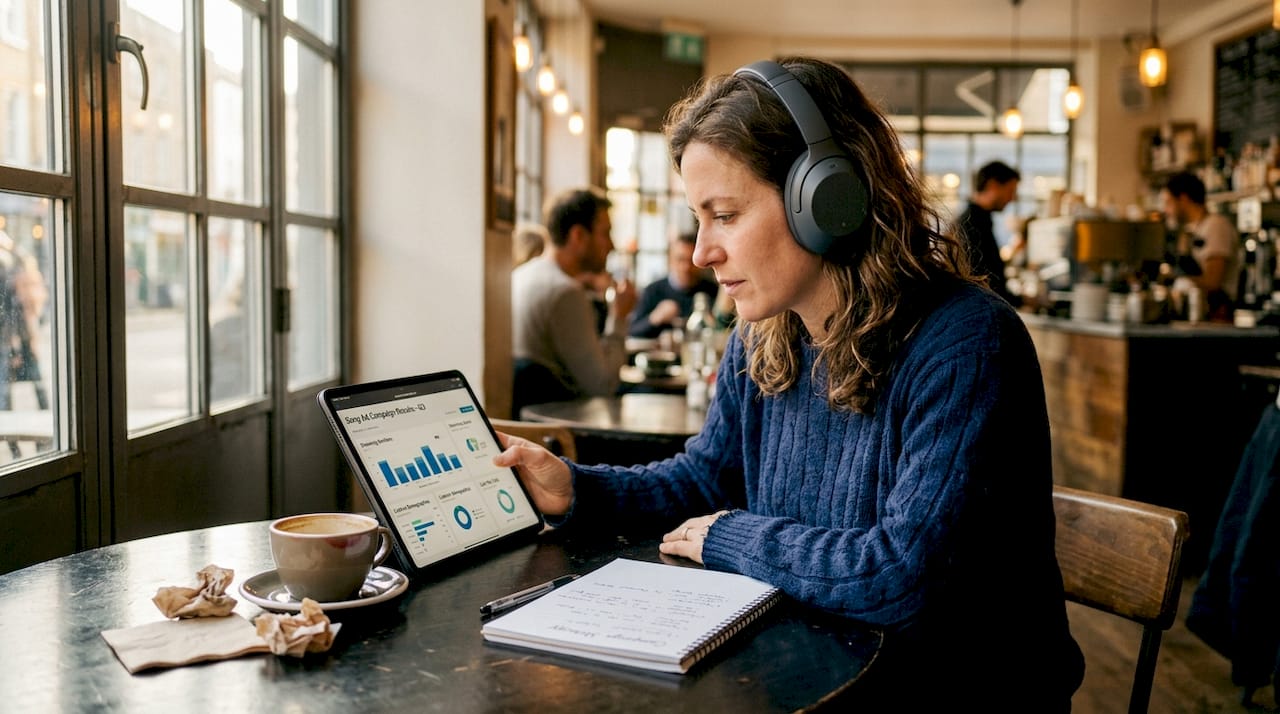
The right time to introduce paid ads is after your organic content has generated some saves, shares, and comments. Start with a modest budget. Paid ads on Meta, TikTok, and YouTube work best after an organic foundation is in place, and hybrid campaigns consistently achieve better algorithm placement than paid-only approaches.
Here is a simple process for launching your first paid campaign:
- Choose your best-performing organic post as your ad creative
- Set a daily budget of £5 to £10 and run for at least seven days
- Target by music taste, age, and geography rather than broad interests
- Monitor save rate, cost per stream, and repeat listens daily
- Scale only the ad sets that hit a save rate above 3%, which yields four times the performance and means 60% of hybrid campaigns turn ROI positive
| Metric | Target benchmark | What it signals |
|---|---|---|
| Save rate | Above 3% | Strong listener intent |
| Cost per stream | As low as possible | Ad efficiency |
| Repeat listens | Rising over time | Fan quality |
| Listener conversion | Playlist adds and follows | Long-term growth |
Exploring proven ad campaign strategies and understanding digital promotion explained in depth will help you make smarter decisions with every pound you spend.
Pro Tip: Test two different ad creatives with a small budget before committing. The one with the higher save rate in the first 48 hours is almost always the winner at scale.
Why most indie promotion fails—and what actually moves the needle
Here is the uncomfortable truth most music marketing guides will not tell you. The majority of independent artists do not fail because their music is bad. They fail because they quit too early and plan too little. Promotion is not a light switch. It is a process that takes weeks to gain momentum, and cancelling a campaign early wastes the algorithm multiplier that was just beginning to build.
Short-term thinking is the single biggest killer of indie campaigns. An artist runs ads for five days, sees modest results, and pulls the plug. But the algorithm had barely started learning who to target. The artists who win are the ones who treat every release as a multi-week investment, not a single event.
Real, sustainable growth comes from three things working together. Patience with organic content, smart and targeted paid boosts, and continual testing of what resonates. Geo-targeting major markets, refreshing ad creative every two weeks, and building relationships with micro-influencers in your genre are the unglamorous tactics that music promotion explained resources rarely highlight but that consistently move the needle.
Next steps: boost your releases with Music Video Marketplace
You now have a complete framework for promoting your music online, from building your foundations to running hybrid ad campaigns. The next step is putting it into action with the right tools behind you.

Music Video Marketplace helps independent artists create long-form videos in minutes, ready to upload to YouTube and pair with a targeted ad campaign for your song. No production team required. Whether you are preparing your first release or scaling a campaign that is already gaining traction, explore YouTube promotion strategies to see how video content can amplify everything you have built. Your music deserves to be heard. Start your campaign today.
Frequently asked questions
What is the most effective online platform for promoting new music?
For discovery and virality, TikTok is extremely effective, while Instagram and YouTube help build fan loyalty over time. Focus on two to three platforms and post three to five times per week for consistent results.
How much should I spend on paid ads to promote a song release?
Starting budgets of £5 to £10 per day on Meta, TikTok, or YouTube are effective once your organic base is active. Paid ads work best after you have organic engagement signals to guide the algorithm.
What are pre-saves and why do they matter?
Pre-saves are commitments from fans to stream your music on release day, signalling popularity to streaming algorithms before your song is even live. Pre-saves boost day-one signals and increase your chances of editorial playlist consideration.
How long should a song promotion campaign run?
A well-structured release campaign should last at least four weeks, covering awareness, pre-save, launch, and post-release phases. Treating releases as multi-week campaigns gives algorithms the sustained signals they need to support your music.
What metrics actually show if my promotion is working?
Key metrics include save rate above 3%, repeat listens, listener conversion, and playlist additions. A save rate above 3% yields four times the performance, with a healthy save-to-stream ratio sitting between 8 and 15%.
Recommended
- Digital music promotion explained: proven strategies | Music Video Marketplace Blog
- Top video marketing trends for musicians: 2026 strategies | Music Video Marketplace Blog
- Why video boosts song exposure for musicians in 2026 | Music Video Marketplace Blog
- Promote your music online: essentials for indie artists | Music Video Marketplace Blog
Read next
 Live streaming for musicians: earn, engage and repurposeDiscover the role of live streaming for musicians. Boost earnings, engage fans, and repurpose content effectively—start streaming today!
 Role of Video in Music Promotion: Unlocking ReachDiscover the role of video in music promotion. Explore video types, YouTube strategies, legal essentials, and common pitfalls facing musicians today.
 Song Teaser Length: How Long Should Yours Be?How long should a song teaser be? Get the right length for TikTok, Reels, Shorts and YouTube, plus how to pick the section of the track and plan your rollout.
 Promote your music online: essentials for indie artistsDiscover proven strategies to promote your music online in 2026. A step-by-step guide for independent artists covering streaming, social media, playlists, and ads.
Turn the idea into a finished music video.
Drop your track into the Workspace and build your visual in minutes.