
Promote your music online: essentials for indie artists
Discover proven strategies to promote your music online in 2026. A step-by-step guide for independent artists covering streaming, social media, playlists, and ads.
Promote your music online: essentials for indie artists
TL;DR:
- Visibility and strategic promotion are key to increasing streams and followers for independent artists.
- Building owned channels like websites and email lists ensures direct fan connection and sustained growth.
- Consistent releases, quality video assets, and authentic engagement outperform viral spikes over time.
You have poured everything into your tracks. The mix is tight, the lyrics are honest, and the artwork looks brilliant. Yet the streams barely move, and the followers are not growing. This is the reality for most independent musicians in 2026, and it is not a talent problem. It is a visibility problem. The good news is that the artists who break through are not necessarily the most gifted. They are the most strategic. This guide gives you a proven, step-by-step playbook for promoting your music online, built around what actually works right now.
Table of Contents
- Get your music platform-ready: essential set-up steps
- Harness social media for discovery and engagement
- Build direct fan connection: websites, email lists, and Bandcamp
- Playlist pitching and digital advertising: amplifying your reach
- Release cycles, measurement, and avoiding common pitfalls
- Why slow, compound growth outperforms viral luck
- Get video assets to supercharge your music promotion
- Frequently asked questions
Key Takeaways
| Point | Details |
|---|---|
| Optimise your platforms | Claim artist profiles on all key streaming sites and prepare assets to maximise promotional opportunities. |
| Balance social and direct channels | Use social media for reach but build a website and email list for a stable, owned fanbase. |
| Combine organic and paid strategies | A mix of playlist pitching, content, and targeted ads boosts reach and sustainability for independent musicians. |
| Focus on consistency | Regular, planned releases and authentic content build lasting audiences better than chasing virality. |
| Measure what matters | Track saves, repeat listens, and engagement—not just streams—to drive true growth. |
Get your music platform-ready: essential set-up steps
Before you spend a single penny on promotion, your digital foundation must be solid. Think of it like a shop window. If the display is messy, nobody walks in.
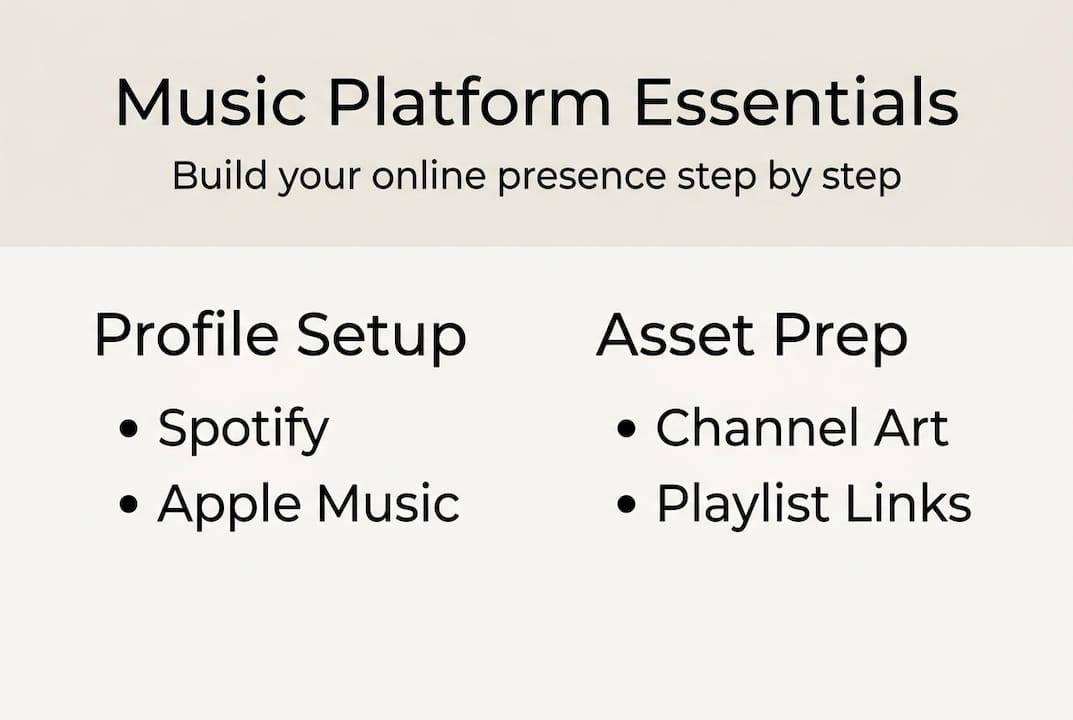
Start by claiming your artist profiles on every major DSP (digital streaming platform), including Spotify, Apple Music, and YouTube Music. Once claimed, pitch editorial playlists through Spotify for Artists at least seven to fourteen days before your release date, and target independent curators using tools like SubmitHub. This early action is critical because algorithms reward releases that gain traction quickly.
Your metadata matters more than most artists realise. Genre tags, mood descriptors, and correct ISRC codes (International Standard Recording Codes) all influence how platforms surface your music to new listeners. Pair that with high-resolution artwork at 3000 x 3000 pixels and a compelling artist bio that reads naturally.
Here is a quick checklist for your core assets:
- Artist profiles claimed and verified on all major DSPs
- High-resolution artwork (3000 x 3000 px minimum)
- Press shots in both colour and black-and-white
- Short and long artist bio (100 words and 300 words)
- EPK (Electronic Press Kit) ready for blogs and playlist curators
- Music video or lyric video ready for upload
| Asset | Purpose | Priority |
|---|---|---|
| Spotify for Artists profile | Editorial pitching and stats | Essential |
| Apple Music for Artists | Verified badge and analytics | Essential |
| EPK | Blogger and curator outreach | High |
| Press shots | Media and social content | High |
| Music video | YouTube growth and ads | High |
For a smooth YouTube music distribution workflow, make sure your channel art, description links, and playlists are all set up before release day. A thorough music promotion guide can help you map out every asset you need.
Pro Tip: Build a shared folder on Google Drive or Dropbox containing all your promo assets. Label it clearly and share the link with collaborators, managers, or PR contacts. It saves hours when submissions are time-sensitive.
Harness social media for discovery and engagement
With your digital presence set up, it is time to tap into the platforms where fans spend their time. Each platform serves a different purpose, and understanding that distinction saves you enormous effort.
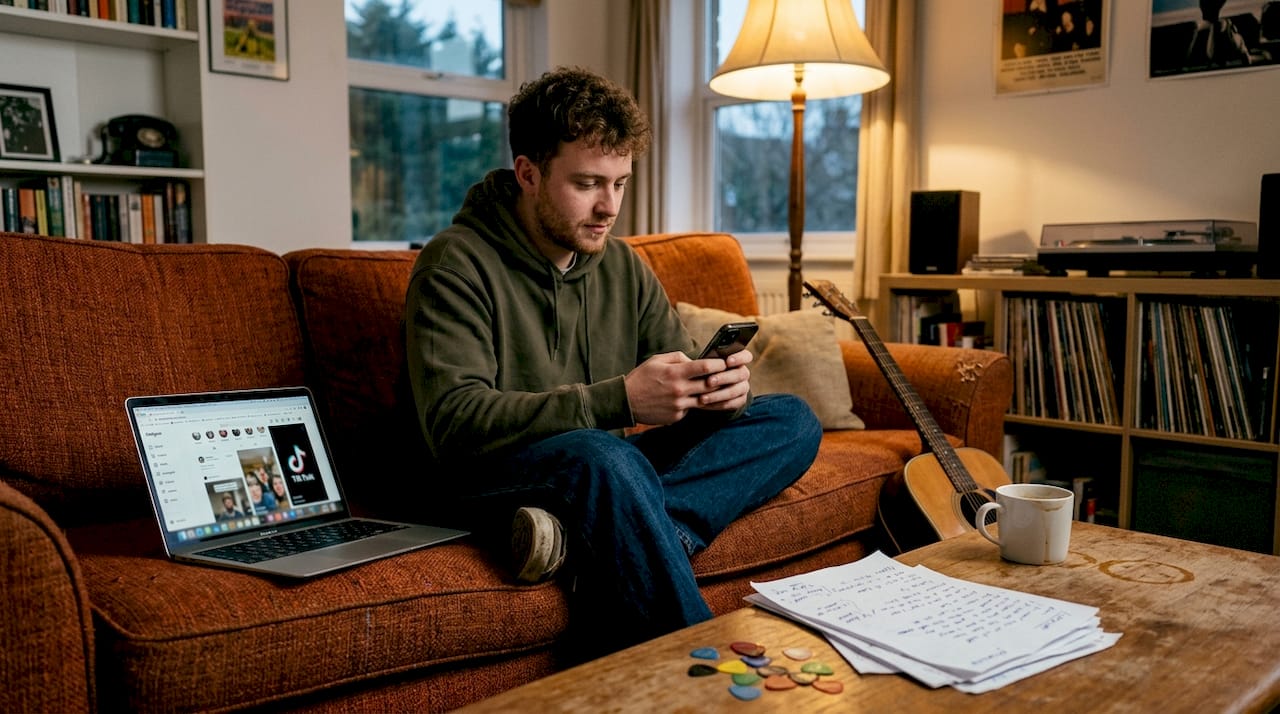
TikTok excels for discovery, Instagram Reels for engagement, and YouTube for long-term growth. That is not a casual observation. It reflects how each platform’s algorithm distributes content to new audiences versus existing followers.
On TikTok, the first two seconds of your video determine everything. Lead with the hook of your song, a surprising visual, or a relatable moment. Use trending audio formats sparingly, and lean into duets and stitches to ride existing conversations. On Instagram, mix Reels with Stories and carousel posts. Stories build intimacy. Reels build reach. On YouTube, titles and thumbnails function like SEO (search engine optimisation), so treat them accordingly.
Content ideas that consistently perform well:
- Behind-the-scenes studio footage showing your creative process
- Release teasers with a fifteen-second clip of your best hook
- Challenges that invite fans to use your sound
- Educational bites explaining your songwriting or production choices
- Reaction videos to your own older tracks
For deeper guidance on building an audience, explore YouTube for indie artists and review video content strategies that have worked for artists at your stage.
Consistency beats everything. Posting three times a week for three months outperforms one viral moment with no follow-up. The importance of authenticity is something indie music executives return to constantly. Fans follow people, not products.
Pro Tip: Use trending sounds and formats as a vehicle, not a costume. Your personality should still come through. Audiences can sense when an artist is performing for the algorithm rather than for them.
Build direct fan connection: websites, email lists, and Bandcamp
While social platforms spark discovery, real fan loyalty is built off-platform. Social media is rented land. The platform can change its algorithm overnight, restrict your reach, or disappear entirely. Your email list and website cannot be taken from you.
Build direct-to-fan channels including a website hub, Bandcamp for sales, and newsletters for exclusives. This approach removes algorithm dependency and gives you a direct line to your most engaged listeners.
Here is how to set up your owned channels step by step:
- Register a domain using your artist name (keep it simple and memorable)
- Build a one-page site with your bio, links, music player, and an email sign-up form
- Offer an incentive for signing up, such as a free download or exclusive demo
- Set up Bandcamp with your catalogue, merch, and a pay-what-you-want option
- Send a monthly newsletter with personal updates, early access, and behind-the-scenes content
“The artists who last are the ones who own their audience. Every follower on social media is borrowed. Every email subscriber is yours.”
| Channel | Ownership | Algorithm risk | Revenue potential |
|---|---|---|---|
| Platform-owned | High | Low | |
| TikTok | Platform-owned | Very high | Low |
| Email list | Artist-owned | None | High |
| Website | Artist-owned | None | High |
| Bandcamp | Shared | Low | Medium to high |
For inspiration on what to share with your inner circle, browse creative content ideas that keep superfans engaged between releases. Further reading on independent artist marketing covers the full picture of off-platform strategy.
Playlist pitching and digital advertising: amplifying your reach
Once there is a foundation and an audience pipeline, it is time to scale with playlist and advertising tools. These two channels work best together, and the data backs that up.
A hybrid playlist push combined with organic marketing yields forty to sixty per cent better results than either approach alone. Start with Spotify for Artists for editorial pitching, then layer in SubmitHub for independent curators. Target curators whose playlists match your genre and listener demographic precisely.
When you have early streaming proof, that is the moment to introduce paid advertising. Run low-budget campaigns on Meta, TikTok, or YouTube targeting listeners of similar artists. A modest spend of a few hundred pounds can generate meaningful data about which audiences respond to your music.
Here is a structured approach to your playlist and ad push:
- Submit to Spotify editorial via Spotify for Artists fourteen days pre-release
- Pitch ten to twenty independent curators via SubmitHub simultaneously
- Monitor saves and completions in the first forty-eight hours post-release
- Launch a paid ad campaign once you have at least two hundred streams as social proof
- Retarget engaged listeners with a follow-up single or merch offer
| Approach | Typical cost | Expected outcome |
|---|---|---|
| Spotify editorial pitch | Free | Potential for thousands of streams |
| SubmitHub curator pitch | £20-£60 per campaign | Niche playlist placements |
| Meta ads (music focus) | £40-£200 | Targeted listener growth |
| TikTok spark ads | £50-£300 | Discovery and video views |
Pro Tip: Prioritise saves and listen completions over raw stream counts. These signals tell Spotify’s algorithm that listeners genuinely connect with your track, which triggers further algorithmic distribution.
One critical warning: fake streams carry penalties that can reduce your external promo streams by roughly eighty per cent. Bots destroy careers quietly. For expert music ad strategies that avoid these pitfalls, the detail is worth studying. Berklee’s data-driven music marketing research reinforces why authentic engagement always outperforms inflated numbers.
Release cycles, measurement, and avoiding common pitfalls
To maintain momentum over time, structure and analytics matter most. A single release is not a strategy. A release cycle is.
Aim for four to six weeks of promotion per single, and release new music every four to eight weeks. This cadence keeps you relevant in algorithms and in your audience’s memory without burning you out.
The metrics that matter most for early-stage artists include:
- Saves per stream ratio (aim for above ten per cent)
- Repeat listens as a sign of genuine connection
- Monthly listener growth targeting five to fifteen per cent month on month
- Instagram engagement rate of three to six per cent
- TikTok video completion rate of five to ten per cent
These streaming benchmarks give you realistic targets rather than chasing vanity numbers. At roughly £0.003 to £0.005 per stream, the maths of streaming income alone rarely sustains a career. Diversified revenue matters.
“Consistency is the strategy. Virality is the lottery. Build the habit, not the hope.”
Common pitfalls to avoid:
- Releasing music without a visual strategy
- Underfunding promotion relative to production spend
- Ignoring geo-targeting in ads (your audience may be concentrated in specific cities)
- Measuring only follower counts rather than engagement depth
- Skipping the sustain phase and moving on too quickly after release day
For practical examples of what strong release content looks like, review video content examples 2026 and study the music release mistakes that derail otherwise solid campaigns.
Why slow, compound growth outperforms viral luck
Looking past tactics, it is worth reflecting on what truly drives long-term music success. The artists we see building real, lasting careers are rarely the ones who went viral once. They are the ones who showed up every week, built genuine relationships with their listeners, and treated promotion as a craft rather than a gamble.
Viral moments are wonderful when they happen. But without systems to capture and retain that attention, they evaporate. An artist who gains fifty thousand streams from a viral TikTok and has no email list, no website, and no follow-up content will return to zero within weeks.
Your genuine advantage as an independent artist is direct access to your audience. You can reply to every comment. You can send a personal newsletter. You can share the real story behind a song. Major label acts cannot do that authentically. That intimacy is your edge.
Getting one thousand true fans who buy your music, attend your shows, and share your work is worth more than ten million passive streams. Explore indie campaign examples to see how artists at your level have built that kind of loyal following through steady, intentional promotion rather than chasing the algorithm.
Get video assets to supercharge your music promotion
Finally, to bring all these strategies to life, compelling video is often the missing piece. Every channel discussed in this guide, from TikTok to YouTube to paid ads, performs significantly better when the visual content is strong, consistent, and professional.

At Music Video Marketplace, we make it straightforward for independent artists to create long-form music videos in minutes and launch ad campaigns directly for their songs. You do not need a film crew or a large budget to look credible. You need the right tools and a clear strategy, and that is exactly what we have built for artists like you. Strong video assets multiply the impact of every promotional channel you invest in.
Frequently asked questions
What is the best way to pitch to Spotify playlists?
Use Spotify for Artists to pitch editorial playlists seven to fourteen days before your release date, and reach independent curators simultaneously through platforms like SubmitHub for the broadest coverage.
How much should I spend on music promotion ads?
A budget of £40 to £400 on Meta, TikTok, or YouTube is a sensible starting point, and a hybrid playlist and ad approach yields forty to sixty per cent better results than either tactic alone.
Which metrics matter most for promoting music online?
Prioritise saves, repeat listens, and monthly listener growth of five to fifteen per cent, as these signals drive algorithmic distribution far more reliably than raw stream counts.
How often should independent artists release new music?
Aim for a new release every four to eight weeks, with four to six weeks of promotion per single, to maintain consistent momentum and keep your audience engaged between drops.
Recommended
- Role of YouTube in Music: Powering Indie Artist Success | Music Video Marketplace Blog
- Guide to YouTube music uploads for indie artists 2026 | Music Video Marketplace Blog
- Digital marketing for producers: grow your audience fast | Music Video Marketplace Blog
- Video Ads in Music Promotion: Power for Indies | Music Video Marketplace Blog
Read next
 Proven strategies to promote your songs online in 2026Learn proven strategies to promote your songs online in 2026. A step-by-step guide covering branding, campaign planning, organic tactics, and paid ads for indie artists.
 PRS vs PPL for Music Videos: Who Covers What in the UKPRS covers the song, PPL covers the recording, VPL covers the video. Here is what UK artists, labels and DJs need to know before releasing a music video.
 Live streaming for musicians: earn, engage and repurposeDiscover the role of live streaming for musicians. Boost earnings, engage fans, and repurpose content effectively—start streaming today!
 Optimise your YouTube music distribution workflowMaster YouTube music distribution with this step-by-step workflow guide. Learn how independent artists optimise uploads, Content ID, and promotion for maximum reach and revenue in 2026.
Turn the idea into a finished music video.
Drop your track into the Studio and build your visual in minutes.