
Optimise your YouTube music distribution workflow
Master YouTube music distribution with this step-by-step workflow guide. Learn how independent artists optimise uploads, Content ID, and promotion for maximum reach and revenue in 2026.
Optimise your YouTube music distribution workflow
Navigating YouTube music distribution as an independent artist or small label can feel overwhelming. Between selecting the right distributor, registering for Content ID, and setting up an Official Artist Channel, the technical steps pile up quickly. Yet mastering this workflow unlocks consistent visibility, protects your music from unauthorised use, and drives meaningful revenue. This guide walks you through each essential stage, from preparation to promotion, ensuring you maximise both reach and earnings on the platform.
Table of Contents
- Understanding Your YouTube Music Distribution Prerequisites
- Step-By-Step YouTube Music Distribution Workflow
- Optimising Promotion And Audience Growth On Your YouTube Channel
- Monitoring Performance And Troubleshooting Common Workflow Issues
- Explore Music Video Marketplace For Your Next YouTube Release
Key takeaways
| Point | Details |
|---|---|
| Choose the right distributor | Popular options like DistroKid, TuneCore, and CD Baby each offer unique benefits tailored to independent musicians. |
| Set up an Official Artist Channel | Verified channels consolidate releases and add a music note badge, boosting credibility with fans. |
| Protect and monetise with Content ID | Registration lets you identify unlicensed uses of your music, claim revenue, or block unauthorised uploads. |
| Maintain consistent uploads | Channels posting at least weekly see 20% subscriber growth, strengthening audience engagement. |
| Launch pre-save campaigns and ads | Strategic promotions generate thousands of streams and secure playlist placements. |
Understanding your YouTube music distribution prerequisites
Before uploading a single track, you need foundational elements in place. Start by selecting a digital distributor that aligns with your budget and goals. Popular options include DistroKid, TuneCore, and CD Baby, each offering distinct pricing models and support levels. Some charge annual fees per artist, whilst others bill per release, so evaluate your release schedule and choose accordingly.
Metadata accuracy is non-negotiable. Incorrect song titles, artist names, genres, or release dates confuse algorithms and frustrate fans searching for your music. Double-check every field before submission, ensuring spelling matches your existing catalogue and that genre tags reflect your sound authentically. Small errors cascade into lost streams and royalty headaches.
An Official Artist Channel elevates your professional presence. These verified channels consolidate music releases under one roof, display a distinctive music note badge, and surface your content more prominently in YouTube Music search results. Eligibility typically requires an active distributor relationship and meeting subscriber or view thresholds, though requirements evolve, so confirm the latest criteria with your distributor.
Content ID registration is your shield against revenue leakage. When other creators use your music without permission, Content ID detects the match and lets you monetise those views or block the video entirely. Not every distributor offers this service, and some charge extra fees, so clarify access during signup. Registering protects your work and captures income you’d otherwise forfeit.
Pro Tip: Compare distributor contracts carefully. Some retain rights to your music or lock you into exclusivity clauses, whilst others let you retain full ownership and withdraw releases anytime. Read the fine print before committing.
For a deeper dive into the fundamentals, explore our guide to YouTube music uploads, which breaks down each prerequisite in granular detail.
Step-by-step YouTube music distribution workflow
Once your prerequisites are sorted, follow this structured process to distribute your music effectively. Each step builds on the previous one, creating a seamless path from upload to monetisation.
- Upload your music through your distributor. Log into your chosen platform, select YouTube Music as a destination, and provide all required metadata. Most distributors let you schedule release dates weeks in advance, giving you time to coordinate promotional campaigns.
- Register for Content ID if eligible. DistroKid facilitates YouTube Content ID registration and distributes music to 150+ platforms, making it a popular choice for independents. This step typically adds a few days to your distribution timeline, so factor it into your schedule.
- Claim your Official Artist Channel. After your music goes live, submit a claim through your distributor’s dashboard or directly via YouTube’s artist verification process. Requirements can change, so check the latest documentation before applying.
- Set your monetisation preferences. Decide whether Content ID matches should monetise, track, or block unauthorised uploads. Most artists choose monetisation to capture ad revenue, but blocking prevents low-quality fan videos that might dilute your brand.
- Monitor your release status. Distributors send confirmation emails once your music appears on YouTube Music, usually within 24 to 72 hours. Log into YouTube Studio to verify your tracks display correctly and that your Official Artist Channel badge appears.
Distributors vary in their workflows, so expect slight differences in interface and timing. TuneCore requires manual Content ID opt-in, CD Baby includes it automatically at higher service tiers, and DistroKid charges an annual fee per artist. Review these distinctions before selecting a platform.
| Distributor | Content ID Access | Official Artist Channel Support | Annual Cost |
|---|---|---|---|
| DistroKid | Yes (additional fee) | Yes | £20 per artist |
| TuneCore | Yes (opt-in) | Yes | £30 per release |
| CD Baby | Yes (higher tiers) | Yes | One-time £40 |
Pro Tip: Upload instrumentals and alternate versions alongside your main release. Content ID scans all variants, maximising protection and revenue opportunities across remixes, covers, and unofficial edits.
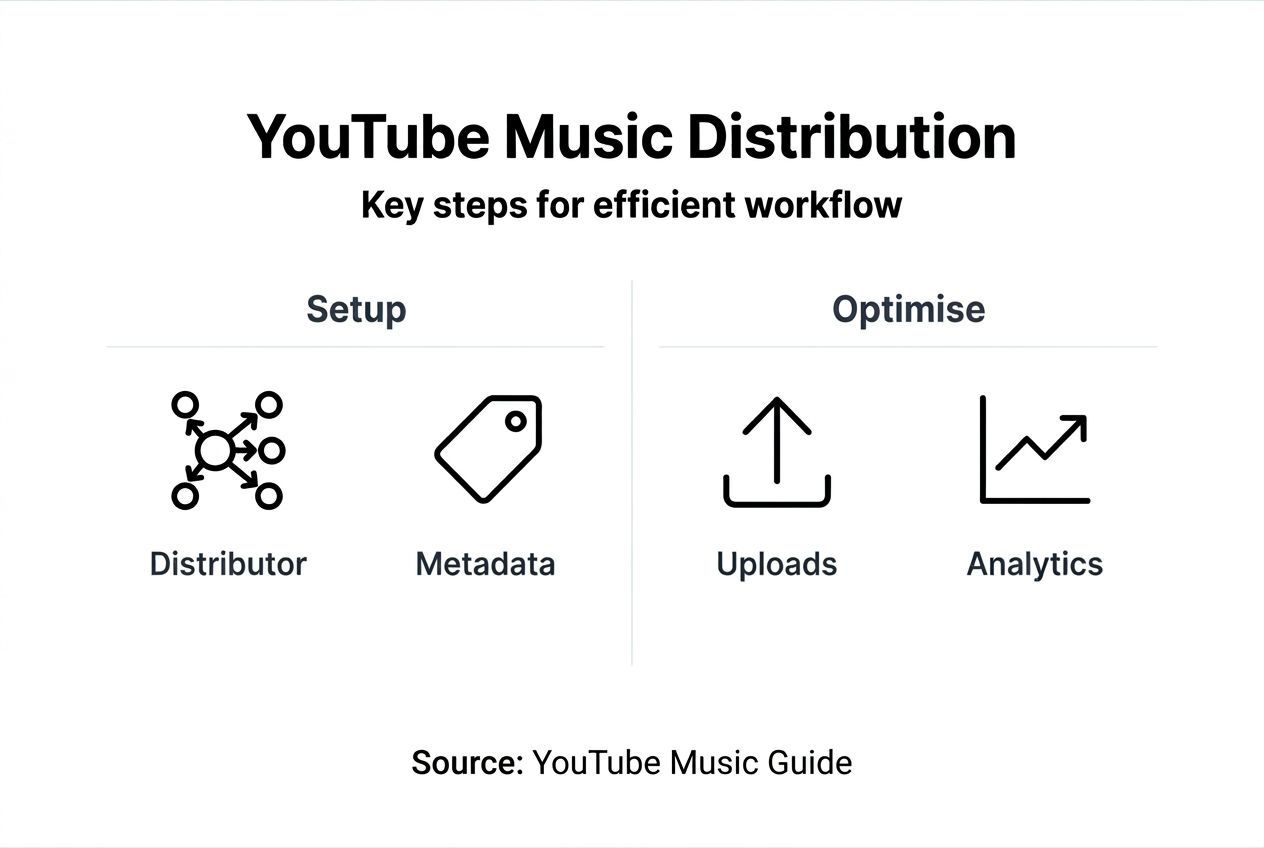
For a comprehensive walkthrough of each distributor’s interface, visit our YouTube music upload workflow guide, which includes screenshots and troubleshooting tips.
Optimising promotion and audience growth on your YouTube channel
Distribution alone won’t build an audience. You need a proactive promotional strategy that combines consistent content, smart advertising, and community engagement to turn casual listeners into loyal fans.

Consistent uploads train the algorithm to favour your channel. Channels posting at least weekly see 20% subscriber growth compared to sporadic uploaders, as regular activity signals quality and reliability. Mix lyric videos, behind-the-scenes footage, live performances, and studio diaries to keep content fresh and cater to diverse viewer preferences.
Pre-save campaigns amplify launch momentum. By collecting emails and phone numbers before release day, you convert passive interest into guaranteed first-day streams. This early spike tells YouTube’s algorithm your track deserves wider recommendation, triggering playlist placements and suggested video features. Integrate pre-save links into every social post, email newsletter, and bio leading up to release.
Targeted advertising accelerates discovery. Even modest budgets can deliver impressive results when you define your audience precisely. Run YouTube ads targeting fans of similar artists, retarget website visitors, and use demographic filters to reach listeners most likely to engage. Pre-save campaigns and targeted ads can generate thousands of streams and playlist placements, as demonstrated by multiple indie case studies.
Playlist curation partnerships extend your reach beyond owned channels. Research curators who feature artists in your genre, personalise your pitch with specific reasons your track fits their aesthetic, and follow submission guidelines meticulously. A single playlist add can introduce your music to thousands of new listeners overnight.
“The algorithm rewards momentum. Early engagement from pre-saves and ads creates a snowball effect that carries your track far beyond your existing fanbase.” — Independent artist case study
Pro Tip: Schedule uploads for Thursday or Friday mornings. Weekend listeners browse more actively, and releasing early in the week lets your content gain traction before the Saturday peak.
For advanced promotional tactics, including ad campaign templates and playlist pitch frameworks, check out our YouTube promotion for musicians resource.
Monitoring performance and troubleshooting common workflow issues
Once your music is live, regular monitoring ensures you catch problems early and optimise revenue. Content ID analytics provide granular data on music usage, revenue, and geographic reach, revealing which tracks generate the most income and where unauthorised uses occur.
YouTube Studio offers dashboards tracking views, watch time, subscriber growth, and traffic sources. Compare these metrics across releases to identify patterns. If a lyric video outperforms the official audio, double down on visual content. If certain regions stream heavily, consider localised marketing or tour stops.
Common workflow issues include:
- Metadata mismatches. Spelling inconsistencies between distributor submissions and existing uploads prevent Official Artist Channel consolidation. Correct errors immediately through your distributor’s dashboard.
- Content ID eligibility delays. Some distributors require manual review before activating Content ID, adding weeks to the process. Contact support if your registration stalls beyond the stated timeframe.
- Verification rejections. Official Artist Channel claims fail if your channel lacks sufficient subscribers or your distributor relationship isn’t current. Address these prerequisites before reapplying.
| Issue | Cause | Solution |
|---|---|---|
| Metadata error | Typo in artist name | Update via distributor, wait 48 hours |
| Content ID delayed | Manual review queue | Contact distributor support |
| Channel verification failed | Insufficient subscribers | Grow audience, reapply at 1,000+ |
Pro Tip: Set up automated alerts in YouTube Studio for unusual spikes in views or sudden drops in monetisation. These signals often indicate viral content opportunities or unauthorised uploads requiring immediate action.
For ongoing performance optimisation strategies, including advanced analytics interpretation, visit our YouTube music content for musicians guide.
Explore Music Video Marketplace for your next YouTube release
Mastering distribution and promotion is only half the equation. High-quality visuals transform passive listeners into engaged fans who share, comment, and return for more. Music Video Marketplace provides independent musicians and small labels with access to a vast library of 4K music videos, letting you create professional long-form content in minutes.

Our platform eliminates production bottlenecks that delay releases and drain budgets. Instead of coordinating shoots, editing footage, and negotiating licensing, you select visuals that match your sonic aesthetic and export broadcast-ready files instantly. This streamlined process integrates seamlessly into the distribution workflow outlined above, ensuring every release launches with compelling video content that maximises YouTube algorithm performance. Elevate your channel’s professionalism and audience engagement by exploring our catalogue today.
FAQ
How do I claim an Official Artist Channel on YouTube?
Set up distribution through a platform like DistroKid, TuneCore, or CD Baby that supports Official Artist Channel claims. Once your music is live, submit a verification request via your distributor’s dashboard or YouTube’s artist portal. Requirements can change over time, so review the latest guidance before applying. Eligibility typically requires an active distributor relationship, a minimum subscriber threshold, and consistent metadata across releases.
What is YouTube Content ID and how can I benefit?
Content ID is a digital fingerprinting system that detects unlicensed uses of your music across YouTube. When another creator uploads a video featuring your track, Content ID identifies the match and presents monetisation or blocking options. You capture ad revenue from these views, turning unauthorised uses into income streams. Registration requires distributor support and sometimes additional fees, but the revenue protection justifies the investment for most independent artists.
How can I promote my songs effectively on YouTube?
Launch pre-save campaigns, run targeted ads, and pitch to playlist curators to maximise exposure and streams. Pre-saves build momentum before release day, signalling algorithm favour and triggering recommendations. Targeted advertising reaches listeners who already enjoy similar artists, increasing conversion rates. Playlist placements introduce your music to curated audiences who trust the curator’s taste, driving sustained engagement beyond initial launch.
Why do my metadata errors prevent Official Artist Channel consolidation?
YouTube’s system matches releases based on exact artist name spelling, capitalisation, and character formatting. A single typo creates separate artist profiles, fragmenting your catalogue and preventing channel verification. Correct errors immediately through your distributor’s dashboard, then wait 48 to 72 hours for YouTube’s system to refresh. Consistency across every release, including features and collaborations, maintains a unified artist presence.
How long does Content ID registration take?
Timelines vary by distributor and submission volume. DistroKid processes registrations within 7 to 14 days, whilst others require 2 to 4 weeks for manual review. Factor this delay into your release schedule, submitting Content ID requests at least one month before your launch date. Once approved, protection activates retroactively, scanning YouTube’s entire catalogue for existing matches and future uploads.
Recommended
- Complete Youtube Music Upload Workflow for Musicians | Music Video Marketplace Blog
- Guide to YouTube music uploads for indie artists 2026 | Music Video Marketplace Blog
- YouTube Music Content: Boosting Reach for Musicians | Music Video Marketplace Blog
- Music Video Production Workflow for YouTube Success | Music Video Marketplace Blog
- Master YouTube Ads Targeting for Mobile Games in 2025 - playablemaker.com Master YouTube Ads Targeting for Mobile Games in 2025
Read next
 How to promote songs on YouTube with long videos and adsLearn how independent musicians promote songs on YouTube using engaging long-form videos and targeted ad campaigns to grow subscribers 50% faster in 2026.
 Promote your music online: essentials for indie artistsDiscover proven strategies to promote your music online in 2026. A step-by-step guide for independent artists covering streaming, social media, playlists, and ads.
 Proven strategies to promote your songs online in 2026Learn proven strategies to promote your songs online in 2026. A step-by-step guide covering branding, campaign planning, organic tactics, and paid ads for indie artists.
 Why Musicians Need Video Content for GrowthDiscover why video content is essential for musicians: key types, promotional impact on YouTube, and common pitfalls in digital marketing strategy.
Turn the idea into a finished music video.
Drop your track into the Studio and build your visual in minutes.