
Role of YouTube in music distribution: 2026 guide
Discover the role of YouTube in music distribution and how it empowers independent artists to reach global audiences and maximize revenue.

Role of YouTube in music distribution: 2026 guide
TL;DR:
- YouTube is now the primary platform for music discovery, streaming, and revenue for independent artists.
- Proper distribution links music to monetisable catalogues and unlocks multiple income streams beyond simple uploads.
YouTube is the world’s largest music discovery platform, and the role of YouTube in music distribution now defines how independent artists reach global audiences, generate revenue, and build lasting careers. Over 2.7 billion active users engage with the platform, and 60% of music listeners discover new artists there first. That single statistic reframes YouTube not as a supplementary channel, but as the primary engine of music discovery worldwide. For musicians and industry professionals, understanding how YouTube functions as both a streaming service and a video platform is no longer optional. It is the foundation of any serious distribution strategy.
How YouTube supports music monetisation and revenue
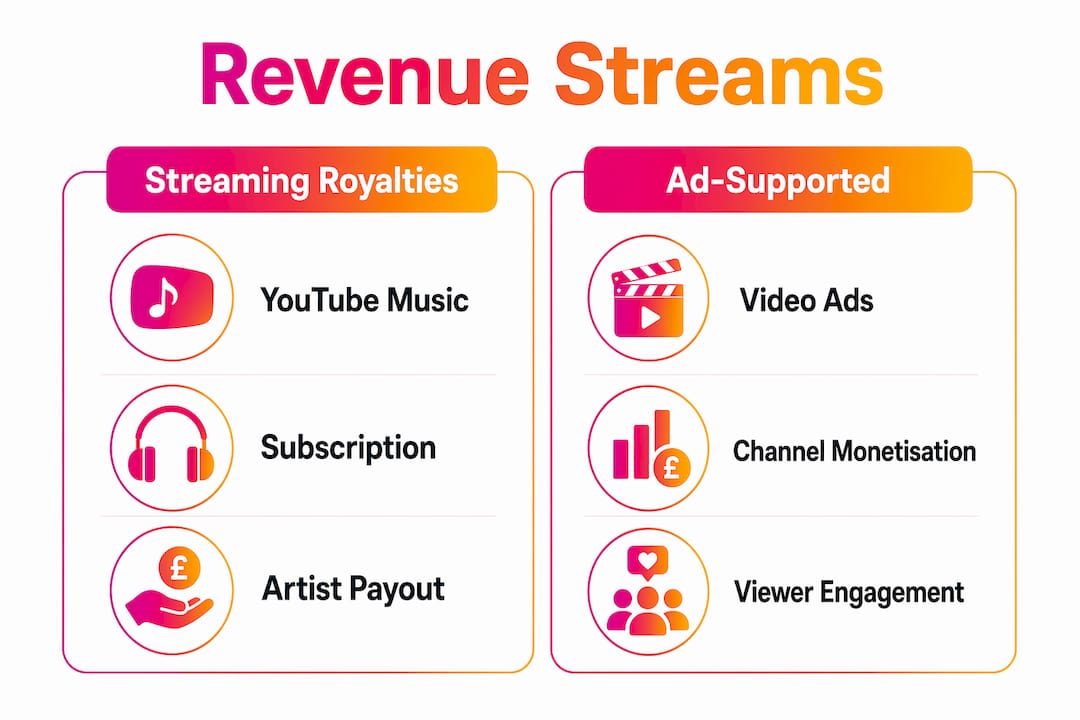
YouTube generates income for musicians through two distinct paths: streaming royalties via YouTube Music, and ad-supported video revenue through the Content ID system. Content ID automatically identifies your music when it appears in other users’ videos, then routes the advertising revenue back to you. This passive income stream operates at scale across billions of uploads, making it one of the most far-reaching royalty mechanisms in the industry.
The scale of that revenue is significant. YouTube paid out over $8 billion to the music industry between july 2024 and june 2025. That figure places YouTube among the largest single sources of music royalties globally, ahead of many traditional broadcast channels.
Beyond streaming royalties and Content ID, artists can access additional income streams once they meet the YouTube Partner Programme thresholds:
- Ad revenue from monetised video uploads on the main YouTube platform
- Super Chat and Super Thanks, which allow fans to pay to highlight their comments during live streams and on uploaded videos
- Channel Memberships, where subscribers pay a monthly fee for exclusive content and perks
- Shorts monetisation, which shares ad revenue from the Shorts feed with eligible creators
Each of these streams rewards consistent publishing and audience engagement. An artist who treats YouTube as a passive upload destination leaves substantial income on the table.
Pro Tip: Set up a Google AdSense account and link it to your YouTube channel before you hit monetisation thresholds. The verification process takes time, and delays cost you early revenue.
What are the differences between YouTube uploads and official distribution?
Many artists assume that uploading a music video to YouTube counts as music distribution. It does not. Uploading a video file alone does not connect your music to monetisable catalogues or generate streaming royalties. Official distribution, by contrast, links your content to your artist catalogue across the platform and unlocks revenue streams that standalone uploads cannot access.
The distinction matters most when it comes to Official Artist Channels (OAC). Here is how the two approaches differ in practice:
- Direct upload only. Your video appears on your channel but sits outside the YouTube Music ecosystem. It generates no streaming royalties and does not contribute to your Art Track catalogue.
- Distribution via an official partner. Your music is delivered to YouTube Music as an Art Track, consolidating your releases under a single verified artist profile. Metadata, album artwork, and credits travel with the release.
- Official Artist Channel status. Once you distribute through a partner and meet the platform’s eligibility criteria, YouTube merges your uploads and Art Tracks into one OAC. This consolidation improves algorithmic visibility and makes your catalogue easier for listeners to find.
- Art Tracks as catalogue anchors. Art Tracks are auto-generated videos created from your distributed audio and artwork. They sit in YouTube Music and accumulate streaming royalties independently of your main channel uploads.
Proper music video distribution links content to artist catalogues for monetisation and broader platform exposure. That linkage is what separates a professional release from a casual upload.
Pro Tip: When choosing a distribution partner, confirm they support Official Artist Channel consolidation. Not every distributor offers this, and missing it means your Art Tracks and channel videos remain separated, which splits your audience data and weakens your algorithmic signals.
How do you optimise YouTube for music distribution and audience growth?
YouTube functions as both a video platform and a search engine. Metadata optimisation and publishing consistency signal the algorithm to recommend your content to new listeners. Titles, descriptions, and tags are not administrative details. They are the primary language you use to communicate with YouTube’s recommendation system.

Metadata and scheduling
Write video titles that reflect how listeners search, not how you describe your music internally. A title like “Acoustic Session: [Song Name] (Live from London)” performs better than a bare song title because it targets multiple search intents simultaneously. Descriptions should include the song’s genre, mood, featured artists, and links to streaming platforms. Tags should cover genre terms, artist name variations, and related artists in your sonic space.
Consistency in publishing matters as much as quality. The algorithm rewards channels that publish on a predictable schedule. Weekly uploads, even short ones, outperform sporadic high-production releases in terms of sustained recommendation frequency.
Content variety and Shorts
Short-form videos act as powerful discovery tools that influence full-length track success. A 30-second Shorts clip of a hook or a behind-the-scenes moment can introduce your music to an audience that would never have searched for you directly. That audience then migrates to your full catalogue. The hybrid discovery model of Shorts plus full tracks is now the dominant pattern for emerging artists in 2026.
Content variety also deepens fan loyalty. Live sessions, studio vlogs, lyric videos, and Premieres each serve a different segment of your audience. Premieres, in particular, create a shared viewing event that generates real-time comments and Super Chat revenue simultaneously.
| Content type | Primary function | Audience benefit |
|---|---|---|
| Official music video | Catalogue anchor and ad revenue | Full artistic statement |
| YouTube Shorts | Discovery and algorithm reach | Quick hook for new listeners |
| Live session | Fan engagement and Super Chat | Intimacy and authenticity |
| Studio vlog | Community building | Behind-the-scenes access |
| Premiere | Launch event and real-time revenue | Shared fan experience |
Pro Tip: Use YouTube Analytics to identify which videos retain viewers past the 50% mark. Those retention patterns reveal what your audience actually values, and that data should directly shape your next upload.
For a detailed breakdown of how to structure your publishing workflow, the guide on optimising your YouTube distribution covers metadata, scheduling, and content planning in full.
What trends are shaping YouTube’s influence on music in 2026?
YouTube has evolved well beyond a platform for uploading music videos. It now functions as a visual storytelling ecosystem where artists build careers through documentaries, live recordings, fan Q&As, and short-form content, not just official releases. Artists who treat every upload as part of a connected visual narrative retain audiences far more effectively than those who publish in isolation.
The data on career longevity is striking. Sustained YouTube audience growth correlates with stronger long-term artist performance compared to passive streaming platforms. Active engagement on YouTube, where fans comment, share, and return repeatedly, builds the kind of community that sustains a career through multiple release cycles.
AI-driven recommendation algorithms are also reshaping how content surfaces. The algorithm increasingly weights watch time, return visits, and comment activity over raw view counts. This means an artist with 10,000 deeply engaged subscribers can outperform one with 100,000 passive followers in terms of recommendation reach.
“Treating music content as part of a larger interconnected visual journey, including documentaries, live sessions, and fan-facing content, builds stronger, more loyal audiences than releasing tracks in isolation. YouTube rewards artists who show up consistently and give fans a reason to return.”
Short-form content on YouTube Shorts promotes music discovery in ways that full-length videos cannot replicate. A Shorts clip that goes viral does not just generate views. It pushes listeners toward the artist’s full catalogue, increasing both streaming royalties and channel subscriber counts simultaneously.
For artists building a long-term presence, the most important shift in 2026 is recognising that YouTube is not a distribution endpoint. It is a living audience relationship that compounds over time.
Key takeaways
YouTube is the single most important platform for music distribution, discovery, and monetisation, and artists who treat it as a passive upload destination consistently underperform those who build active, consistent presences.
| Point | Details |
|---|---|
| YouTube leads music discovery | 60% of music listeners discover new artists on YouTube first, making it the primary discovery channel. |
| Official distribution unlocks revenue | Distributing via a partner connects music to Art Tracks, OAC status, and Content ID royalties. |
| Metadata drives algorithmic reach | Titles, descriptions, and tags are the primary signals YouTube uses to recommend your content. |
| Shorts accelerate audience growth | Short-form clips act as discovery gateways that push new listeners toward full catalogue streams. |
| Engagement predicts career longevity | Sustained active YouTube growth correlates with stronger long-term artist performance. |
Why most artists are using YouTube wrong
The most common mistake I see is artists treating YouTube as a filing cabinet. They upload a music video, share it once on social media, and move on. That approach misunderstands what YouTube actually is. It is a search engine with a recommendation engine built on top of it, and both systems reward behaviour, not just content.
The second mistake is conflating uploading with distributing. I have spoken with independent artists who believed their YouTube channel was their distribution strategy. It was not. Without an official distribution partner linking their music to YouTube Music and the Content ID system, they were generating views with no royalties attached. That is a significant and entirely avoidable loss.
What actually works is building a content rhythm. Not every upload needs to be a polished music video. A live acoustic version, a 60-second Shorts clip of your recording process, or a Premiere event for a new single all serve distinct algorithmic and audience functions. Engaging with music video content across multiple formats is what separates artists who grow from those who stagnate.
The artists I see building genuine careers on YouTube are not necessarily the ones with the biggest budgets. They are the ones who show up consistently, understand their metadata, and treat every piece of content as part of a larger conversation with their audience.
— Music
How Musicvideomarketplace helps you get on YouTube faster
Getting a professional video onto YouTube with a live ad campaign used to require a production team, a marketing budget, and weeks of coordination. Musicvideomarketplace changes that equation entirely.

Musicvideomarketplace enables musicians to create a long-form video in minutes and upload it directly to YouTube, then launch an ad campaign for their song without needing any technical expertise. The platform is built specifically for independent artists who want to move quickly and distribute professionally. Whether you are releasing your first single or your tenth album, Musicvideomarketplace gives you the tools to get your music on YouTube with the metadata, campaign structure, and visual presentation that the platform’s algorithm actually rewards. Stop leaving your music sitting in a folder. Put it in front of the audience that is already looking for it.
FAQ
What is the role of YouTube in music distribution?
YouTube serves as the primary global platform for music discovery, streaming, and video-based distribution. It combines a search engine, a recommendation algorithm, and a monetisation system that pays artists through Content ID, streaming royalties, and ad revenue.
How does YouTube pay musicians for their music?
YouTube pays musicians through two main routes: streaming royalties via YouTube Music for distributed Art Tracks, and ad revenue via the Content ID system when music appears in other users’ videos.
What is an Official Artist Channel on YouTube?
An Official Artist Channel is a verified profile that consolidates an artist’s uploads and Art Tracks into a single channel. It requires distribution through an approved partner and meeting YouTube’s eligibility criteria.
Do YouTube Shorts help with music promotion?
Yes. Shorts act as discovery gateways that introduce new listeners to an artist’s full catalogue. The hybrid model of Shorts plus full-length tracks is the dominant discovery pattern for emerging artists in 2026.
Is uploading a video to YouTube the same as music distribution?
No. Uploading a video to YouTube does not connect your music to YouTube Music, generate streaming royalties, or activate Content ID. Official distribution through a partner is required to access those revenue streams.
Recommended
- Key advantages of YouTube for musicians in 2026 | Music Video Marketplace Blog
- YouTube music distribution: 5 key benefits in 2026 | Music Video Marketplace Blog
- Optimise your YouTube music distribution workflow | Music Video Marketplace Blog
- Benefits of YouTube promotion for musicians in 2026 | Music Video Marketplace Blog
Read next
 Rolling Stones UK Featured Music Video MarketplaceMusic Video Marketplace celebrates a major milestone with its Rolling Stone UK feature, highlighting our mission to make high-quality visuals accessible for independent artists as we prepare for our upcoming U.S. launch and 2026 Texas expansion.
 Short form vs long form video: 2026 creator guideDiscover the difference between short form and long form video in 2026. Learn how each format engages audiences and boosts your video strategy!
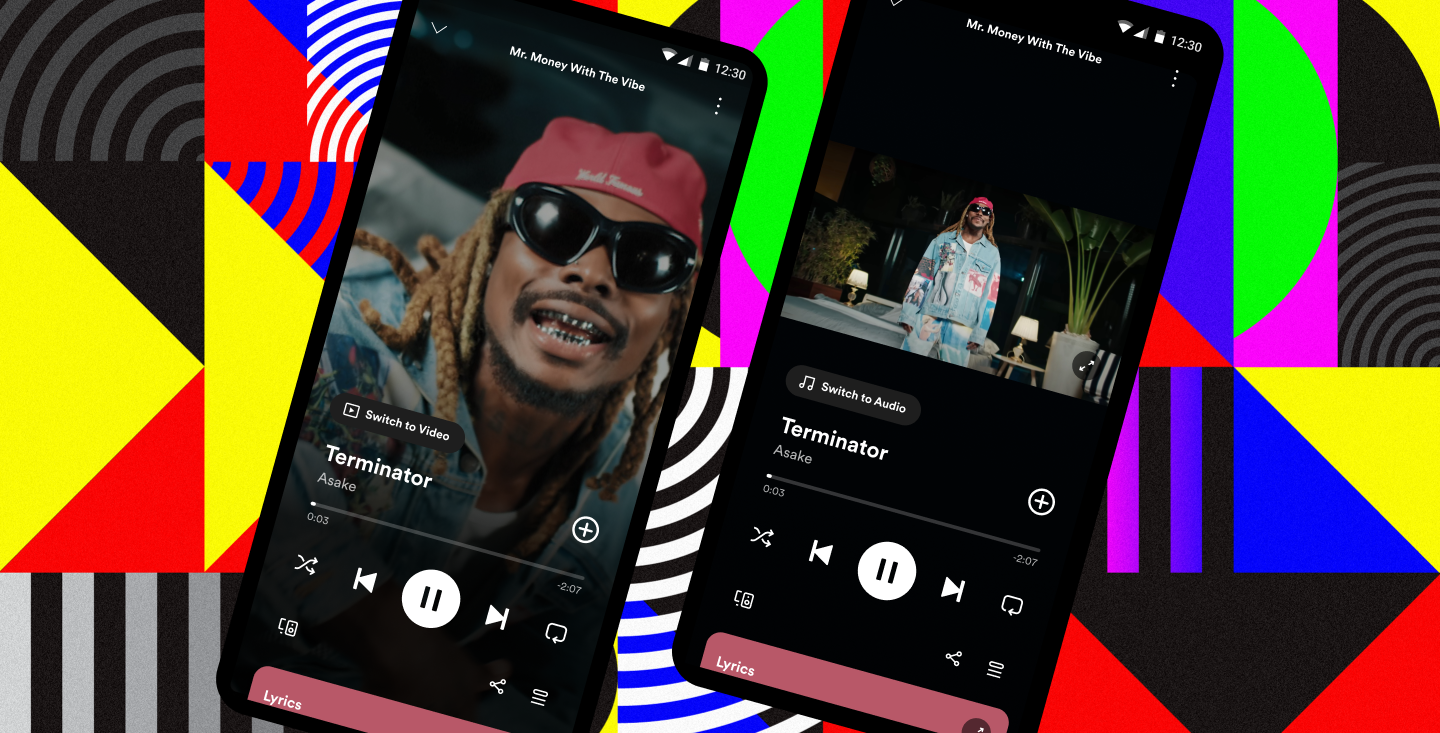 Spotify Music Videos Launch USA & CanadaSpotify’s rollout of full-length music videos in the USA and Canada is changing how artists grow their fanbase. Discover why visuals matter more than ever — and how Music Video Marketplace delivers instant, done-for-you music videos.
 Role of video in beat marketing: 2026 guideDiscover the role of video in beat marketing. Boost sales and engagement with effective video strategies that drive conversions in 2026.
Turn the idea into a finished music video.
Drop your track into the Studio and build your visual in minutes.