
Tips for effective song ads: your 2026 guide
Unlock success with tips for effective song ads! Learn how to amplify your music through strategic ad spending and organic engagement.
Tips for effective song ads: your 2026 guide
TL;DR:
- Effective song advertising hinges on demonstrating strong organic engagement signals, such as high save and completion rates, before investing in paid promotion. Crafting clear, focused ads that highlight a song’s catchiest moments and testing one variable at a time maximizes ad performance and budget efficiency. Targeting audiences based on genuine cultural or genre affinity yields better results than broad or cheap traffic, ensuring steady long-term growth.
Effective song advertising is the practice of using paid media to amplify music that has already proved its appeal organically. The most common mistake independent artists make is spending money on ads before their song has demonstrated any real traction. Platforms like Meta, TikTok, and Spotify reward content that listeners genuinely engage with. Save rates, completion rates, and click-through rates are your early warning system. Get these signals right first, and your ad budget works far harder.
1. Tips for effective song ads start with organic proof
Ads amplify success; they do not manufacture it. Before you spend a single pound on paid promotion, your song needs to show organic signs of life: strong save rates, high completion rates, and genuine comments rather than passive scrolls.
Look at your streaming data on Spotify for Artists and your social analytics on Instagram and TikTok. If listeners are saving your track, sharing it, or adding it to their own playlists without any prompting, that is your green light. If the numbers are flat, no ad budget will fix an engagement problem rooted in the creative itself.
- Save rate above 20% on organic posts signals the song is ready to scale with paid spend
- Completion rate above 60% on short-form video means the hook is working
- Organic shares and comments indicate genuine emotional resonance with listeners
Pro Tip: Before launching any paid campaign, post three to five organic variations of your song clip across TikTok and Instagram Reels. The version that outperforms the others is your ad creative.
2. Structure your ad creative around one clear message
Clear, uncluttered ads with a single message consistently outperform busy, multi-layered creatives. Every song ad needs to answer four questions in under ten seconds: who you are, what the song sounds like, why the listener should care, and what they should do next.
Resist the urge to include your artist logo, a release date, a streaming badge, and a lyric all at once. Each element you add dilutes the impact of the others. The listener’s attention is the scarcest resource you have.
“Simplicity is not laziness in advertising. It is the hardest discipline to master, and the one that pays the most.”
Visuals should match the energy of the song rather than contradict it. A melancholic ballad paired with fast cuts and bright colours creates cognitive dissonance that increases skip rates. Choose footage, colour grading, and pacing that feel like a natural extension of the music itself.
- Lead with the catchiest moment of the song, not a slow intro or a title card
- Use subtitles or on-screen lyrics to increase watch time for listeners in silent environments
- Keep the call to action direct: “Stream now on Spotify” beats “Check out my new single”
3. Hook listeners in the first three seconds
Opening ads with the chorus or a recognisable lyric rather than a slow intro can reduce cost per click by 55%. That figure matters because it directly determines how far your budget stretches across a campaign. Three seconds is not a guideline; it is the window within which most listeners decide whether to keep watching or scroll past.
Edit your song into 10 to 15-second blocks that feel complete and loop naturally. A clip that ends abruptly or fades awkwardly signals low production quality and undermines trust in the artist. The goal is for the listener to feel they have heard something worth finishing, not a fragment of something longer.
Test at least two audio hooks per campaign. One might open on a vocal melody, another on a distinctive instrumental moment. You will rarely know which performs better until the data tells you.
4. Use A/B testing to find your strongest creative
Isolating one variable at a time is the discipline that separates artists who scale successfully from those who burn through budgets without learning anything. Run two ad sets simultaneously with identical targeting and budget, changing only one element between them.
Here is a practical sequence for testing song ads:
- Test two audio hooks: same visual, different 8 to 15-second audio clips
- Test two visual treatments: same audio hook, different footage or colour grade
- Test two calls to action: same creative, different end-card text or button copy
- Test two audience segments: same creative, different interest or demographic targeting
- Allow each test to run for at least three to five days before drawing conclusions
Pro Tip: Set a test budget of £50 to £100 per variation. Anything less and the platform’s algorithm does not have enough data to optimise delivery properly. Anything more before you have a winner is premature.
Track save rate and cost per stream as your primary indicators of creative quality. Click-through rate tells you whether the ad is compelling; save rate tells you whether the song itself is resonating. Both matter, but save rate is the stronger predictor of long-term algorithmic benefit on streaming platforms.
5. Platform-specific targeting for Meta, TikTok, and Spotify
Each platform has a distinct targeting logic, and applying the same settings across all three is one of the most common and costly errors in music advertising.
| Platform | Targeting approach | Key consideration |
|---|---|---|
| Meta (Facebook/Instagram) | Layer specific artist interests with lookalike audiences built from your existing fans | Fans of specific artists convert far better than broad “music fans” targeting |
| TikTok Spark Ads | Start broad with age range and region only; avoid heavy interest layering | Broad targeting lets TikTok’s algorithm self-optimise more effectively than manual narrowing |
| Spotify audio ads | Target by genre, mood, and playlist behaviour; focus on free-tier listeners | Genre and cultural alignment yields better saves and playlist adds than demographic targeting alone |
On Meta, combine fans of two or three artists whose sound resembles yours with a lookalike audience built from your Spotify pixel or email list. This layered approach narrows the audience to people with demonstrated music consumption behaviour, not just casual interest.
On TikTok, respect the 72-hour learning phase without making any changes to the campaign. Adjusting targeting or budget during this window resets the algorithm’s learning and wastes the data it has already gathered. Once the learning phase completes, increase your daily budget by no more than 20% every 48 hours to preserve optimisation.
6. Budget your campaign in stages, not all at once
Start with £5 to £10 per day across multiple ad variations for three to five days. This initial phase is purely diagnostic. You are not trying to reach millions of listeners; you are identifying which creative and audience combination performs best before committing serious spend.
Once a clear winner emerges from your test phase, move into a scaling budget of £200 to £400 on the proven creative. Sudden large budget increases reset the platform’s learning algorithm and reduce efficiency. Gradual scaling preserves the optimisation the platform has built around your best-performing ad.
Allocate budget for creative production alongside your ad spend. A well-produced 15-second video clip that costs £150 to make can outperform a free screen recording by a factor of three or four in engagement rate. The creative is not a cost to minimise; it is the engine of the campaign.
7. Target the right regions and genres, not just cheap clicks
Targeting markets where your genre aligns with local tastes produces better saves and algorithmic boosts than chasing low-cost impressions in unrelated regions. A cost per click of £0.02 in a market with no cultural affinity for your genre is worth far less than a £0.15 click from a listener in a market where your sound has genuine resonance.
Research which countries and cities have the strongest streaming audiences for your genre using Spotify for Artists’ audience data. If you make indie folk music and your organic listeners are concentrated in the UK, Ireland, Australia, and Canada, those are your primary ad markets. Expanding to regions with cheap traffic but no genre alignment inflates your stream count without building a real fanbase.
Genre and mood targeting on Spotify is particularly precise. Targeting listeners of “sad indie” or “late night study” playlists places your song in front of people who are already in the right emotional state to receive it.
8. Measure what matters and avoid common pitfalls
High skip rates above 45% within the first seven days of a campaign reduce the likelihood of playlist placement by 60%. This is the hidden cost of misaligned ad creative. If your ad promises one emotional experience and the song delivers another, listeners skip. Those skips are recorded by the platform and actively harm your algorithmic standing.
Use these benchmarks to assess campaign health:
- Save rate below 10%: Stop the campaign. The song or creative needs work before further spend.
- Save rate between 10% and 20%: Continue testing with new creative variations.
- Save rate above 20%: Scale the campaign with confidence.
- Cost per stream above £0.05: Review targeting and creative before increasing budget.
- Cost per follower above £1.50: Reassess audience segments and call-to-action clarity.
Avoid targeting broad categories like “fans of music” or “people who like concerts.” These audiences are too diffuse to convert efficiently. Specificity in targeting is what separates a campaign that builds a fanbase from one that generates hollow impressions.
Key takeaways
Effective song advertising requires organic proof of engagement before paid spend, precise platform-specific targeting, and disciplined creative testing to maximise every pound of budget.
| Point | Details |
|---|---|
| Validate before spending | Only run ads on songs with save rates above 10% and strong organic engagement signals. |
| Hook within three seconds | Open with the catchiest part of the song to reduce cost per click and hold attention. |
| Test one variable at a time | Isolate audio hooks, visuals, and audiences separately to identify what actually drives performance. |
| Scale budgets gradually | Increase daily spend by no more than 20% every 48 hours to preserve platform optimisation. |
| Match targeting to genre | Choose markets and audiences with genuine cultural affinity for your sound, not just cheap traffic. |
What I have learned from watching artists waste their ad budgets
Most independent artists treat paid advertising as a shortcut. They release a song, see modest organic numbers, and immediately reach for their card to “give it a boost.” That instinct is understandable, but it is almost always expensive and demoralising.
The artists I have seen build real audiences through advertising share one habit: patience before spend. They post organic content obsessively, study which clips generate saves and shares, and only then commit money to amplifying the version that already works. They treat the ad budget as a reward for organic proof, not a substitute for it.
The other pattern I notice is an obsession with vanity metrics. Stream counts look impressive in screenshots, but save rate and playlist adds are the numbers that actually predict whether an algorithm will carry your song further. An artist with 50,000 streams and a 5% save rate is in a worse position than one with 8,000 streams and a 25% save rate.
My honest advice: budget as much for creative production as you do for ad spend. A mediocre video with a great song will underperform a great video with the same song every time. The creative is not the packaging; it is the product the listener sees first.
— Music
Take your song ads further with Musicvideomarketplace
Creating professional ad-ready video content used to require a production team and a significant budget. Musicvideomarketplace changes that for independent artists.
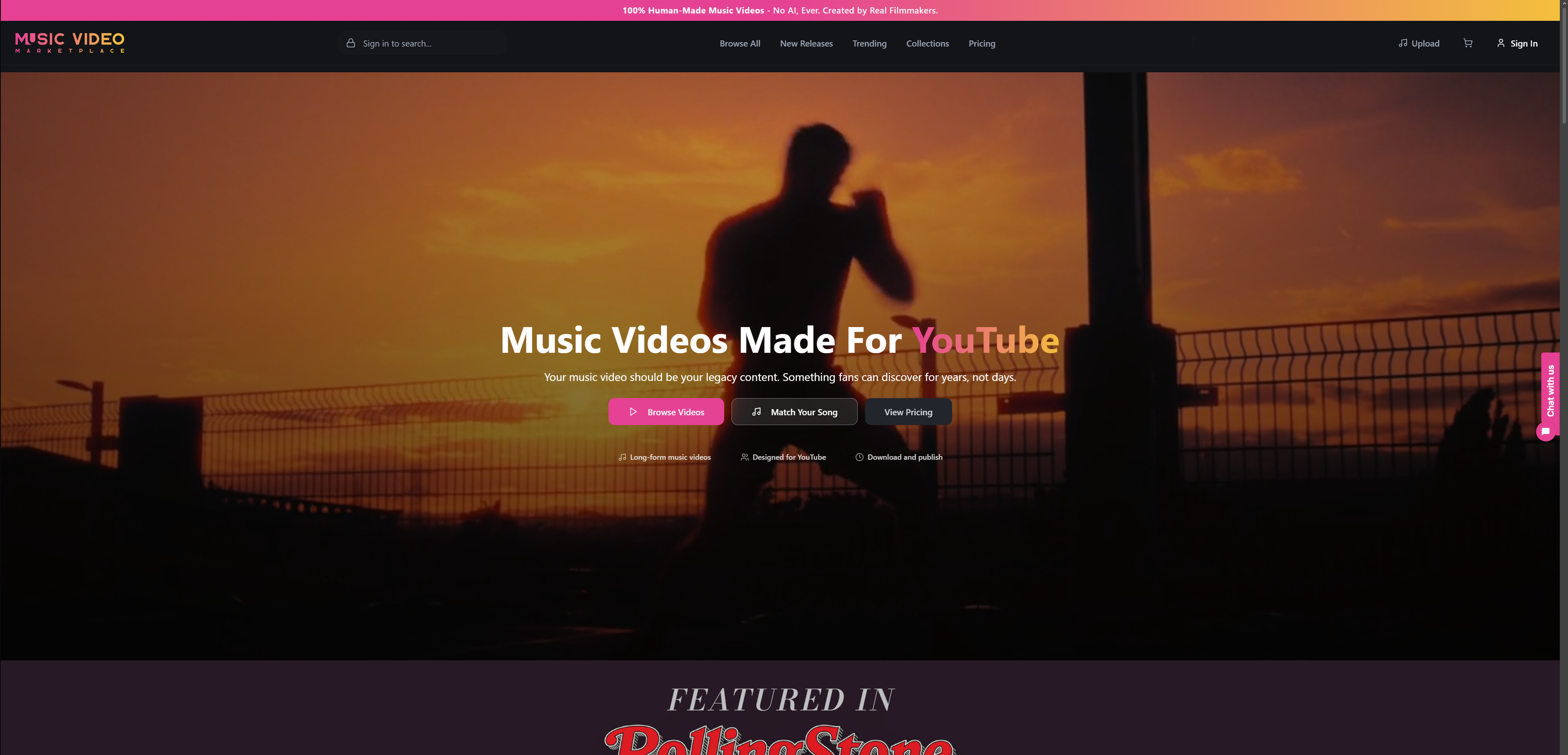
With Musicvideomarketplace, you can produce a long-form music video in minutes, upload it directly to YouTube, and launch an ad campaign for your song without needing a separate agency or editor. The platform is built specifically for musicians who want to move fast without sacrificing visual quality. If you are ready to put the best practices for song promotion covered in this guide into action, Musicvideomarketplace gives you the creative infrastructure to do it. Visit musicvideomarketplace.com to get started.
FAQ
What save rate should I aim for before running song ads?
A save rate above 20% on organic content signals that your song is ready to scale with paid advertising. Below 10% indicates the creative or the song itself needs improvement before any ad spend.
How much should I spend when testing song ads?
Start with £5 to £10 per day across multiple ad variations for three to five days. A total test budget of £50 to £100 per variation gives platforms enough data to optimise delivery before you commit to scaling.
Which platform is best for promoting songs with ads?
Meta works well for layered interest targeting around specific artists; TikTok Spark Ads perform best with broad age and region targeting; Spotify audio ads suit genre and mood-based targeting. The right platform depends on where your existing organic audience is most active.
How do I avoid wasting money on song ads?
Avoid targeting broad categories like “music fans,” boosting untested content, and making campaign changes during the platform’s learning phase. Align your ad creative with the actual emotional tone of the song to reduce skip rates and protect your algorithmic standing.
Do I need a professional video to run song ads?
Not necessarily, but visual quality directly affects engagement rates. A well-produced short clip consistently outperforms a low-quality screen recording, even when the song itself is strong. Platforms like Musicvideomarketplace make professional video creation accessible without a large production budget.
Recommended
- Best practices for music ads: promote your tracks effectively | Music Video Marketplace Blog
- Examples of song ad campaigns for independent musicians | Music Video Marketplace Blog
- Proven strategies to promote your songs online in 2026 | Music Video Marketplace Blog
- Best practices for song promotion in 2026 | Music Video Marketplace Blog
Read next
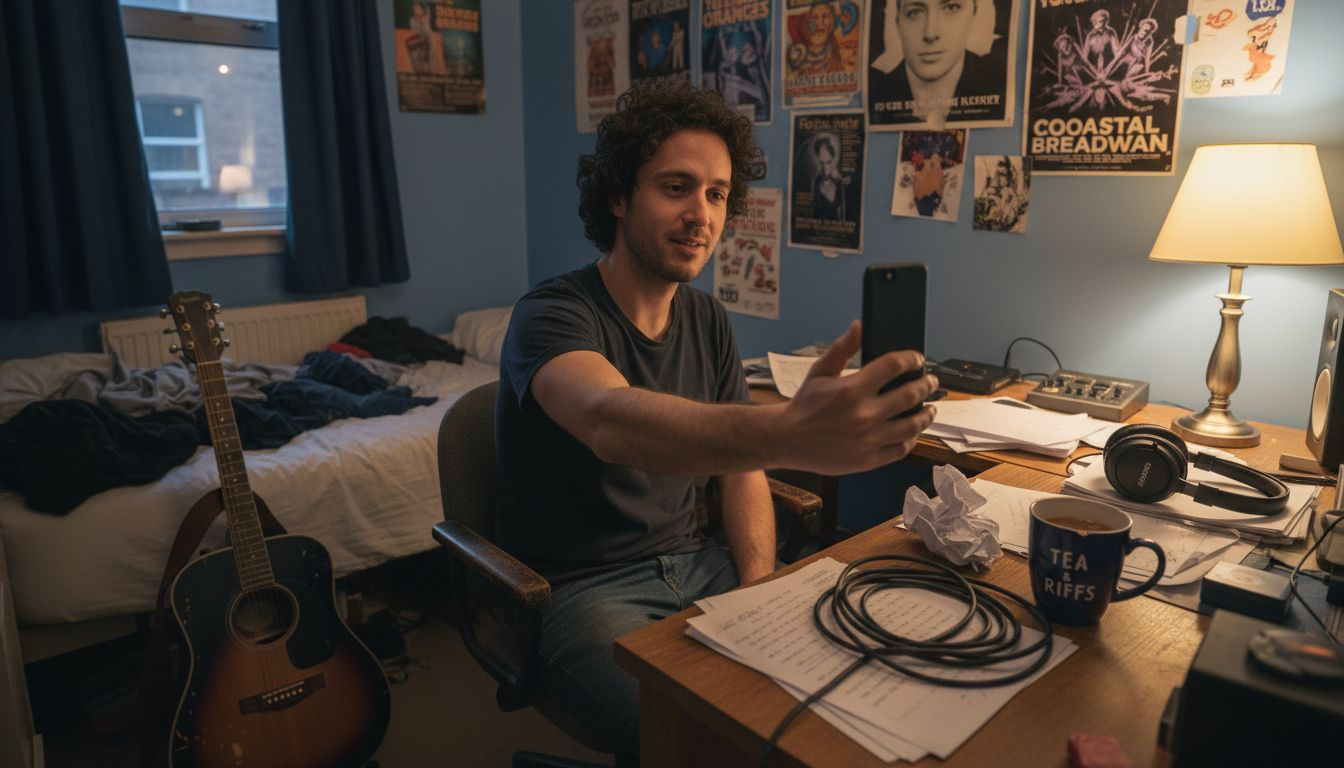 Types of Video Ads for Musicians: Boosting ReachTypes of video ads for musicians, including YouTube, Meta, and TikTok formats. Learn best practices, real-world examples, and how to avoid common pitfalls.
 Top video ad campaign tips for independent musiciansDiscover proven video ad campaign tips for independent musicians. Learn how to set goals, choose formats, and optimise spend to grow your YouTube audience.
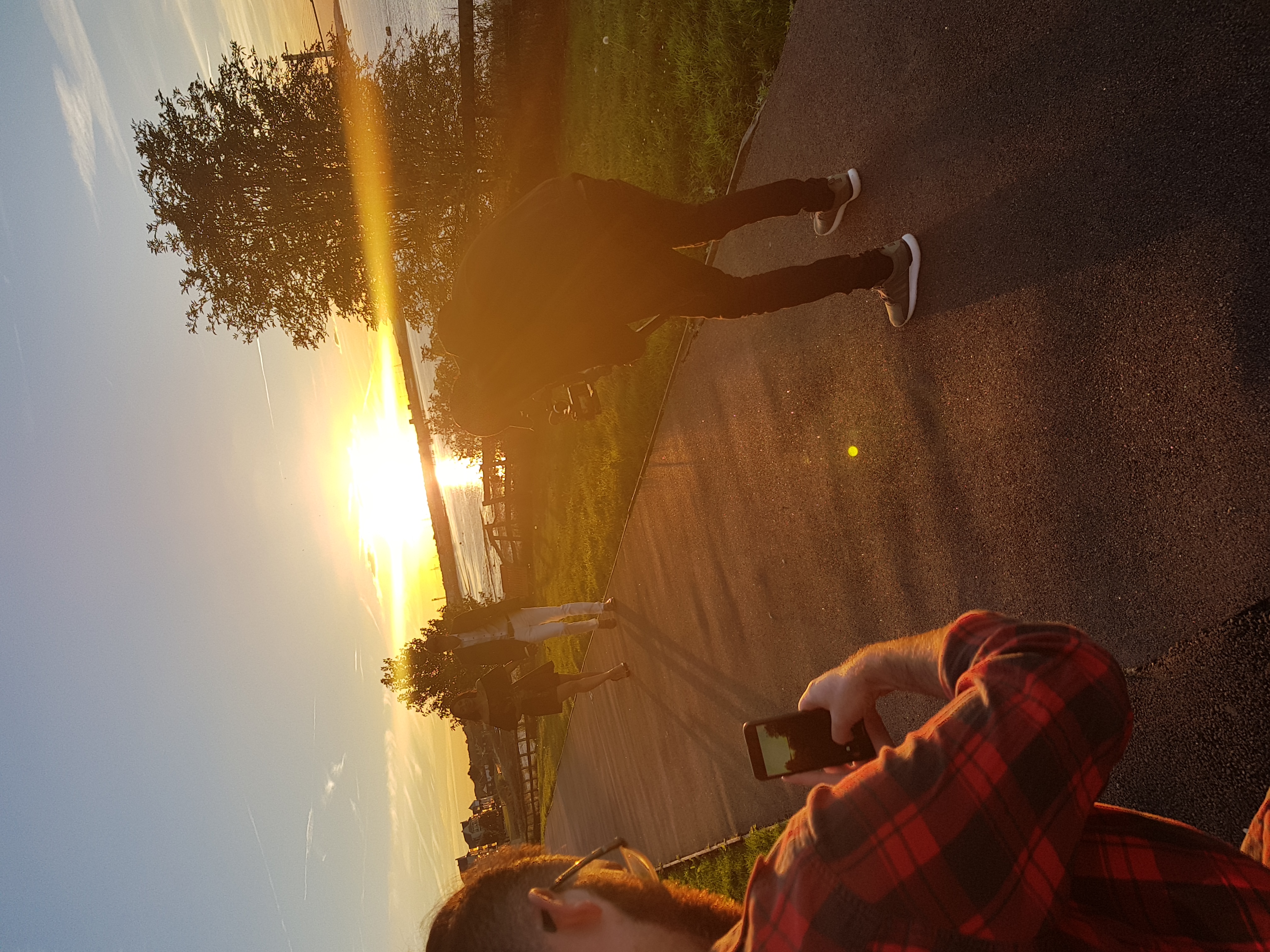 Video ads for producers: strategies to boost music exposureLearn how to plan, launch, and scale video ad campaigns for your music. A step-by-step guide for independent producers and emerging artists in 2026.
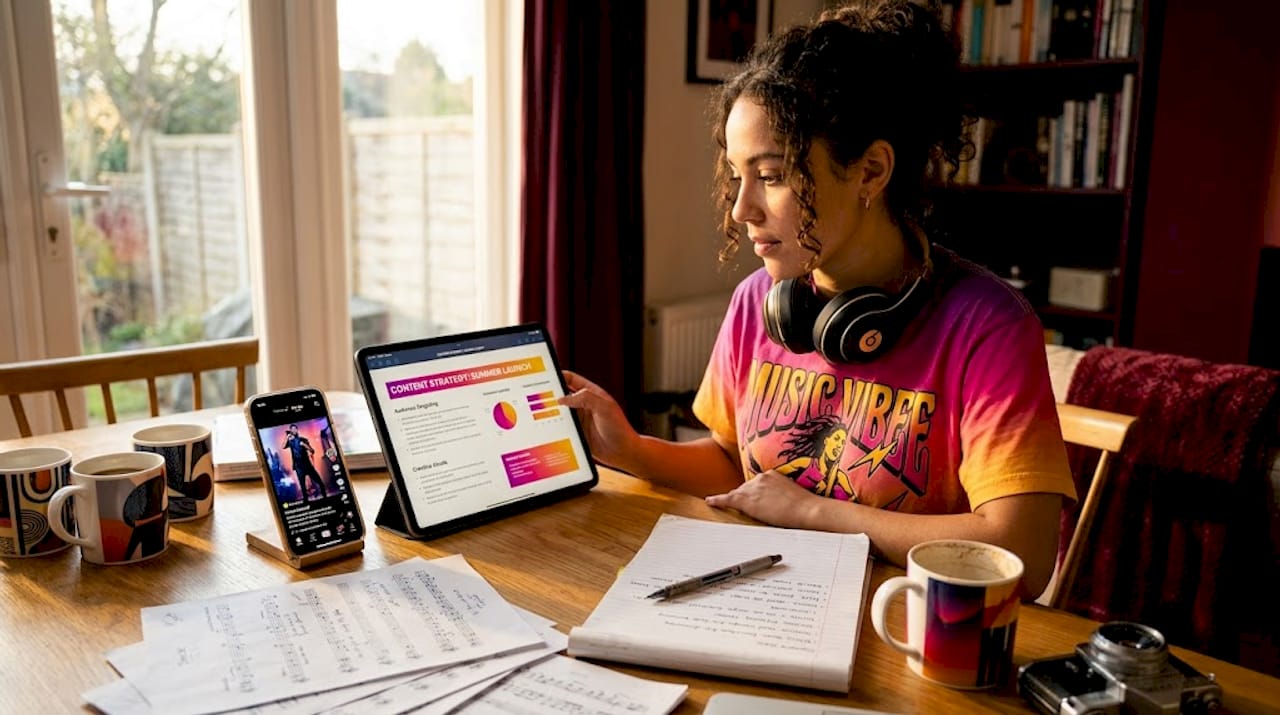 The role of influencers in music advertisingDiscover the crucial role of influencers in music advertising and learn how to leverage them for profitable campaigns. Don't miss out!
Turn the idea into a finished music video.
Drop your track into the Studio and build your visual in minutes.