
Explaining music release strategies: your 2026 guide
Master the art of explaining music release strategies. Your 2026 guide covers pre-release planning, launch tactics, and post-launch retargeting.

Explaining music release strategies: your 2026 guide
TL;DR:
- A music release strategy involves multiple phases, including pre-release planning, launch, and post-release promotion. Proper timing, content, and targeted advertising maximize streaming, engagement, and long-term visibility for artists.
A music release strategy is a multi-phase campaign that combines timing, distribution, and promotion to maximise listener engagement and sales. Getting it right is not about luck or a single upload. Artists who understand the mechanics of explaining music release strategies, from pre-release planning through to post-launch retargeting, consistently outperform those who treat a release as a single event. Platforms like Spotify for Artists, TikTok, and digital distributors such as DistroKid and TuneCore each play a defined role in this process. The difference between a track that gains traction and one that disappears is almost always the quality of the plan behind it.
What are the key phases of an effective music release strategy?
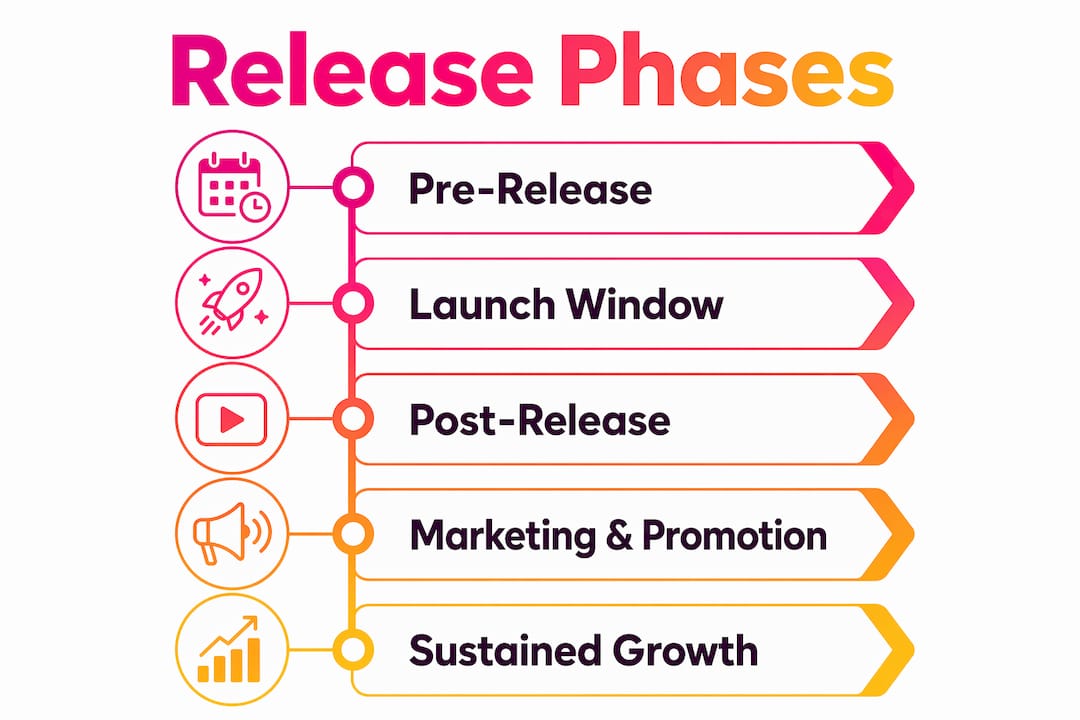
A release strategy follows a structured timeline with three distinct phases: pre-release, launch window, and post-release. Each phase has specific tasks that must be completed in sequence. Skipping any phase reduces the impact of the others.
Phase 1: Pre-release preparation
Pre-release is infrastructure. Your distributor needs your files, metadata, and artwork locked in well before the public sees anything. Lead times vary by release type: six weeks for singles, eight weeks for EPs, and ten to twelve weeks for albums. The editorial pitch deadline on Spotify for Artists sits at a minimum of seven days before release, though pitching three to four weeks out gives you a far stronger chance of placement. Metadata errors at this stage are costly. A wrong ISRC code or a misspelled featured artist name can delay distribution and kill editorial consideration.

Pre-save campaigns belong in this phase too. Tracks with 200 or more pre-saves achieve 3.4 times higher inclusion in Spotify’s Release Radar. That figure reflects a direct algorithmic reward for early audience commitment.
Pro Tip: Plan your release date by checking the major label release calendar for your genre. Releasing the same week as a high-profile album in your space will bury your track in editorial noise.
Phase 2: The launch window (first 72 hours)
The first 72 hours after release are the most algorithmically sensitive period. Streaming platforms measure stream velocity, saves, and playlist adds in this window to determine whether a track earns algorithmic promotion. Front-loading your promotional budget here is the single most effective tactic available to independent artists. Concentrated social posting, paid ads, and direct outreach to your existing audience should all happen within this window.
Phase 3: Post-release momentum
Post-release weeks 2 through 6 are where most artists lose ground by going quiet. This is the phase for curator outreach using live listener data, retargeting ads, and community engagement. Playlist curators respond better to pitches that include real stream counts and save rates. Going silent after release day is the most common and most damaging mistake in independent music release planning.
How to integrate digital distribution and marketing tools in your release plan
Modern music distribution is a marketing decision, not just a logistics one. Unified platforms that bundle smart links, ad infrastructure, and playlist pitching with distribution reduce friction and produce better campaign results than stitching together separate services. When your distributor, smart link tool, and ad platform do not share data, you lose visibility into what is working and waste budget on audiences that have already converted.
Key considerations when choosing your distribution and marketing setup:
- Rights retention: Confirm your distributor does not claim any ownership of your master recordings. DistroKid, TuneCore, and Amuse all operate on rights-retention models, though their fee structures differ significantly.
- Royalty splits: Some distributors take a percentage of royalties; others charge a flat annual fee. A flat fee is almost always better for artists releasing more than two or three tracks per year.
- Smart links: Tools like Linktree or Hypeddit let you send fans to a single pre-save or streaming page. Without a smart link, you fragment your traffic and lose retargeting data.
- Analytics dashboards: Spotify for Artists and Apple Music for Artists provide stream data, but a unified dashboard that pulls from multiple platforms saves time and improves decision-making.
- Playlist pitching services: Services like SubmitHub allow direct outreach to independent curators. Use them in conjunction with your distributor’s editorial pitching, not as a replacement.
Pro Tip: Before committing to a distributor, check whether they offer a marketing layer. Paying for distribution and then separately paying for a smart link tool, an ad platform, and a pitching service adds up quickly and creates data silos.
The SOBO (Sound Exchange, BMI, ASCAP) royalty model is worth understanding before you distribute. Mechanical and performance royalties flow through different collection societies. Registering your works with PRS for Music in the UK before your release date protects income from day one.
What promotional techniques maximise reach during and after release?
Promotion is where most artists either build real momentum or waste their budget. The most effective music promotion techniques in 2026 are built around short-form video and precise ad targeting.
The core tactics that produce measurable results:
- Short-form video frequency: Post on TikTok, Instagram Reels, and YouTube Shorts four to seven times weekly. Native, authentic content outperforms polished ads. Overproduced adverts are skipped 70 to 80 per cent more often than content that feels organic to the platform.
- First-second hooks: The opening second of every short-form video determines whether a viewer stays or scrolls. Lead with the most arresting moment of your track, a visual surprise, or a direct statement. Never open with a slow build.
- Budget front-loading: Allocate the majority of your paid ad spend to the first 72 hours post-release. This concentrates streams and saves into the window that triggers algorithmic boosts on Spotify and Apple Music.
- Retargeting in week two: Retargeting listeners who engaged but did not save your track costs 60 to 80 per cent less per conversion than reaching cold audiences. This is one of the most overlooked tactics in independent music promotion.
- Curator outreach with live data: After the first week, pitch independent playlist curators on SubmitHub or Groover with your actual stream and save numbers. Real data converts better than a press release.
Major labels plan releases six to twelve months ahead, sequencing teasers, lyric videos, and behind-the-scenes content to build sustained hype. Independent artists can replicate this model at a smaller scale by mapping out content in advance rather than creating it reactively.
How do indie artists optimise release timing and frequency for sustained growth?
Release frequency matters as much as release quality for independent artists building an audience. Consistent, predictable schedules outperform sporadic drops because they train listeners and algorithms alike to expect new content from you.
The waterfall release method
The waterfall release method keeps your profile’s latest release slot active for months by adding new singles cumulatively. You release Track A, then Track A plus Track B, then Track A plus Track B plus Track C. Each addition refreshes your release date on streaming platforms without requiring a full new project. This is one of the most effective tools available to independent artists who want sustained visibility without the cost of constant new recordings.
Choosing your release date
Avoid releasing on the same day as major artists in your genre. Most new music drops on Fridays, which means editorial attention is concentrated. Releasing on a Thursday or a Tuesday can sometimes earn more curator attention simply because there is less competition. Check genre-specific streaming chart tracking windows, which typically reset on Fridays, and plan accordingly.
| Release strategy | Advantages | Disadvantages |
|---|---|---|
| Single every 4–6 weeks | Keeps profile active, builds anticipation | Requires consistent recording output |
| Waterfall method | Extends momentum from existing recordings | Requires careful metadata planning |
| Album drop | Creates a single major event | Hard to sustain attention post-release |
| EP launch | Balances depth and frequency | Needs 8-week lead time minimum |
| Seasonal release | Aligns with listener behaviour trends | Limits flexibility in scheduling |
Pro Tip: Map your release calendar for the full year in january. Knowing your release dates in advance lets you book studio time, plan video shoots, and coordinate promotional content without last-minute pressure.
Key takeaways
A music release strategy built around pre-release infrastructure, a concentrated 72-hour launch window, and sustained post-release promotion consistently produces better streaming results than unplanned drops.
| Point | Details |
|---|---|
| Plan six to twelve weeks ahead | Submit to distributors early and pitch Spotify editorial at least seven days before release. |
| Front-load your budget | Spend the majority of your ad budget in the first 72 hours to trigger algorithmic boosts. |
| Use the waterfall method | Release singles cumulatively to keep your profile active for months without new recordings. |
| Retarget engaged listeners | Retargeting costs 60 to 80 per cent less than cold outreach and converts at a higher rate. |
| Stay active post-release | Weeks 2 through 6 are critical. Pitch curators with live data and keep posting content. |
What I have learnt from watching releases succeed and fail
The single biggest mistake I see artists make is treating release day as the finish line. It is the starting pistol. Every release I have observed that gained real traction had one thing in common: the artist stayed visible and active for at least four weeks after the drop. They posted content, responded to comments, pitched curators with real numbers, and ran retargeting ads to listeners who had already shown interest.
The second mistake is separating distribution from marketing. Artists who choose a distributor based on price alone, then bolt on a separate smart link tool, a separate ad platform, and a separate pitching service, end up with fragmented data and wasted spend. The platforms that bundle these functions together produce cleaner campaigns and better results. That is not a preference. It is a pattern I have seen repeat itself consistently.
The tactic most artists ignore is retargeting. Spending money to reach people who have already heard your track and shown interest is far cheaper and far more effective than chasing cold audiences. If you have a release coming up and a limited budget, put the majority of your week-two spend into retargeting. You will see the difference in your save rate.
Finally, do not underestimate video. A well-made visual asset, even a short one, gives you content to post, a reason for fans to share, and a vehicle for YouTube ads. Artists who release music without any video component are leaving a significant promotional channel unused.
— Music
How Musicvideomarketplace fits into your release plan
A strong visual component is one of the most underused assets in an independent release campaign. Musicvideomarketplace lets you create a long-form video in minutes and upload it directly to YouTube, then build an ad campaign around your track without needing a production team or a large budget.
Whether you are launching an EP or dropping a single, having a professional video ready for release day gives you content for social media, a YouTube presence, and a retargeting asset from day one. Musicvideomarketplace is built specifically for independent artists who need professional video content without the cost and complexity of traditional production. If you want to see what a release-ready video looks like, browse the video examples on the platform and see how other artists are using visual content to build momentum.
FAQ
What is a music release strategy?
A music release strategy is a planned, multi-phase campaign that coordinates timing, distribution, and promotion to maximise streams, saves, and listener engagement. It begins weeks before release day and continues for at least four to six weeks after launch.
How far in advance should I plan a music release?
Singles require a minimum six-week lead time, EPs need eight weeks, and albums need ten to twelve weeks. Editorial pitching on Spotify for Artists requires submission at least seven days before release.
What is the waterfall release method?
The waterfall method involves releasing singles cumulatively, adding each new track to a growing release rather than launching separate projects. This keeps your profile’s latest release slot active for months and extends visibility without requiring new recordings.
How do pre-saves affect streaming performance?
Tracks with 200 or more pre-saves achieve 3.4 times higher inclusion in Spotify’s Release Radar. Pre-saves signal audience demand to the algorithm before the track goes live, improving its chances of algorithmic promotion on release day.
When should I use retargeting ads for music promotion?
Run retargeting ads in the second week after release, targeting listeners who engaged with your content but did not save the track. Retargeting costs 60 to 80 per cent less per conversion than reaching cold audiences and produces a significantly higher save rate.
Recommended
- Proven strategies to promote your songs online in 2026 | Music Video Marketplace Blog
- Estrategias para lanzar canciones: guía 2026 | Music Video Marketplace Blog
- Best practices for song promotion in 2026 | Music Video Marketplace Blog
- Tendances marketing musical 2026 : guide pour pros | Music Video Marketplace Blog
Read next
 Fan engagement strategies that power your music marketingDiscover the vital role of engagement in music marketing. Learn effective strategies to connect with fans, boost sales, and enhance your reach.
 Guide to music video teasers: 2026 strategiesUnlock the secrets of promotion with this guide to music video teasers. Boost engagement on social media and build anticipation for your release!
 Guide to YouTube music uploads for indie artists 2026Learn how to upload music to YouTube efficiently with this complete guide covering video creation, metadata optimisation, copyright protection, and promotional campaigns for independent musicians in 2026.
 Create standout explainer videos for your record labelDiscover how independent musicians and record labels can create standout explainer videos using AI tools and proven strategies, without a big budget.
Turn the idea into a finished music video.
Drop your track into the Studio and build your visual in minutes.