
Music industry marketing explained: strategies for indie artists
Learn what music industry marketing really means for indie artists, with actionable strategies, real case studies, and channel benchmarks to grow your career in 2026.

Music industry marketing explained: strategies for indie artists

TL;DR:
- Successful indie music marketing focuses on long-term brand building and audience relationships.
- Consistent releases, targeted campaigns, and owned channels drive sustainable growth.
- Diversifying marketing channels and authentic storytelling are key to lasting career success.
Music industry marketing isn’t about going viral overnight or landing one lucky playlist placement. It’s a long-term, strategic process that shapes your entire career as an independent artist. Most musicians pour energy into one-off promotional bursts, then wonder why their momentum fades. The reality is that sustainable growth comes from treating your music like a business, building a brand, nurturing a fanbase, and using data to guide every decision. This article breaks down what music industry marketing actually means, which channels and tactics work in 2026, and how real indie artists are using these frameworks to achieve lasting results.
Table of Contents
- What is music industry marketing?
- Core pillars of music marketing today
- Key marketing channels and audience engagement
- What actually works: case studies and modern artist wins
- The uncomfortable truths and overlooked strategies for indie music marketing
- Next steps: grow your music career with the right tools
- Frequently asked questions
Key Takeaways
| Point | Details |
|---|---|
| Long-term approach | Real music industry marketing is a strategic, ongoing process that goes far beyond quick promotions. |
| Foundational pillars matter | Building your brand, nurturing superfans, and consistency are more effective than chasing trends. |
| Diversify your channels | Use streaming, social media, email, and video campaigns together for best results. |
| Data-driven adjustments | Monitor benchmarks and stats to make smarter marketing decisions each month. |
| Avoid shortcuts | Resist one-size-fits-all advice and focus on sustainable strategies that preserve your creativity. |
What is music industry marketing?
Music industry marketing is far more than posting about your new single on Instagram. As music marketing in 2026 describes it, music industry marketing is a strategic, long-term process for artists to achieve career goals by developing a brand, story, and fanbase through targeted channels, distinct from short-term promotion tactics. That distinction matters enormously for indie artists working without a major label’s resources.
Self-promotion is reactive. You release a track, you shout about it for two weeks, and then it goes quiet. Strategic marketing, by contrast, is a continuous process that builds equity in your name, your sound, and your audience relationship over months and years.
| Strategic marketing | Self-promotion |
|---|---|
| Long-term brand building | Short-term release push |
| Data-driven decisions | Gut-feel posting |
| Audience relationship focus | Reach and impressions focus |
| Consistent content calendar | Sporadic activity |
| Measurable career milestones | Vanity metrics (likes, plays) |
Independent artists who treat marketing as a business process rather than an afterthought are the ones who build durable careers. Understanding music branding essentials is a strong starting point, because your visual identity and story are the foundation everything else is built upon.
“Marketing isn’t something you do to your music. It’s something you build around it, consistently, over time, until your audience can’t imagine their world without your sound.”
The numbers reflect this reality too. Indies often invest more than 30% of their revenue back into marketing simply to stay competitive, a figure that underscores why having a structured approach, rather than random spending, is so critical.
Core pillars of music marketing today
With a firm grasp of what music marketing truly is, let’s examine the core pillars that every modern independent artist should implement.
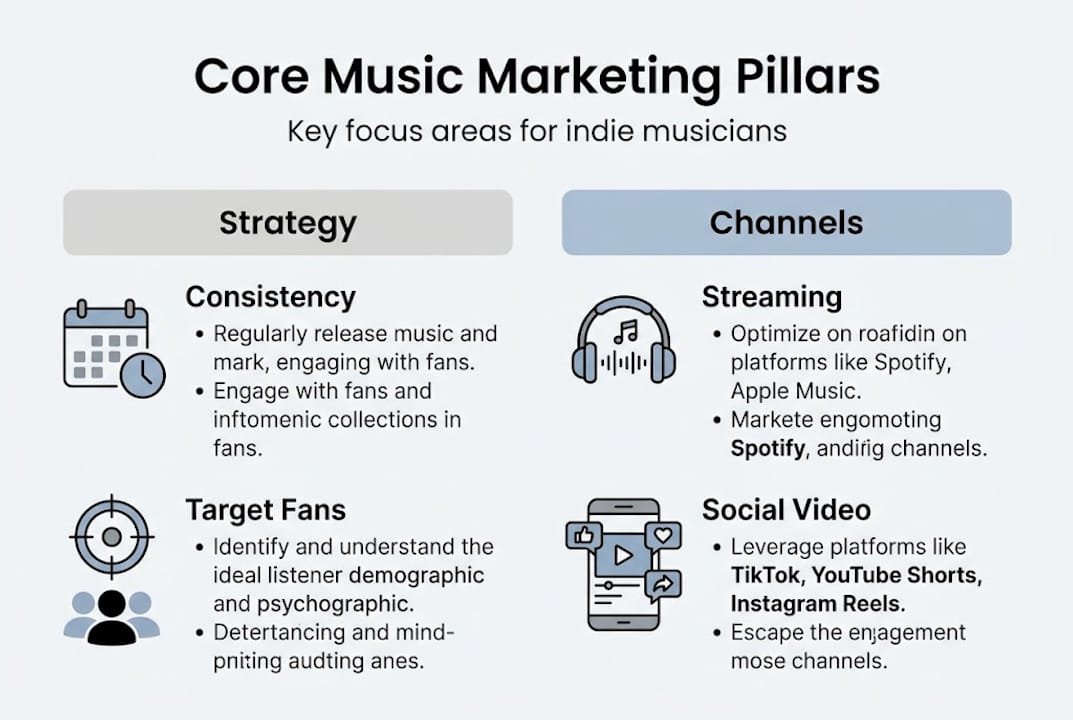
According to music marketing strategies outlined by Berklee, key methodologies for independent artists include building a foundation covering brand, website, and profiles, audience targeting, consistent singles releases every 6 to 8 weeks, content campaigns around releases, optimising streaming profiles, short-form social media, email lists, and data-driven adjustments. That’s a lot to hold at once, so breaking it into pillars helps.
The five core pillars are:
- Brand and visual identity: Your name, logo, colour palette, and overall aesthetic should be instantly recognisable across every platform. Consistency here builds trust before a listener even presses play.
- Platform presence: A professional website, complete streaming profiles, and active social accounts are non-negotiable. Think of these as your shop front.
- Release consistency: Dropping music every 6 to 8 weeks keeps algorithms engaged and gives fans a reason to stay subscribed. One release a year simply doesn’t sustain momentum.
- Content campaigns: Every single deserves a surrounding campaign, lyric videos, behind-the-scenes clips, and story-driven posts that extend the life of each release.
- Owned channels: Your email list is the most valuable marketing asset you own. Social platforms change their algorithms constantly, but your email list is yours forever.
When you’re thinking about promoting music online, remember that reach without relationship is hollow. And when you’re planning your next release, solid song promotion strategies can help you structure each campaign for maximum impact.
Pro Tip: Prioritise building deep fan relationships and owned channels like your email list over chasing vanity metrics. A thousand genuinely engaged fans will always outperform a million passive followers.
Key marketing channels and audience engagement
Understanding your marketing foundation is crucial, but knowing how to leverage the right channels and measure results sets successful artists apart.
In 2026, the primary channels for indie artists are streaming platforms, short-form social video, email marketing, and paid advertising. Each serves a different purpose in your funnel, and the smartest artists layer them strategically rather than treating them as interchangeable.

| Channel | Typical reach | Key benchmark |
|---|---|---|
| Spotify/Apple Music | Broad, algorithm-driven | Save rate 1-3% |
| Instagram Reels | Medium, community-driven | Engagement 3-6% |
| TikTok | High potential, volatile | Engagement 5-10% |
| Email list | Narrow but owned | Open rate 25-40% |
| YouTube | Long-tail, searchable | Watch time matters |
For emerging artists, indie artist streaming benchmarks show that early-career artists typically have 0 to 2k monthly listeners, with good save rates of 1 to 3%, Instagram engagement of 3 to 6%, TikTok engagement of 5 to 10%, and a 20% monthly growth rate considered strong. Knowing these numbers stops you from feeling discouraged by normal early-stage figures.
Steps for launching an effective single release campaign:
- Set your release date at least six weeks out to allow pitching time for editorial playlists.
- Build a content calendar covering the four weeks before and two weeks after release.
- Pitch to Spotify editorial via Spotify for Artists at least seven days before release.
- Create short-form video content tied to the song’s story or emotional hook.
- Send a dedicated email to your list on release day with an exclusive message.
- Run a small paid ad campaign targeting similar artists’ audiences on Meta or YouTube.
- Analyse your data two weeks post-release and adjust your next campaign accordingly.
For a deeper look at video-led promotion, explore YouTube music promotion and how music ad campaign strategies can amplify each release. Staying across music video trends also ensures your visual content stays relevant.
Pro Tip: Build your presence in this order: streaming first, then social, then email, and finally paid advertising. Rushing into ads before your profiles are polished wastes budget.
A common pitfall is over-relying on one channel. Artists who bank everything on TikTok virality, for instance, often find that a single algorithm shift wipes out their growth overnight. Diversification isn’t just smart, it’s essential. The independent music industry stats confirm that artists with multi-channel strategies consistently outperform those focused on a single platform.
What actually works: case studies and modern artist wins
Once you understand the key channels, it’s worth exploring what strategic approaches have delivered meaningful results for real artists in recent years.
Real numbers cut through the noise better than any theory. An indie pop US algorithm unlock case study shows that one indie pop artist grew from 2,400 to 29,700 monthly listeners through sustained playlist campaigns, while a rapper went from debut to 46,000 streams by stacking monthly and boost plans together. These aren’t overnight miracles. They’re the result of consistent, methodical effort applied over several months.
Tactics that drove breakthrough growth in these cases:
- Sustained playlist pitching across multiple tiers, not just chasing editorial placements.
- Email list activation around each release, creating a reliable first-day streaming spike.
- Small, targeted paid ad tests to identify which audiences converted best before scaling spend.
- Regular content creation that told the story behind the music, not just the music itself.
- Tracking data weekly and adjusting strategy based on what the numbers actually showed.
The Corey Smith case study is another compelling example of how direct-to-fan marketing, built over years rather than months, can generate genuine financial independence for an independent artist without major label support.
However, it’s worth being cautious about who you take advice from. As one widely shared industry discussion notes, avoid simplistic marketing advice peddled by self-styled experts. Real marketing involves complex funnels, careful data analysis, and avoiding scams like pay-for-signing schemes that prey on artists desperate for shortcuts.
Authenticity matters too. Audiences in 2026 are sophisticated. They can sense when an artist is performing marketing rather than genuinely connecting. The most successful indie artists treat their community like people they actually care about, because they do. Creative campaign examples from independent musicians show that the most memorable campaigns are rooted in genuine storytelling, not manufactured hype.
The uncomfortable truths and overlooked strategies for indie music marketing
Most articles about music marketing will tell you to post more, release more, and optimise more. We’d rather tell you something harder to hear: most indie artists overestimate what marketing can do in the short term and dramatically underestimate its power over the long term.
The artists who build lasting careers aren’t necessarily the ones with the cleverest campaigns. They’re the ones who kept showing up, kept being honest with their audience, and kept making music that meant something. Community care consistently outperforms reach chasing. A smaller, deeply engaged audience will sustain your career far longer than a fleeting viral moment.
Short-form video and AI tools are genuinely useful in 2026, but not if they’re draining your creativity or making you feel like a content machine rather than an artist. As one candid 2026 music marketing discussion highlights, short-form content isn’t mandatory if it’s genuinely harming your mental health, and slower honest growth beats viral chases every time. AI can assist with operations, but protecting your artistry matters more than any efficiency gain.
The way we see it, amplifying your artist identity through authentic visual storytelling is the single most underused strategy available to indie artists right now. Not because it’s flashy, but because it compounds quietly over time.
Pro Tip: Protect your artistry. Resist shortcuts and expert fads in favour of steady, sustainable practices that you can actually maintain without burning out.
Next steps: grow your music career with the right tools
Putting these strategies into action doesn’t have to feel overwhelming. The key is starting with the right tools and resources that are actually built for independent artists like you.

Music Video Marketplace is designed specifically for musicians who want to move fast without cutting corners. You can create a long-form video in minutes, upload it directly to YouTube, and launch an ad campaign for your song, all in one place. It’s the kind of practical support that turns the frameworks in this article into real-world results. If you’re ready to put your next release in front of the right audience, get online marketing tips and start building the momentum your music deserves.
Frequently asked questions
How is music industry marketing different from music promotion?
Music industry marketing is a long-term strategy for building your brand and fanbase, while promotion is a short-term push tied to a specific release. Marketing creates the foundation; promotion activates it.
What are the most important marketing strategies for indie artists?
The most impactful strategies are consistent releases every 6 to 8 weeks, audience targeting, content campaigns, email list building, and optimising your profiles across all platforms.
How much should indie musicians budget for marketing?
Indies often spend more than 30% of revenue on marketing to stay competitive. Even with a modest budget, structured spending across channels beats random one-off spending every time.
What are the typical engagement benchmarks for indie artists on social media?
Strong engagement benchmarks for indie artists are 3 to 6% on Instagram and 5 to 10% on TikTok, with 20% monthly follower growth considered excellent at the early-career stage.
Recommended
- Music promotion strategies for indie artists on YouTube | Music Video Marketplace Blog
- Promote your music online: essentials for indie artists | Music Video Marketplace Blog
- Proven strategies to promote your songs online in 2026 | Music Video Marketplace Blog
- Music ad campaigns: expert strategies for real results | Music Video Marketplace Blog
Read next
 Music marketing trends shaping success for independent artistsDiscover the top music marketing trends shaping success for independent artists in 2026, from video strategies to AI tools and fan community building.
 Music promotion ideas for DJs: 2026 guideDiscover effective music promotion ideas for DJs in 2026! Elevate your reach with digital strategies, playlist pitching, and social media tips.
 Music video b-roll: a buyer's guide for artists and labelsDiscover how to buy licensed music video b-roll quickly. Get the right sync and master rights to ensure a seamless publishing experience.
 Music distribution explained: how to get your songs heardDiscover what is music distribution and how it ensures your songs reach Spotify, Apple Music, and more. Get your music heard today!
Turn the idea into a finished music video.
Drop your track into the Studio and build your visual in minutes.