
Music video ad best practices for YouTube success
Unlock the secrets to YouTube success with the best practices for video ads. Transform views into loyal fans and maximize your impact!
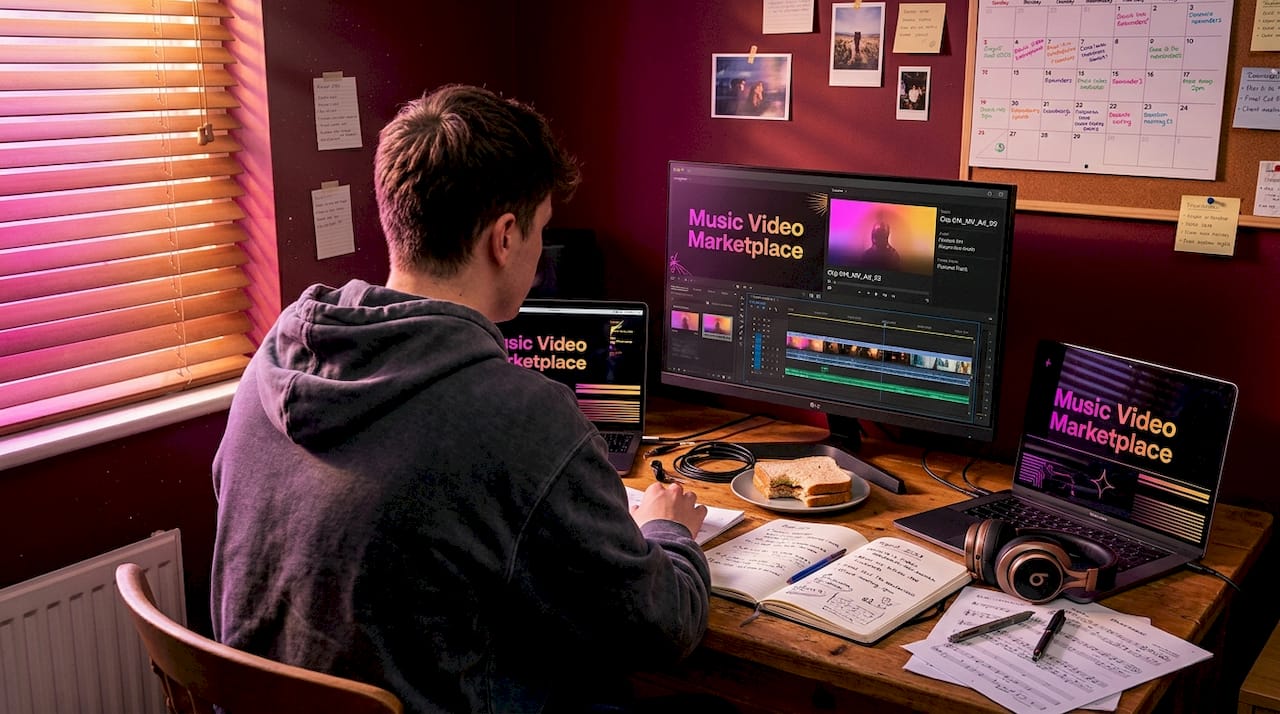
Music video ad best practices for YouTube success
TL;DR:
- Effective YouTube music ads focus on engagement metrics like subscriptions and clicks, not just views.
- Crafting a strong hook within the first five seconds is crucial to retain viewers and reduce skips.
- Monitoring placement quality and excluding irrelevant or fraudulent views improves ad efficiency and results.
Running a YouTube ad for your music is one thing. Running one that actually converts passive scrollers into genuine fans is something else entirely. Independent artists are competing not just against each other, but against major label budgets, algorithm shifts, and ever-shrinking attention spans. The good news is that smart strategy, not big spend, separates the artists who build real audiences from those who burn through their budget chasing empty view counts. This guide breaks down the most effective, evidence-backed video ad practices so you can make every penny work harder.
Table of Contents
- Define your video ad objectives and success signals
- Front-load your hook: Creative essentials for music video ads
- Choose smart YouTube ad formats and audience targeting
- Track, test, and optimise: Turning data into real fan growth
- Avoid wasted spend: Placement quality and audience safeguards
- Our perspective: Why most artists optimise for the wrong thing
- Create your music video ad in minutes
- Frequently asked questions
Key Takeaways
| Point | Details |
|---|---|
| Focus on real fans | Judge ad success by engagement like subscriptions or streaming clicks, not just view numbers. |
| Grab attention instantly | The first 3–5 seconds are crucial for stopping skips and sparking interest. |
| Pick the right format | Match your ad format and audience for your goal, starting with TrueView in-stream. |
| Test and optimise relentlessly | Use YouTube analytics to keep tuning your message, audience, and creative for more impact. |
| Safeguard your budget | Apply exclusion and placement controls to prevent wasted spend and fake views. |
Define your video ad objectives and success signals
To build a successful campaign, grounding your approach in clear objectives is essential. Let us start by defining what “success” truly means for your music video ads.
Most artists launch their first YouTube ad campaign with one goal in mind: views. It feels logical. More views means more people heard your music, right? Not quite. Raw view counts are one of the most misleading metrics in music marketing, because a view tells you nothing about whether that person cared enough to do anything afterwards.
The metrics that actually matter are the ones that show downstream engagement signals such as subscriptions, clicks to streaming links, and saves. These are the actions that signal a listener has moved from passive to interested. A subscriber is worth infinitely more than a view from someone who skipped after six seconds and forgot your name.
Here is what you should be tracking instead of chasing raw numbers:
- Click-through rate (CTR): Are people clicking your call-to-action link to your Spotify, Apple Music, or website?
- Average view duration: How long are people watching before they drop off? A strong hook keeps this high.
- Subscriber growth: Are viewers converting into channel subscribers during or after your ad?
- Streaming link clicks: Are listeners going to your music after seeing the ad?
- Earned actions: Likes, shares, and additional views earned organically after a paid view.
You need to monitor CTR, average view duration, and subscriber conversion rather than fixating on raw view totals. This shift in thinking is the foundation of every effective campaign.
“Treat views and view-through rates as proxies only. The real test of a music ad campaign is what listeners do after watching: do they subscribe, click through, or save your track?”
Understanding why use video ads in the first place helps you stay focused on fan-building rather than vanity metrics. Pair that with digital engagement strategies built for creators, and you have a solid foundation.
Front-load your hook: Creative essentials for music video ads
With your success metrics outlined, crafting an ad that seizes attention quickly becomes your next priority. Here is how to get it right.
YouTube gives you a brutally short window to make an impression. For skippable in-stream ads, viewers can hit “Skip Ad” after five seconds. That is not much time. For musicians, this means your opening moments need to do serious heavy lifting. Front-load the hook in the first 5 seconds because ads are only counted as paid views after a viewer stays for at least 30 seconds. If someone skips at six seconds, you pay nothing, but you also gained nothing.
Here is a step-by-step approach to crafting an opening that keeps people watching:
- Start with your strongest musical moment. Do not open with a slow intro or a title card. Lead with the most emotionally charged or melodically memorable part of your track.
- Show a face immediately. Human faces trigger instinctive attention. A close-up of you performing, reacting, or emoting within the first two seconds dramatically reduces skip rates.
- Add a visual or lyric that creates curiosity. A line that raises a question or an image that feels slightly unexpected gives viewers a reason to stay.
- State or imply a benefit. Even in music ads, viewers respond to “what is in it for me?” Whether that is a feeling, a story, or a vibe, make it clear fast.
- Place your call-to-action early and repeat it. Do not save your “Listen now” or “Subscribe” prompt for the end. Put it at 10 seconds and again at the close.
Pro Tip: Drop your catchiest chorus lyric or most memorable melodic hook in the first three seconds. Listeners who recognise something they like will stay. Those who are not your audience will skip, which is actually fine since you only pay for engaged viewers.
In-stream best practices consistently point to the hook, refined targeting, and constant testing as the three pillars of ad creative success. Creative testing is never a “set and forget” exercise. What works brilliantly in week one may plateau by week four. Plan to refresh your creative every few weeks and test at least two variations at a time.
Reviewing music video best practices specific to YouTube ads will give you additional creative frameworks tailored to how the platform rewards engagement.
Choose smart YouTube ad formats and audience targeting
With creative basics in place, you need the right technical setup: selecting the optimal ad type and properly narrowing your audience.

YouTube offers several distinct ad formats, and each serves a different purpose in your fan-building funnel. Choosing the wrong format for your goal is one of the most common ways artists waste budget.
| Ad format | Best for | Payment model | Ideal use case |
|---|---|---|---|
| TrueView in-stream (skippable) | Awareness and discovery | Cost per view (CPV) after 30 seconds | New releases, reaching new audiences |
| In-feed Discovery | Active intent, channel growth | Cost per click (CPC) | Driving subscribers, playlist adds |
| Bumper (non-skippable, 6 seconds) | Retargeting, brand recall | Cost per thousand impressions (CPM) | Reminding warm audiences of a release |
| Non-skippable in-stream | Forced exposure | CPM | Announcements, tour dates |
Separate your funnel stages and use multiple formats: TrueView in-stream for awareness, Discovery for active intent, and bumper ads for retargeting people who have already engaged with your content. This layered approach means you are not relying on a single touchpoint to convert a stranger into a fan.
For budget-conscious artists, the numbers are encouraging. CPV for music YouTube ads typically runs between $0.01 and $0.05, with view-through rates of 25 to 35 percent when you use precise similar-artist targeting. That means you can reach thousands of genuinely relevant listeners for a modest daily spend.
Key questions to ask before choosing your format and targeting:
- Who are the artists your ideal fans already listen to? Target those channels directly.
- What is the primary action you want viewers to take: subscribe, stream, or click a link?
- Are you building awareness with cold audiences or re-engaging people who already know you?
- What is your daily budget, and how does that affect reach versus frequency?
- Which geographic markets are most likely to convert into real fans and attendees?
Pro Tip: When starting out, use TrueView in-stream with similar-artist targeting to reach listeners who are already primed for your genre. It is the most cost-efficient way to introduce yourself to a relevant audience without overspending on impressions from people who will never care about your music.
Explore ad campaign examples from musicians who have used these formats effectively, and review the ad format overview to understand the technical specifications before you build.
Track, test, and optimise: Turning data into real fan growth
Having chosen your format and targeting, the real work is tuning your ad set based on evidence. Here is your roadmap to optimising for actual growth.
Most independent artists launch a campaign, check the view count once or twice, and either feel good or feel disappointed. Neither reaction leads to improvement. The artists who grow consistently are the ones who treat every campaign as a learning exercise, not a one-off bet.
Here is a practical optimisation loop you can follow:
- Run your initial campaign for at least five to seven days before drawing conclusions. Early data is noisy and not statistically meaningful.
- Pull your key metrics from YouTube Analytics and Google Ads. Focus on CTR, average view duration, and subscriber conversion.
- Identify your weakest point. Is your CTR low? Your hook may not be compelling enough. Is your view duration short? People are losing interest mid-video. Is subscriber conversion low? Your call-to-action may be unclear.
- Make one change at a time. Test a new thumbnail, a new opening line, or a different call-to-action. Changing multiple elements at once makes it impossible to know what worked.
- Compare results over the same time period and scale what wins. Increase budget on the ad variant that performs better, and pause the weaker one.
| KPI | Healthy benchmark | Action if underperforming |
|---|---|---|
| CTR | 4 to 6% is strong | Test a new thumbnail or opening hook |
| Average view duration | Above 40% of total video length | Tighten the opening 10 seconds |
| Subscriber conversion | 1 to 3% of viewers | Add a clearer subscribe call-to-action |
| Streaming link clicks | 2 to 5% of viewers | Move the link prompt earlier in the ad |
| CPV | £0.01 to £0.04 | Narrow targeting to reduce wasted impressions |
For context, Google Ads search CTR averages 6.66% across industries, but this figure is not directly comparable to YouTube music ad performance, where intent and format differ significantly. Use music-specific benchmarks to evaluate your results.
A practical testing loop means constantly adjusting your hook, targeting, and calls to action based on what the data tells you. This is not optional if you want to grow efficiently.
“Every creative and targeting decision should be driven by real results, not gut feeling. The data will always tell you more about your audience than your assumptions will.”
For deeper guidance on keeping viewers engaged, explore music video engagement tips and apply the same principles to your paid campaigns. Combining organic engagement knowledge with paid strategy creates a compounding effect. You can also look at broader social media engagement approaches to reinforce your off-platform presence.
Avoid wasted spend: Placement quality and audience safeguards
Even the best creative and targeting go to waste if you are not vigilant about where your ads appear. Learn to protect every pound spent.
Here is an uncomfortable truth: a significant portion of YouTube ad spend, particularly from artists who do not actively manage placements, ends up being seen by bots, children watching cartoon channels, or viewers in markets where music streaming is not even available. High view counts with no downstream engagement are often a symptom of this exact problem.
Ad performance can be distorted by low-quality or fraudulent placements, which is why audience controls and careful market selection are non-negotiable for any serious campaign. Here is how to protect your budget:
- Exclude high-fraud geographic regions. Some markets have disproportionately high bot traffic. Review placement reports and exclude regions where you see high views but zero engagement.
- Set age and gender targeting. If your music is for adults, exclude the under-18 bracket to avoid children’s content placements.
- Exclude irrelevant content categories. Use YouTube’s content exclusion tools to avoid having your ad appear on children’s videos, gaming content unrelated to your genre, or low-quality channels.
- Review your placement report weekly. YouTube shows you exactly which channels and videos your ads ran on. Remove any that look suspicious or irrelevant.
- Avoid “maximise views” bidding strategies early on. These can prioritise cheap impressions over quality ones. Start with target CPV bidding to maintain control.
Pro Tip: Set aside 15 minutes each week to review your placement report in Google Ads. Remove any channel or video that has generated views but zero clicks, subscriptions, or watch time. Over time, this regular pruning dramatically improves your campaign efficiency.
The risk of ignoring placements is not just wasted money. It is misleading data. If your analytics show 10,000 views but only 12 clicks and no new subscribers, you may wrongly conclude your music is not connecting, when the real problem is that most of those views were never from real music fans in the first place. Explore more about video ads for indie artists to understand how to structure campaigns that prioritise quality over quantity from the start.
Our perspective: Why most artists optimise for the wrong thing
There is a pattern we see repeatedly with independent artists running their first YouTube campaigns. They spend days perfecting their thumbnail, agonise over the ad copy, and then judge the entire campaign by how many views it got in the first 48 hours. Then they either scale up based on vanity metrics or abandon the whole thing out of frustration.
The uncomfortable truth is that most music video ad campaigns fail not because the music is bad or the budget is too small, but because the artist never defined what winning actually looked like before they started spending. Without a clear picture of what a “real fan action” means for your campaign, every decision becomes guesswork.
We believe the most powerful shift an independent artist can make is to stop thinking of YouTube ads as a broadcast tool and start treating them as a feedback mechanism. Every click, every skip, every subscriber tells you something about your audience that no amount of focus-grouping or gut instinct can replicate. The data is telling you who your fans are, where they are, and what made them care. Your job is to listen and act on it.
Start small, test obsessively, and scale only what the evidence supports. That is not a cautious approach. It is the fastest route to sustainable growth.
Create your music video ad in minutes
Building an effective YouTube ad campaign does not have to mean weeks of production work or expensive agencies. At Music Video Marketplace, we help independent artists go from song to live ad campaign faster than you might think possible.

Our platform lets you create a long-form music video in minutes, ready to upload directly to YouTube and connect to a targeted ad campaign for your track. Everything in this guide, from hook-first creative to precise audience targeting, is built into the workflow we have designed for artists like you. Whether you are releasing your first single or scaling an existing fanbase, you can launch a professional campaign without a label budget or a marketing team behind you.
Frequently asked questions
What is the average cost per view for music video ads on YouTube?
For music-focused YouTube campaigns, expect a cost per view between £0.01 and £0.05, depending on how precisely you target your audience and which markets you run in.
How do I know if my video ad is actually working?
Focus on subscriber conversion and CTR rather than raw views. A CTR of 4 to 6 percent and steady subscriber growth are reliable indicators that your ad is reaching genuinely interested listeners.
Which YouTube ad format should indie artists use first?
Start with TrueView in-stream for broad awareness, using similar-artist targeting to reach listeners already primed for your genre, then layer in Discovery ads once you have baseline data.
How can I stop wasted spend from bots or bad placements?
Review your placement report weekly and exclude high-fraud regions along with irrelevant content categories and age groups that fall outside your target audience.
Does average Google Ads CTR apply to YouTube music ads?
No. The Google Ads search CTR average of 6.66 percent reflects search intent behaviour and is not a meaningful benchmark for YouTube music video ads, which operate on a very different viewer mindset.
Recommended
- Music Video Best Practices: 28% More Reach With YouTube Ads | Music Video Marketplace Blog
- Why use video ads to grow your music audience | Music Video Marketplace Blog
- YouTube ad campaign examples for musicians: proven strategies | Music Video Marketplace Blog
- Boost music video engagement: proven tips for 28% reach | Music Video Marketplace Blog
- Interactive video ads: boost engagement and conversions | QuickAdVideo Blog
- Unlock YouTube Success: A Creator’s Guide to Brand Accounts
Read next
 Music Video Best Practices: 28% More Reach With YouTube AdsDiscover proven music video best practices that increase YouTube reach by 28% through optimized content, strategic ads, and effective audience engagement for independent musicians.
 £400–£2,500 Music Video Budgets: Licence, Edits & Ads for IndiesSee realistic sample budgets (£400–£2,500) and exact line items — licence, edits/exports, and ad spend — plus a pre-purchase checklist and when Music...
 How to promote songs on YouTube with long videos and adsLearn how independent musicians promote songs on YouTube using engaging long-form videos and targeted ad campaigns to grow subscribers 50% faster in 2026.
 Music advertising terms every musician needs to knowUnlock the secrets of music advertising terminology explained! Learn essential terms to maximize your ad campaigns and reach your audience effectively.
Turn the idea into a finished music video.
Drop your track into the Studio and build your visual in minutes.