
How to promote songs on YouTube with long videos and ads
Learn how independent musicians promote songs on YouTube using engaging long-form videos and targeted ad campaigns to grow subscribers 50% faster in 2026.
How to promote songs on YouTube with long videos and ads
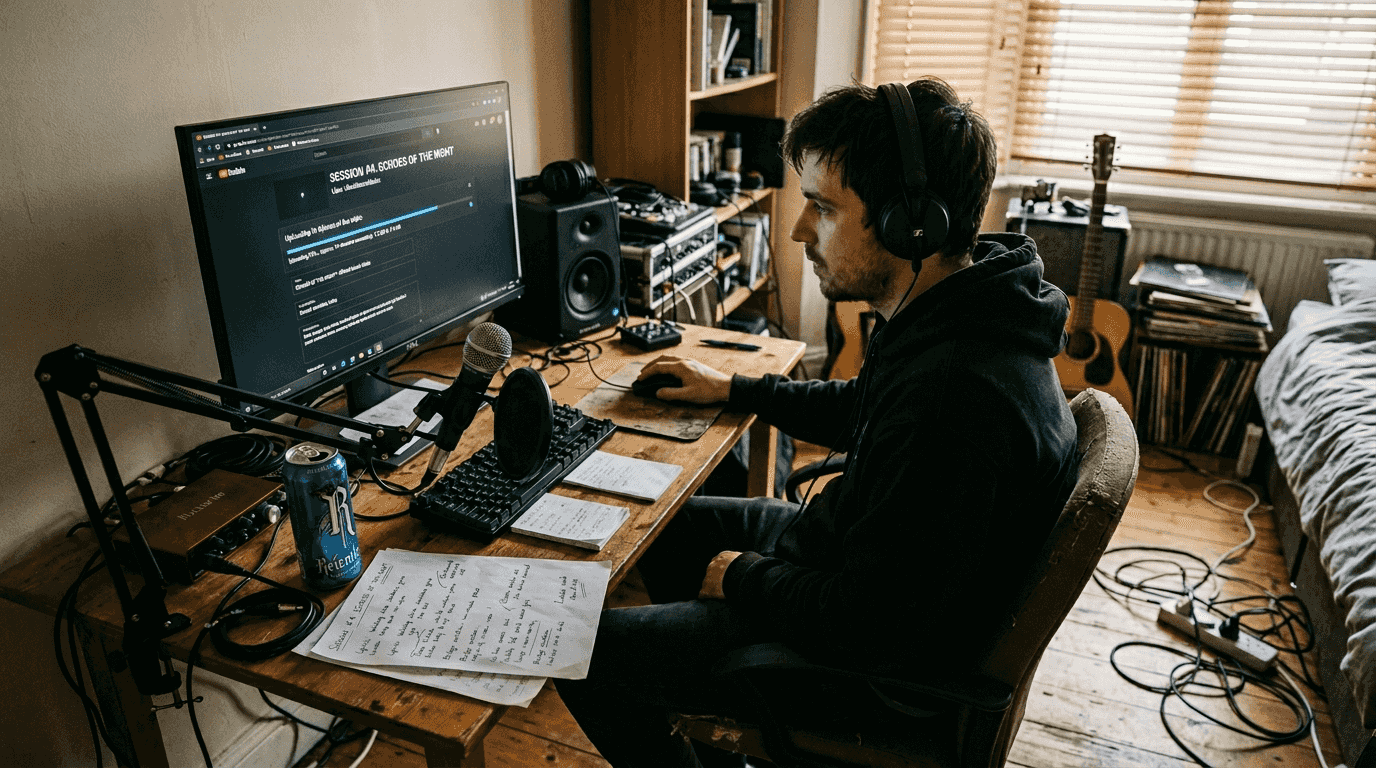
As an independent musician, you upload tracks regularly but struggle to attract the attention your songs deserve on YouTube’s crowded platform. Combining engaging long-form videos with targeted ad campaigns transforms visibility, driving measurable subscriber growth and fanbase expansion. This guide covers creation, optimisation, and advertising strategies to help you promote your music effectively in 2026.
Table of Contents
- Prerequisites And What You Need Before Starting
- Creating Engaging Long-Form Music Videos
- Setting Up Targeted YouTube Ad Campaigns
- Video Seo Optimisation Techniques
- Troubleshooting Common Mistakes
- Comparing Organic And Paid Promotion Methods
- Expected Timelines And Measurable Outcomes
- Promote Your Music Video With Professional 4K Visuals
Key takeaways
| Point | Details |
|---|---|
| Hybrid promotion accelerates growth | Combining organic long-form videos with targeted ads grows subscribers 50% faster than using either method alone. |
| Optimised metadata boosts reach | Video titles, descriptions, and tags increase organic views by up to 60% when properly researched and implemented. |
| Precise targeting prevents waste | Effective audience targeting and regular analytics review prevent wasted ad spend and improve campaign ROI. |
| Common mistakes reduce results | Poor audience definition, skipping A/B testing, and ignoring analytics significantly harm campaign performance. |
Prerequisites and what you need before starting
Before launching your YouTube song promotion, understand platform basics and policies. Familiarise yourself with copyright rules, community guidelines, and monetisation requirements to avoid takedowns or strikes.
You need access to video creation tools or platforms that produce long-form music videos efficiently. Whether using professional editing software or streamlined services, your toolkit should support videos exceeding 10 minutes with consistent quality.
Allocate a realistic budget for YouTube ad campaigns. Typical costs range from £0.10 to £0.30 per view, though rates vary by targeting specificity and competition. Calculate your total campaign budget based on desired reach and expected conversion rates.
Develop a planned content strategy before uploading. Define video themes that align with your brand, identify audience engagement calls to action, and establish a consistent upload schedule. This preparation prevents scattered efforts and strengthens viewer retention.
Essential prerequisites checklist:
- YouTube channel with verified status and complete profile
- Video creation tools or platform access for long-form content
- Allocated advertising budget with cost per view calculations
- Defined content strategy including themes and CTAs
- Understanding of YouTube analytics and reporting tools
Budget planning table
| Budget tier | Monthly spend | Expected views | Typical reach |
|---|---|---|---|
| Starter | £100-£300 | 500-1,500 | 1,000-3,000 impressions |
| Growth | £300-£800 | 1,500-4,000 | 3,000-8,000 impressions |
| Advanced | £800+ | 4,000+ | 8,000+ impressions |
Pro Tip: Start with a smaller budget to test audience response and refine targeting before scaling your campaign investment.
For detailed upload workflows and channel setup best practices, explore our YouTube music uploads guide tailored for independent artists.
Creating engaging long-form music videos
Videos exceeding 10 minutes generate three times higher average watch time compared to shorter clips on YouTube. Extended formats allow deeper storytelling, maintaining audience interest and reducing drop-off rates throughout your content.

Use clear, compelling calls to action within your videos to increase interaction. Place CTAs strategically at natural breaks or emotional peaks rather than only at video end. Direct viewers to subscribe, comment, or visit external links when engagement is highest.
Custom thumbnails aligned with your song’s mood and branding attract clicks and set viewer expectations. Design thumbnails with bold text, contrasting colours, and recognisable visual elements that stand out in crowded search results and recommendation feeds.
Storytelling techniques help maintain audience interest throughout long-form content. Structure videos with narrative arcs, visual variety, and pacing changes to prevent monotony. Integrate behind-the-scenes footage, lyric breakdowns, or performance angles to enrich viewer experience.
Long-form video best practices:
- Maintain consistent branding across thumbnails, intros, and outros
- Include chapter markers for easier navigation in longer videos
- Vary camera angles and visual effects to sustain attention
- Embed CTAs at 3-minute intervals for maximum impact
- End with strong closing visuals and subscription reminders
Pro Tip: Use the first 15 seconds to hook viewers with your strongest visual or musical moment, as this window determines whether audiences continue watching.
For advanced engagement tactics and audience retention strategies, review our music video engagement tips that independent musicians use successfully.
Setting up targeted YouTube ad campaigns
Use Google Ads platform to create campaigns targeting specific demographics, music interests, and viewer behaviours. Access the platform through your Google account, link your YouTube channel, and select video campaign objectives aligned with your promotional goals.
Implement A/B testing on ad visuals and copy to identify top performers. Create multiple ad variations with different thumbnails, headlines, and descriptions. Run them simultaneously to small audience segments, then scale the highest-performing versions.
Regularly monitor click-through rate (CTR), conversions, and engagement metrics to adjust targeting and bids. YouTube analytics reveal which audience segments respond best, allowing real-time optimisation. Expect initial campaign traction between 2 and 4 weeks as algorithms learn your ideal viewers.
60% of YouTube music ad campaigns underperform due to poor audience targeting and lack of optimisation. Avoid these pitfalls by defining precise demographics, interests, and keywords before launching.
Campaign setup steps:
- Link your YouTube channel to Google Ads account
- Define campaign objective (views, subscribers, or traffic)
- Set daily or total campaign budget limits
- Select target audience demographics and interests
- Create multiple ad variations for A/B testing
- Launch campaign and monitor initial performance
- Adjust bids and targeting based on analytics insights
Common ad campaign mistakes:
- Broad audience targeting without demographic refinement
- Skipping A/B testing on thumbnails and ad copy
- Setting unrealistic budgets for desired reach
- Ignoring analytics and failing to optimise mid-campaign
- Using low-quality video creatives that don’t represent your brand
Pro Tip: Start with narrow targeting parameters and gradually expand based on performance data rather than casting a wide net initially.
Discover comprehensive campaign strategies and targeting frameworks in our guide on advantages of YouTube music ads for independent musicians.
Video SEO optimisation techniques
Use keyword research relevant to your music genre for titles and tags. Tools like Google Trends, YouTube autocomplete, and competitor analysis reveal terms your target audience searches. Incorporate these naturally into metadata without keyword stuffing.
Write compelling, keyword-rich descriptions with links and CTAs. The first 150 characters appear in search results, so front-load critical information and hooks. Include timestamps, social media links, and streaming platform URLs to drive traffic beyond YouTube.
Optimised video metadata boosts organic views by up to 60% when implemented strategically. This organic growth complements paid campaigns, creating sustainable audience expansion over time.
Custom thumbnails increase click-through rates significantly compared to auto-generated options. Design thumbnails with readable text even at small sizes, high contrast colours, and close-up faces or recognisable imagery that conveys your song’s mood instantly.
Organise videos into playlists and use video cards to increase session duration. Playlists keep viewers engaged with multiple tracks, whilst video cards suggest related content at strategic moments. Both signals tell YouTube’s algorithm your channel provides valuable watch time.
SEO optimisation checklist:
- Research and implement 5-10 relevant keywords per video
- Write descriptions exceeding 200 words with natural keyword placement
- Create custom thumbnails with consistent branding elements
- Add video to relevant playlists immediately after upload
- Include end screens promoting other videos or subscription
- Update metadata quarterly based on search trend changes
Metadata performance benchmarks
| Element | Optimised | Unoptimised | Impact |
|---|---|---|---|
| Title with keywords | 8-12% CTR | 2-4% CTR | 3x improvement |
| Custom thumbnail | 10-15% CTR | 3-5% CTR | 3x improvement |
| Rich description | 60% more views | Baseline | 60% increase |
| Tags and playlists | Higher rankings | Lower rankings | 40% better placement |
Regularly update metadata based on analytics insights. Monitor which keywords drive traffic, adjust titles to match evolving search patterns, and refresh descriptions with current links and information.
For complete SEO frameworks and ranking strategies, explore our detailed resource on video SEO for musicians looking to maximise organic reach.
Troubleshooting common mistakes
Poor audience targeting wastes advertising budget and generates low engagement. Campaigns targeting overly broad demographics reach viewers unlikely to enjoy your music genre, resulting in high costs per meaningful interaction. Refine targeting to specific age ranges, interests, and geographic locations where your genre thrives.
Not optimising titles, descriptions, and tags causes reduced organic views. Neglecting metadata optimisation reduces views significantly, as YouTube’s algorithm cannot accurately categorise or recommend your content. Invest time in keyword research and implementation for sustainable growth.
Skipping A/B testing leads to inefficient ad spend. Running single ad versions assumes your initial creative is optimal, which rarely proves true. Test multiple thumbnails, headlines, and video intros simultaneously to identify what resonates before scaling budget.
Ignoring YouTube analytics results in missed optimisation opportunities. Analytics reveal viewer demographics, traffic sources, and engagement patterns essential for improvement. Review reports weekly during active campaigns to catch performance issues early.
Critical mistakes to avoid:
- Launching campaigns without defined success metrics
- Using identical ad creative across different audience segments
- Failing to update metadata after algorithm changes
- Ignoring viewer comments and engagement signals
- Setting budgets without tracking cost per acquisition
“Regular review and adjustment separate successful campaigns from wasted budget. Independent musicians who optimise weekly see 40% better ROI than those who set and forget campaigns.”
Pro Tip: Schedule weekly 30-minute analytics reviews to spot trends early and make data-driven adjustments before significant budget waste occurs.
For comprehensive troubleshooting frameworks and performance recovery strategies, visit our guide on YouTube promotion for musicians facing campaign challenges.
Comparing organic and paid promotion methods
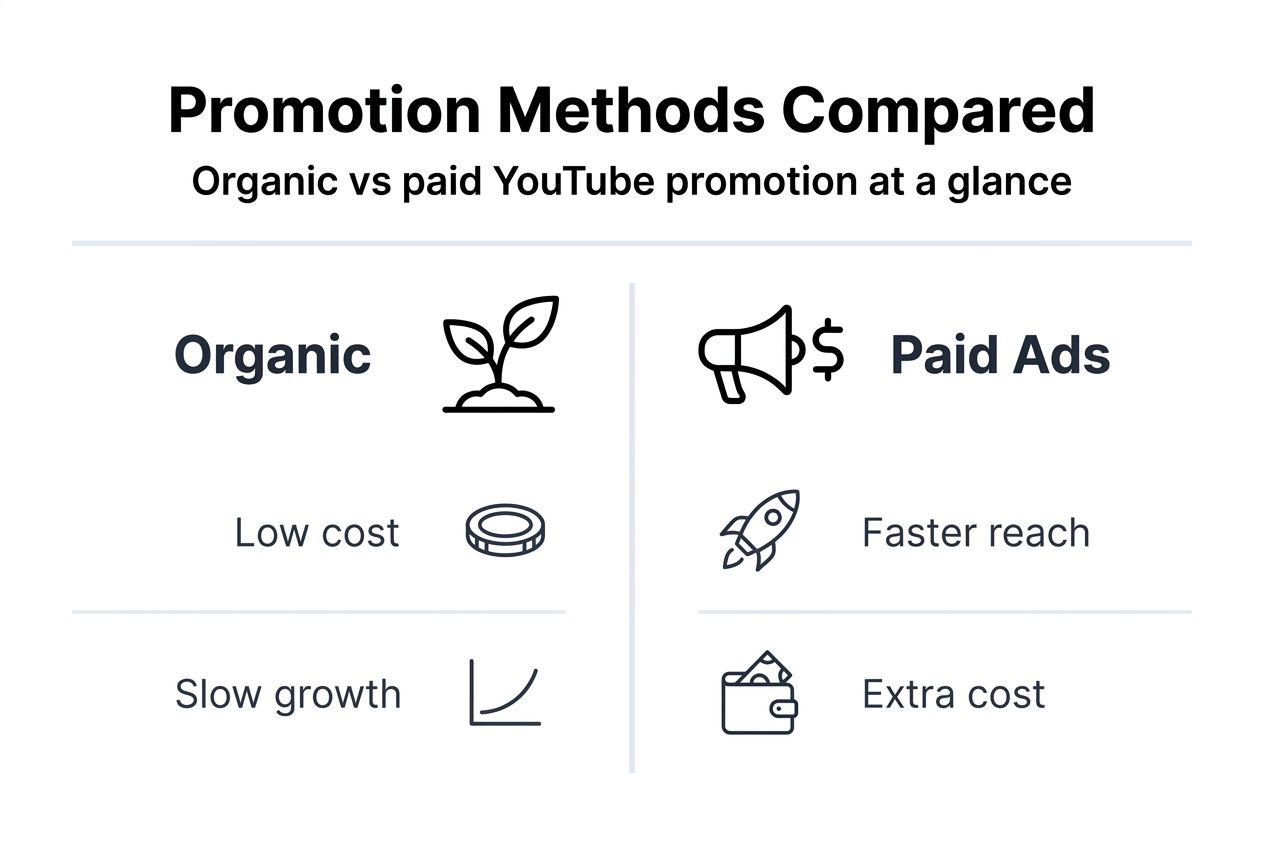
Organic promotion builds authentic engagement but grows slowly. Uploading quality content consistently and optimising metadata attracts genuine fans over months or years. This method costs no money but demands significant time investment and patience for results.
Paid ads offer faster visibility with targeted reach at a cost. YouTube advertising places your music directly before defined audiences, generating immediate views and potential subscribers. However, stopping ad spend typically reduces traffic unless organic momentum has built simultaneously.
Musicians combining organic and paid strategies grow subscribers 50% faster than using either method alone. Hybrid approaches leverage paid traffic to jumpstart visibility whilst organic optimisation sustains growth long-term, creating compound effects.
Budget and goals influence method choice significantly. Artists with limited funds prioritise organic tactics and gradual growth, whilst those seeking rapid launches for album releases or tours invest in paid campaigns. Most successful independent musicians eventually adopt hybrid models.
Promotion method comparison
| Method | Cost | Speed | Sustainability | Best for |
|---|---|---|---|---|
| Organic only | Time investment | 6-12 months | High | Patient artists, limited budget |
| Paid only | £300-£1,000+ monthly | 2-4 weeks | Low without continuity | Product launches, tours |
| Hybrid | £200-£600 monthly + time | 3-6 months | Very high | Serious career growth |
Hybrid strategies provide sustainable and measurable growth by balancing strengths. Paid ads generate initial traffic and data about audience preferences, informing organic content creation. Organic optimisation then retains and compounds that audience without ongoing ad costs.
For detailed comparison frameworks and strategy selection guidance, review our analysis of music video promotion methods available to independent artists.
Expected timelines and measurable outcomes
Initial campaign results typically emerge 2 to 4 weeks after launch as YouTube’s algorithm learns your ideal audience. Early metrics fluctuate whilst the platform optimises delivery, so avoid making major changes during this learning phase.
Increased engagement comes from clear CTAs and strong thumbnails that prompt viewer action. Videos with strategic calls to action see 30-45% higher interaction rates, translating to more subscribers, comments, and shares that boost algorithmic ranking.
Subscriber growth benchmarks differ by promotion method, with hybrid approaches fastest. Organic-only strategies typically add 50-100 subscribers monthly after initial traction, whilst paid campaigns generate 200-500 depending on budget and targeting quality. Hybrid methods often exceed 400-600 monthly subscribers once optimised.
Typical cost per view ranges between £0.10 and £0.30 for ads, though highly competitive genres or premium demographics may cost more. Calculate expected reach by dividing total budget by average cost per view in your target market.
Regular monitoring of CTR, view duration, and subscriber gains is essential for success. Track these metrics weekly during active campaigns and monthly for organic growth. Adjust strategies when performance trends downward or plateaus beyond expected timelines.
Realistic timeline expectations:
- Week 1-2: Algorithm learning phase, fluctuating metrics
- Week 3-4: Stabilising performance, initial traction visible
- Month 2-3: Clear trends emerge, optimisation opportunities identified
- Month 4-6: Sustainable growth patterns established
- Month 6+: Compounding organic and paid synergies
Pro Tip: Document baseline metrics before launching campaigns so you can accurately measure improvement and calculate return on investment over time.
For comprehensive timeline planning and milestone tracking frameworks, explore our YouTube music upload timelines guide for independent artists.
Promote your music video with professional 4K visuals
High-quality 4K music videos improve viewer engagement and strengthen your branding on YouTube. Professional visuals complement the strategies covered in this guide, helping your content stand out in crowded recommendation feeds and search results.

Music Video Marketplace offers a curated selection of videos tailored for independent musicians looking to elevate their YouTube presence. Our platform enables you to create long-form videos in minutes, then launch targeted ad campaigns that drive measurable results for your songs.
FAQ
How long should my music video be to maximise engagement?
Videos 10 minutes or longer generally sustain higher watch time and engagement on YouTube. Extended formats support storytelling that retains viewers better than shorter clips, giving your songs more opportunity to connect with audiences emotionally.
What budget should independent musicians expect for YouTube ad campaigns?
Typical cost per view ranges between £0.10 and £0.30, though competitive genres may cost more. Your total budget depends on targeting scope, campaign duration, and desired reach, with most effective campaigns starting at £300 monthly.
How can I improve my YouTube ad campaign performance?
Use precise audience targeting with detailed demographics and music interest filters. Implement A/B testing on creatives, thumbnails, and ad copy to identify top performers. Regularly review analytics and adjust targeting parameters, bids, and budgets based on performance data to maximise return on investment.
Is a hybrid organic and paid promotion strategy worth the extra effort?
Yes, hybrid strategies grow subscribers 50% faster than using either method alone. They balance authentic engagement from organic optimisation with rapid audience growth from paid advertising, creating sustainable momentum that continues even when ad spend reduces.
Recommended
- YouTube Promotion for Musicians: Driving Global Impact | Music Video Marketplace Blog
- Music Video Promotion: Growing Your YouTube Audience | Music Video Marketplace Blog
- Video Ads in Music Promotion: Power for Indies | Music Video Marketplace Blog
- Complete Youtube Music Upload Workflow for Musicians | Music Video Marketplace Blog
Read next
 Remarketing for Music: How to Re-Reach Your ListenersRemarketing for music explained for UK artists: who you can reach again, how YouTube and Google Ads audiences work, PECR consent rules and a simple fan funnel.
 The role of end screens on YouTube for musiciansDiscover the critical role of end screens on YouTube for musicians. Turn engaged viewers into subscribers and boost your video’s impact!
 Role of subtitles in music videos: 2026 guideDiscover the role of subtitles in music videos. Enhance engagement and viewership to make your content stand out in 2026.
 Optimise your YouTube music distribution workflowMaster YouTube music distribution with this step-by-step workflow guide. Learn how independent artists optimise uploads, Content ID, and promotion for maximum reach and revenue in 2026.
Turn the idea into a finished music video.
Drop your track into the Studio and build your visual in minutes.