
 Try the Workspace
Educational Video for Musicians: Boosting Song Reach
Educational video for musicians explained: types, creation process, copyright rules, and best practices for impactful YouTube promotion by independent artists.
Educational Video for Musicians: Boosting Song Reach
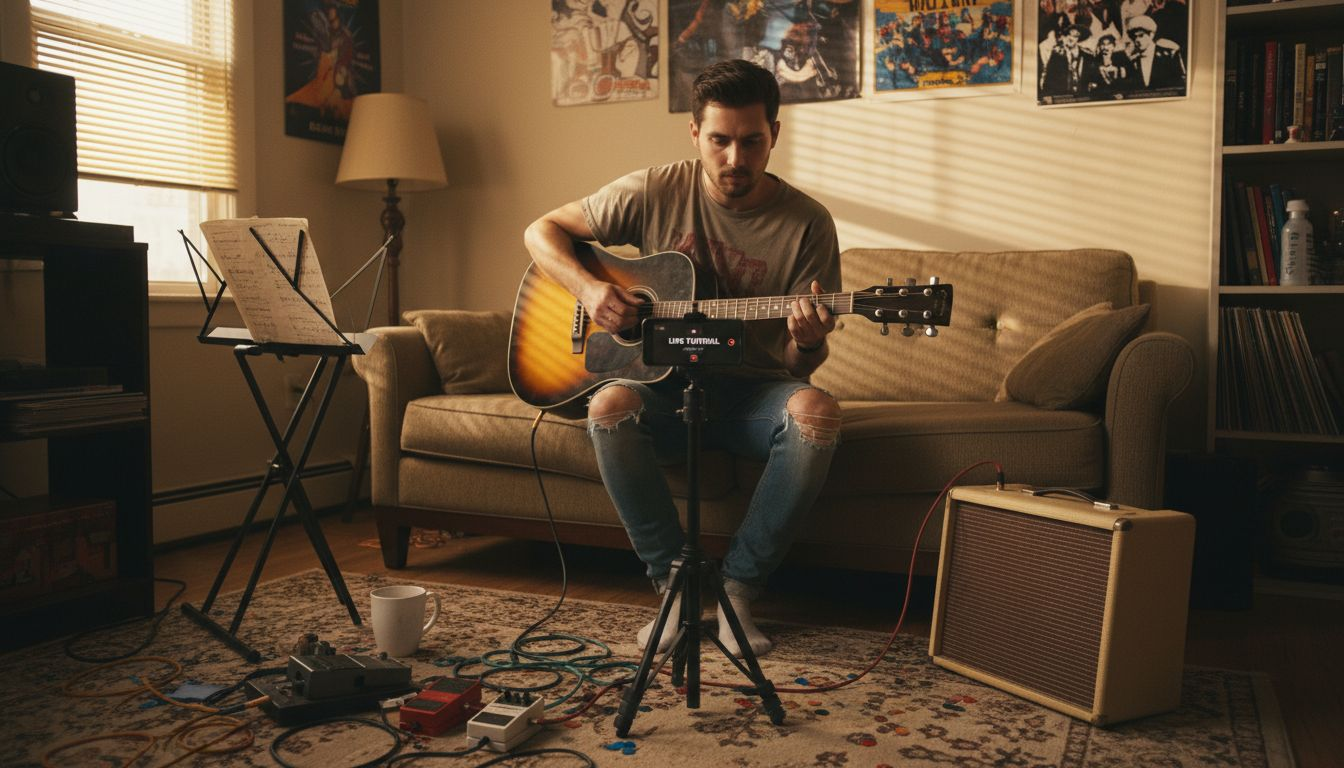
Uploading a song to YouTube brings excitement but getting noticed as an independent musician is a real challenge. Finding ways to stand out matters now more than ever because visibility shapes your audience. Educational videos for musicians have become powerful digital learning tools, combining clear visuals and sound for both skill development and audience building. Discover how this approach supports your music promotion whilst helping you connect with viewers who appreciate your expertise.
Table of Contents
- What Are Educational Videos for Musicians
- How Educational Videos Connect to Your Song Promotion
- The Connection to Song Reach Strategy
- Key Variations and Real-World Applications
- How to Create Compelling Music Education Videos
- Copyright, Licensing, and Platform Compliance
- Common Pitfalls and How to Avoid Them
Key Takeaways
| Point | Details |
|---|---|
| Educational videos enhance learning | They provide visual and auditory instruction, making complex musical concepts more accessible. |
| Flexibility in learning | Musicians can access quality instruction anywhere and at any time, catering to diverse learning preferences. |
| Dual purpose for promotion | Educational content not only teaches but also builds a connection with potential listeners, enhancing visibility on platforms like YouTube. |
| Quality and planning are crucial | Effective videos require solid planning and high production quality to maintain viewer engagement and ensure clarity. |
What Are Educational Videos for Musicians
Educational videos for musicians are digital learning tools designed to help you develop musical skills, knowledge, and creative thinking. They range from practical tutorials to theory explanations, all tailored to match your current level—whether you’re just picking up your first instrument or refining advanced techniques.
These videos combine visual and audio elements to make complex musical concepts easier to understand. Rather than reading about music theory in a textbook, you can watch someone demonstrate chord progressions in real time. You see the hand positions, hear the resulting sound, and can pause to practise alongside the instructor.
Types of Educational Videos Musicians Use
Educational videos span several distinct categories:
- Performance tutorials showing proper technique for your instrument
- Music theory lessons breaking down chord progressions, scales, and composition
- Production guides covering recording, mixing, and mastering
- Creative process videos demonstrating songwriting and arrangement methods
- Gear reviews and setup guides helping you choose and configure equipment
Educational videos for musicians support both formal learning and self-directed study, offering flexibility and the ability to revisit content whenever you need it.
Why Musicians Choose Video Learning
Video-based learning works exceptionally well for music because you need to see and hear simultaneously. You can’t fully understand a technique by reading a description. Watching a guitarist’s finger placement, hearing the resulting tone, and seeing the entire body movement creates a complete learning experience.
These videos also make music education more inclusive. You can access world-class instruction regardless of your location or budget. A musician in rural areas gains access to the same teaching quality as someone in major music cities.
To better understand how educational videos benefit musicians, consider this comparison of learning methods:
| Aspect | Educational Videos | In-Person Lessons | Self-Study (Books) |
|---|---|---|---|
| Visual demonstration | Immediate and detailed | Often limited | Rare or absent |
| Accessibility | Online, anytime | Fixed schedule, location | Any time, requires motivation |
| Cost | Usually lower or free | Higher, hourly rates | Variable, cost of books |
| Feedback | Can pause and replay | Real-time, personalised | Limited to personal interpretation |
How Educational Videos Connect to Your Song Promotion
When you create types of video content for musicians, educational videos serve a dual purpose. They demonstrate your expertise whilst simultaneously promoting your music. As listeners watch you teach, they become familiar with your style, personality, and artistry—building genuine connection beyond a simple music video.
Educational content often generates longer engagement times than traditional music videos. Viewers stay for 5-10 minutes watching a tutorial rather than the 3-4 minutes of a song. This extended watch time signals quality to YouTube’s algorithm, improving your visibility for both educational and promotional content.
The Connection to Song Reach Strategy
Music education encompasses technique, theory, and creative development, all elements you can showcase through educational content. By demonstrating your mastery, you build authority in your genre. Potential listeners trust your music more when they’ve seen your teaching ability.
Many successful independent musicians use educational content as their primary YouTube strategy. They attract viewers seeking learning, then convert those viewers into dedicated fans who follow their original music.
Pro tip: Create educational videos around concepts featured in your original songs—teach the production technique, theory, or creative decision behind your tracks to drive traffic back to your music.
Key Variations and Real-World Applications
Educational videos for musicians come in distinct formats, each serving different learning goals. Understanding these variations helps you choose the right approach for your content strategy and audience needs.
Main Video Formats
The most common formats include:
- Tutorial videos providing step-by-step instructions for specific techniques or skills
- Explainer videos using storytelling to clarify complex musical concepts
- Training videos focused on developing competency in particular areas
- Screencasts showing demonstrations through screen recording with audio narration
- Simulation videos offering experiential learning opportunities for practice
Each format uses targeted background music and audiovisual strategies to maintain viewer engagement whilst supporting your learning objective.
Real-World Benefits for Independent Musicians
In practice, educational videos solve genuine problems facing music learners worldwide. They provide flexible access to expert instruction regardless of time zone or location. A musician in a small town gains the same quality teaching as someone in London or New York.
These videos also address the challenge of inconsistent in-person instruction availability. Quality music teachers are concentrated in major cities, leaving many musicians without proper guidance. Video-based learning democratises access to expert knowledge.
Educational videos enable learners to practise independently whilst maintaining connection to expert instruction, bridging the gap between self-study and formal lessons.
Building Global Connections Through Video
When you create educational content, you expose viewers to diverse musical styles and pedagogies. A guitarist watching your tutorial learns not just technique but your unique approach and musical philosophy. This builds cultural understanding whilst broadening your audience’s musical perspective.
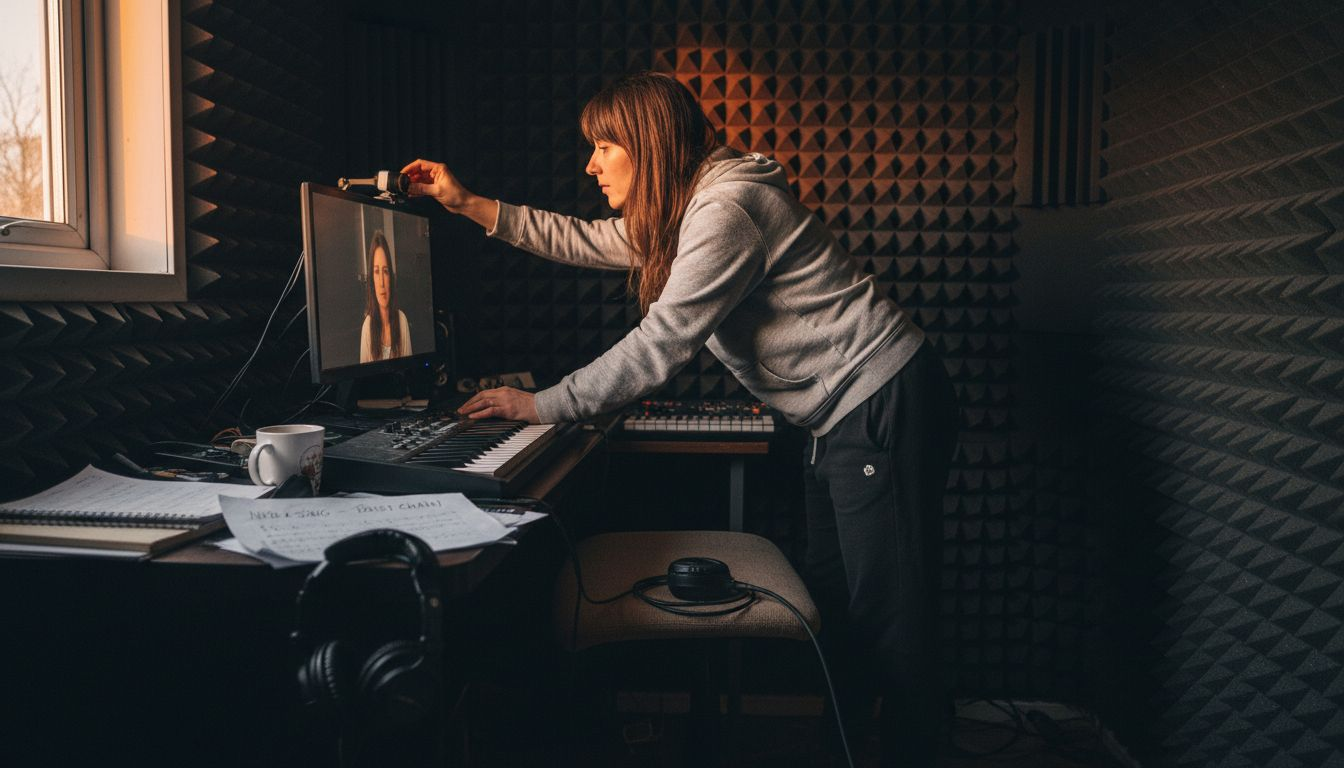
For your song promotion strategy, this creates natural pathways to your original music. Viewers who learn from your tutorials develop genuine familiarity with your artistry. They trust your music recommendations because they’ve already experienced your expertise through educational content.
Addressing Common Challenges
Online music learning presents obstacles like motivation and structured guidance, which well-crafted educational videos overcome. Your viewers benefit from your experience whilst you build loyal followers interested in both learning and supporting your music.
The format also allows you to demonstrate your production process, songwriting approach, and technical skills. Each educational video becomes subtle promotion for your artistry.
Pro tip: Film tutorial content in your home studio or practice space to reinforce your brand identity and make viewers comfortable with your creative environment.
How to Create Compelling Music Education Videos
Creating effective music education videos requires deliberate planning and technical attention. The difference between videos that gain traction and those that fall flat often comes down to production quality and instructional clarity.
Start With Solid Planning
Before you press record, invest time in pre-production work. Write a detailed script outlining exactly what you’ll teach and in what order. Storyboard your key moments—where you’ll show close-ups of finger positions, where you’ll demonstrate the full technique, where you’ll pause for emphasis.
This planning phase prevents rambling and keeps viewers engaged. A 10-minute tutorial filmed without a script often feels like 20 minutes of wandering instruction.
Focus on Audio and Visual Quality
Music education videos live or die by their audio quality. Invest in a decent USB microphone (£30-80 makes a significant difference). Position it to capture clear vocal instruction without background noise or wind noise if filming outdoors.
Visually, viewers need to see what you’re demonstrating. Frame shots so your hands, instrument, and face are all visible. Good lighting eliminates shadows that obscure technique details.
Reduce Cognitive Overload
Instructional design principles emphasise keeping viewers focused on one concept at a time. Don’t explain music theory whilst simultaneously demonstrating technique. Teach one element, demonstrate it, let viewers practise, then build to the next concept.
Break longer topics into shorter videos. Three focused 5-minute tutorials work better than one 15-minute video covering everything.
Effective educational videos prioritise clarity over comprehensiveness—teaching one concept well beats attempting to cover everything.
Structure Your Content Strategically
Use this proven framework:
- Hook (0-10 seconds) - Show the payoff. Demonstrate the finished technique or explain why this matters
- Foundation (10-60 seconds) - Explain the theory or concept behind what you’re teaching
- Demonstration (60+ seconds) - Show the technique slowly, then at normal speed
- Practice (final section) - Invite viewers to play along, pause the video, and practise with you
- Recap (final 30 seconds) - Summarise the key points
This structure keeps viewers moving through the content whilst maintaining engagement.
Connect to Your Music Promotion
When designing educational content, choose topics that naturally connect to your original songs. Teaching production techniques used in your tracks, music theory concepts in your compositions, or performance skills you showcase in your music creates natural touchpoints for promoting your artistry.
Every educational video becomes a subtle gateway to your original work.
Pro tip: Film multiple takes of key demonstrations and edit together the clearest version—viewers notice polished, seamless instruction and stay engaged longer.
Copyright, Licensing, and Platform Compliance
Music education videos involve more legal complexity than you might expect. You’re not just uploading your own content—you’re likely using music, which triggers copyright laws across multiple jurisdictions.
Understanding Copyright and Licensing Basics
When you create an educational video featuring music, you need licences covering two distinct elements. The composition (the written song itself) and the sound recording (the specific recorded version) each require separate permissions.
Using music without proper licences exposes you to copyright claims, revenue loss, or video removal. Platforms actively monitor for unlicenced content using automated detection systems that flag violations instantly.
What Licences Actually Cover
Copyright and licensing requirements vary significantly across international territories and distribution periods. A licence valid for European distribution might not cover North American use. Similarly, a year-long licence expires, requiring renewal for continued use.
You must secure explicit clearance for:
- Specific territories where your video will be visible
- Duration of rights (typically 1-5 years)
- Commercial versus non-commercial use
- Synchronisation rights (pairing music with visual content)
- Mechanical rights (if you’ve created a cover version)
Platform Requirements and Enforcement
Content identification technologies and digital rights management systems actively monitor uploaded videos for compliance violations. YouTube, Spotify, and other platforms employ sophisticated matching software that identifies unlicenced music within seconds of upload.
When your video contains flagged content, platforms can:
- Mute the audio entirely
- Block the video in specific countries
- Claim revenue for copyright holders
- Suspend your channel for repeated violations
- Remove content permanently
Non-compliance with music licensing creates legal liability, reduces your video visibility, and damages your reputation with platforms that control your reach.
Practical Compliance Steps
Before uploading any educational video:
- Verify you own all original content or have written permission
- Obtain synchronisation licences for any existing music featured
- Document all rights clearances with dates and territories
- Use only royalty-free or licenced music for backgrounds
- Include proper music attribution in video descriptions
- Understand your platform’s specific policies
Working with licenced music libraries simplifies this process significantly. Rather than negotiating individual permissions, you pay a subscription for pre-cleared music.
Working with royalty-free music libraries eliminates most licensing headaches whilst keeping your production costs manageable.
Pro tip: Before investing time in producing a full educational video, verify that all music you plan to feature is either licenced, royalty-free, or explicitly approved by the copyright holder in writing.
Below is a summary of key legal requirements for music education videos:
| Requirement | Purpose | Risks if Ignored | Recommended Action |
|---|---|---|---|
| Copyright clearance | Protect original creators | Content removal, potential lawsuits | Seek written permissions |
| Licensing for music | Legal rights to use tracks | Revenue loss, platform blocking | Use licenced or royalty-free music |
| Attribution | Acknowledge sources | Credibility issues | Include credits in description |
| Platform policy compliance | Stay within platform rules | Channel suspension or bans | Review and follow platform guidelines |
Common Pitfalls and How to Avoid Them
Most musicians make the same mistakes when filming educational content. Understanding these pitfalls saves you time, frustration, and keeps viewers engaged from start to finish.
Audio and Visual Quality Issues
Poor audio quality is the fastest way to lose viewers. If people can’t hear your instruction clearly, they’ll click away within seconds. Similarly, blurry visuals, inadequate lighting, or shaky camera work undermines your credibility as a teacher.
Technical issues such as inadequate audio clarity and improper microphone placement significantly impact how viewers absorb your content. Test all equipment thoroughly before filming. Record a short sample, listen back critically, and adjust microphone position or lighting before committing to full production.
Common audio mistakes:
- Recording in rooms with hard surfaces that echo
- Placing the microphone too far from your mouth
- Failing to reduce background noise (traffic, fans, pets)
- Inconsistent audio levels throughout the video
Structure and Content Problems
Missing clear learning objectives leaves viewers confused about what they should actually learn. Start every video by stating exactly what viewers will be able to do by the end—a specific skill, technique, or understanding.
Lack of clear objectives, excessive length, and failure to engage viewers interactively are widespread production errors. Videos exceeding 15 minutes often suffer from cognitive overload where viewers stop retaining information.
Break content strategically:
- Single-topic videos work better than trying to cover everything
- Aim for 5-10 minutes maximum for tutorial content
- Include checkpoints where viewers pause and practise
- Add interactive elements like quizzes or practice challenges
Distracting Visuals and Music
Background music should support instruction, not compete with it. Many musicians add lush instrumental tracks that distract from the teaching moment. Your voice and the sound of your instrument should remain centre stage.
Similarly, avoid animated text overlays, zooming effects, or transitions unless they genuinely clarify content. Keep visuals aligned closely with your spoken instruction. When you’re explaining hand position, show the hands clearly. When discussing theory, display notation on screen.
The most engaging educational videos prioritise clear instruction over production flourishes—viewers come to learn, not to watch special effects.
Engagement and Interaction Gaps
One-way lecturing loses attention quickly. Successful educational videos invite viewer participation. Pause occasionally and ask viewers to try the technique themselves. This simple interaction dramatically increases learning retention.
Include opportunities for viewers to:
- Practise alongside you in real time
- Download worksheets or chord charts
- Ask questions in comments
- Progress through structured learning sequences
Pro tip: Test your video on someone unfamiliar with your teaching style—ask them to point out confusing moments, audio issues, or where their attention drifted, then revise accordingly.
Transform Your Musical Education Videos Into Powerful Song Promotion Tools
The article highlights key challenges musicians face when creating educational videos: maintaining engagement, demonstrating clear technique, and seamlessly connecting educational content to music promotion. If you want to boost your song reach by turning tutorial content into an authentic audience-building strategy, you need tools that simplify video creation and optimise your exposure. Educational videos thrive on clear, professional presentation and longer viewer engagement times. But producing and promoting these videos efficiently can feel overwhelming.

Discover how Music Video Marketplace empowers you to create long form educational videos in minutes and launch targeted YouTube ad campaigns that amplify your music’s visibility. With our platform, you turn detailed tutorials into compelling video ads that grow your fanbase around your unique artistry. Don’t wait — harness the power of educational video marketing today to connect expertise with promotion and watch your song reach soar. Explore the possibilities and start now at Music Video Marketplace. You can also learn more about types of video content for musicians and music video ideas and tips to refine your strategy.
Frequently Asked Questions
What are educational videos for musicians?
Educational videos for musicians are digital tools designed to help develop musical skills, including practical tutorials and theory explanations, suitable for all levels of musicians.
How can educational videos help promote my music?
Educational videos can promote your music by showcasing your expertise and teaching abilities, engaging viewers for longer periods, which can enhance your visibility on platforms like YouTube.
What types of content can I create as an educational video for musicians?
Common types of educational content include performance tutorials, music theory lessons, production guides, creative process demonstrations, and gear reviews.
How should I structure my music education videos for maximum engagement?
A good structure includes a hook to capture interest, a foundation explaining the concept, a demonstration of the technique, practice time for viewers, and a recap summarising key points.
Recommended
- Types of Video Ads for Musicians: Boosting Reach | Music Video Marketplace Blog
- Video Ads in Music Promotion: Power for Indies | Music Video Marketplace Blog
- 6 Essential Music Video Ideas Checklist for Musicians | Music Video Marketplace Blog
- Top 7 TunePocket.com Alternatives in 2026 for Musicians | Music Video Marketplace Blog
- Warum Videos die Conversion erhöhen: Psychologie & Praxis - WinWebDesign
- Search Engine Ranking – Why It Matters Locally
- Measuring Customer Engagement for Real Growth | BonusQR
Read next
 Effective types of music promotion for indie artistsDiscover the best types of music promotion for indie artists in 2026. Learn strategies to stand out and successfully reach your audience!
 Distributor artist onboarding: examples, templates and checklistsDiscover effective distributor artist onboarding processes with copy-paste templates, checklists, and a practical timeline to streamline your workflow.
 Genre-focused distributor services: a UK guide for indie artistsExplore top genre-focused distributor services for UK indie artists, offering tailored support to enhance your music's reach and impact.
 Digital music promotion explained: proven strategiesLearn proven digital music promotion strategies for independent artists, covering YouTube, playlist pitching, release cycles, and the metrics that drive real growth.
Turn the idea into a finished music video.
Drop your track into the Workspace and build your visual in minutes.