
Effective types of music promotion for indie artists
Discover the best types of music promotion for indie artists in 2026. Learn strategies to stand out and successfully reach your audience!
Effective types of music promotion for indie artists
TL;DR:
- Effective independent music promotion requires a clear strategy aligned with your goals, audience, and resources.
- Video content, especially short-form organic-style clips, is crucial for engagement across platforms like TikTok, Instagram, and YouTube.
- Building genuine fan relationships through authentic communication surpasses fleeting trend chasing for long-term success.
More music is released every single day than most listeners will ever hear in a lifetime. With over 100,000 tracks uploaded to streaming platforms daily, standing out requires more than talent. It requires a clear, deliberate promotional strategy built around your specific goals, your audience, and the tools you actually have access to. This article breaks down the main types of music promotion available to independent artists in 2026, with a particular focus on video content and targeted advertising, so you can stop guessing and start making decisions that genuinely move the needle.
Table of Contents
- How to choose your music promotion strategy
- Video advertising: Reaching fans where they watch
- Playlist and algorithm promotion for wider discovery
- Comparing the main types of music promotion
- Which music promotion type suits your stage?
- Why lasting fan connection matters more than chasing trends
- Take your music promotion further with expert support
- Frequently asked questions
Key Takeaways
| Point | Details |
|---|---|
| Video ads drive discovery | Short-form and organic-feel video content outperforms traditional advertising for independent musicians. |
| Playlist pitching builds streams | Editorial and user-curated playlists are vital for reaching new audiences and securing algorithmic momentum. |
| Best results blend approaches | Combining video, ads, and playlist strategy gives more reach and sustained fans than any solo method. |
| Avoid chasing trends | Focus on genuine fan relationships and artist identity for long-term impact, not just quick spikes. |
How to choose your music promotion strategy
Before spending a single penny or hour on promotion, you need a clear framework for evaluating your options. Not every promotional channel suits every artist, and wasting resources on a tactic that does not match your audience is one of the most common and costly mistakes indie musicians make.
Start by asking five questions about any promotional method you are considering:
- Audience fit: Are your listeners actually on this platform, and in enough numbers to make it worthwhile?
- Cost: What is the realistic spend required to see meaningful results, including both money and time?
- Time investment: Does this method demand ongoing daily effort, or is it a one-time campaign you can set and review?
- Platform requirements: Does the platform favour the genre, format, or aesthetic of your music?
- Content requirements: What type of creative assets do you need, and do you already have them or need to produce them?
Video content sits at the intersection of almost every modern promotional method. Whether you are running paid ads or submitting to playlist curators, having strong visual content adds credibility and engagement. Keeping up with music marketing trends helps you understand what is gaining traction before you invest.
One counter-intuitive insight worth flagging early: best-performing ads often resemble organic short-form video, such as lyric snippets or live clips, rather than polished traditional music videos. This means your promotional content strategy and your creative identity should be closely aligned.
Pro Tip: Before choosing a promotional type, write down your one core goal for the next 90 days. Is it streams, email subscribers, ticket sales, or social following? Every promotional decision should point back to that one goal.
Video advertising: Reaching fans where they watch
Paid video advertising has become the most controllable and scalable tool available to independent artists. Unlike organic posts that rely on platform algorithms to distribute your content, paid ads put your music in front of a defined audience on your timeline.
The three dominant platforms for music video advertising are Meta (Instagram and Facebook), TikTok, and YouTube. Each has distinct strengths:
-
Meta (Instagram and Facebook): Strong demographic targeting based on age, location, interests, and behaviours. Instagram Reels placements are particularly powerful for music because the format is immersive and sound-on by default. Meta’s ad manager allows you to retarget people who have previously engaged with your content, which is invaluable for turning casual listeners into genuine fans.
-
TikTok: Unmatched for organic discovery. TikTok’s algorithm surfaces content to non-followers aggressively, meaning a well-produced short video can reach thousands of new listeners at a relatively low cost per view. Paid promotion amplifies this further, and video ads for musicians on TikTok tend to perform best when they feel completely native to the platform, meaning no watermarks, no excessive branding, and a hook in the first two seconds.
-
YouTube: The long-game platform. YouTube ads, particularly pre-roll and in-feed video ads, are highly effective for artists with longer-form content. YouTube also has the highest average watch time per user of any video platform, meaning your music video has a better chance of being watched in full rather than skipped.
“A single music video can generate multiple short-form assets for use on TikTok, Reels, and Shorts.”
This is a game-changing insight for indie artists with limited budgets. Rather than producing separate content for every platform, you can shoot one quality long-form video and repurpose it into 15-second, 30-second, and 60-second clips, each tailored to its destination platform. A lyric-focused cut for Instagram, a behind-the-scenes moment for TikTok, and a full performance for YouTube. You can see how this works in practice by browsing video content examples from other independent musicians.
The evidence is consistent: paid social and video ad types relevant to indie promotion, including Meta, TikTok, and YouTube ads, work best when the creative mimics native organic content rather than broadcast-style advertising. A clip of you singing in your kitchen with the lyrics on screen will outperform a glossy ten-second promo almost every time.
Pro Tip: Use lyric snippets and live session clips as your primary ad creative. These formats consistently deliver higher engagement rates across all three platforms compared to produced music video excerpts. If you want further inspiration, this approach to music video cross-promotion shows how creative collaboration can elevate a video campaign.
Playlist and algorithm promotion for wider discovery
While video advertising drives direct discovery, playlist placement works differently. It puts your music into a listening context where people are already in a receptive, engaged mood. The result is often higher completion rates and more meaningful saves and follows compared to cold ad exposure.

There are three types of playlist placement worth understanding:
Editorial playlists are curated by the platform itself. Spotify’s “New Music Friday” or Apple Music’s genre-specific playlists fall into this category. To be considered, you pitch your unreleased track via Spotify for Artists or Apple Music for Artists typically three to four weeks before your release date. The competition is fierce, but placement on even a mid-tier editorial playlist can deliver tens of thousands of streams.
User-curated and niche playlists are maintained by independent curators and are often highly genre-specific. Services like SubmitHub allow you to pay a small fee to submit your track to relevant curators for review. Strategic playlist pitching, including both editorial and user-curated outreach, is considered one of the most reliable levers for digital music promotion by independent artists.
Algorithmic playlists such as Spotify’s Discover Weekly or Release Radar are generated automatically based on listener behaviour data. You cannot pitch for these directly; instead, they respond to engagement signals like saves, shares, and full song completions. Getting placed on editorial or niche playlists first generates the data that then feeds algorithmic recommendations.
| Playlist type | How to access | Cost | Time to results | Longevity |
|---|---|---|---|---|
| Editorial | DSP pitch tools | Free | 3 to 4 weeks | Medium |
| User-curated | SubmitHub, direct outreach | Low to medium | 1 to 2 weeks | Varies |
| Algorithmic | Engagement signals | Free | Ongoing | High |
Balancing these three types is the key to sustainable growth on streaming platforms. You can explore online promotion strategies that combine playlist pitching with video content to create a compounding promotional effect across multiple channels simultaneously.
Comparing the main types of music promotion
With a solid understanding of both video advertising and playlist promotion, it helps to see them side by side. Each method has a distinct role depending on where you are in your career and what you are trying to achieve.
| Method | Cost | Engagement quality | Longevity | Fan-building potential | Time investment |
|---|---|---|---|---|---|
| Paid video ads (Meta/TikTok/YouTube) | Medium to high | Medium | Short to medium | High if retargeted | Low once set up |
| Editorial playlist pitching | Free | High | Medium | Medium | Low per release |
| User-curated playlist outreach | Low | High | Medium to high | Medium | Medium |
| Algorithmic playlist | Free | Very high | High | High | Passive |
A critical warning worth heeding: many campaigns “launch but fade” without building real fan relationships. Streams go up, numbers look impressive, and then they drop back to zero because no ongoing relationship was established. This is the defining pitfall of promotion that prioritises vanity metrics over genuine connection.
When to use each method:
- Paid video ads work best at release time, for tour announcements, or when you have a specific short-term conversion goal.
- Editorial playlist pitching suits every release, particularly for genre-fitting tracks with strong production quality.
- User-curated outreach is ideal for niche genres where community and identity are strong.
- Algorithmic placement is a long-term reward for consistent quality and engagement across all other channels.
You can find proven music ad campaign strategies that combine several of these methods into a cohesive release plan. Equally, reviewing the music promotion essentials for indie artists helps you avoid common missteps before committing budget.
Which music promotion type suits your stage?
The most effective promotional approach changes depending on where you are in your career. Here is a stage-by-stage guide:
-
Brand-new artist with no audience: Start with user-curated playlist outreach and short-form organic video. Build social proof before spending on paid ads. Invest in one quality video asset you can repurpose.
-
Growing artist with a small but engaged fanbase: Begin testing paid video ads on Meta or TikTok with modest daily budgets. Pitch to editorial playlists with every release. Use your existing fans as a warm audience for retargeting.
-
Established indie artist preparing an album launch: Combine all methods. Run a phased ad campaign starting four to six weeks before release. Pitch lead singles to editorial playlists three to four weeks out. Use video ads to drive pre-saves. Use community engagement to build anticipation.
-
Touring or live-focused artist: Lean into geo-targeted paid ads around tour dates. Short live-session video clips work exceptionally well for this audience. Music touring support initiatives can also amplify your reach in specific regions.
The evidence is clear that marketing effectiveness is maximised when strategies are tailored to your specific goals and resources rather than chasing what is trending. Understanding indie artist marketing strategies specific to your stage is far more valuable than copying a major label playbook.
Pro Tip: Reassess your promotional mix every quarter. What worked for your last release may not serve your next one. Track your data, note what drove saves versus streams versus followers, and adjust accordingly. Staying current with 2026 video marketing trends will help you adapt without losing your core identity.
Why lasting fan connection matters more than chasing trends
Here is an uncomfortable truth the music marketing industry rarely says out loud: the promotional tactics that generate the most impressive short-term numbers are often the least effective at building a lasting career.
We see it constantly. An artist runs a polished ad campaign, streams spike, the dashboard looks great, and then nothing. No new followers. No email sign-ups. No ticket sales. Just a temporary bump that fades quickly because the campaign was built around a trend rather than a relationship.
The artists who sustain genuine careers over years are not necessarily the ones with the biggest ad budgets or the most viral moments. They are the ones whose audiences feel a personal connection to them. Fans remember a story you told in a behind-the-scenes clip long after they forget a perfectly edited music video. They remember that you replied to their comment, that your lyrics articulated something they could not find words for, that you made them feel seen.
This does not mean ignoring video ads or playlist strategies. Those tools are genuinely useful and should be part of your toolkit. But they work best as amplifiers of something real, not as substitutes for it. Looking at real-world campaign lessons from artists who have built sustainable fanbases, the common thread is consistent, authentic communication over time, supported by targeted promotion rather than driven by it.
Define what makes your music and your story worth caring about. Then build your promotional strategy around communicating that, not around whatever platform feature launched last week.
Take your music promotion further with expert support
Choosing the right promotional approach is only half the challenge. Executing it well, with quality video content and well-targeted campaigns, is where most independent artists struggle to find the time and resources.
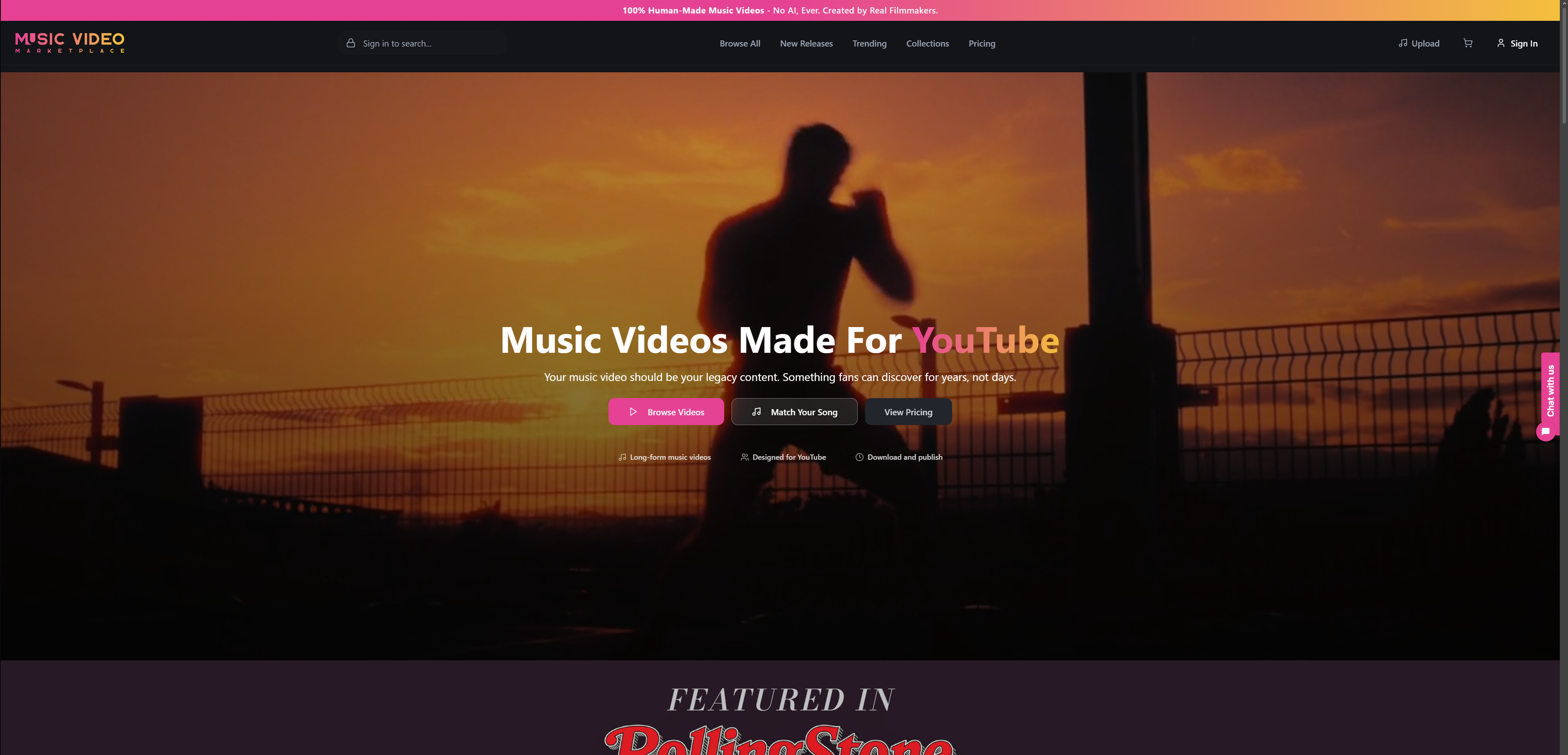
At Music Video Marketplace, we help you create a long-form video in minutes, ready to upload to YouTube, and launch a targeted ad campaign for your song without needing a production team or a marketing agency. The strategies outlined in this article, from short-form repurposing to platform-native ad creative, are built directly into how we work. Whether you are planning your first release campaign or scaling up an existing promotional strategy, visit Music Video Marketplace to see how we can help you turn quality video content into real fan growth.
Frequently asked questions
What is the most cost-effective type of music promotion for new artists?
Short-form video ads and targeted playlist pitching offer strong results for minimal spend when leveraged strategically. Best-performing ads tend to resemble organic short-form video, keeping production costs low while maximising engagement.
How far in advance should you pitch your music to editorial playlists?
Pitch your track three to four weeks before the release date for editorial playlists. Strategic playlist pitching within this window gives curators enough time to review and schedule your track before it goes live.
Do music video ads really help reach new fans?
Video ads on TikTok, Instagram, and YouTube are highly effective for discovery when they use platform-native creative. Meta, TikTok, and YouTube ads work for indie promotion when the content feels organic rather than overtly promotional.
How do algorithm playlists differ from user-curated ones?
Algorithm playlists are automated based on listening stats and engagement signals, while user-curated lists are handpicked by individuals and require direct outreach. The editorial versus algorithmic playlist mechanics each serve different discovery functions and work best when pursued together.
Should I focus on trends or building a fan community?
Sustained success strongly favours fan engagement and authentic identity over chasing fleeting trends. Many campaigns launch and fade precisely because they follow trends instead of investing in meaningful fan relationships.
Recommended
- Promote your music online: essentials for indie artists | Music Video Marketplace Blog
- Music promotion strategies for indie artists on YouTube | Music Video Marketplace Blog
- Music industry marketing explained: strategies for indie artists | Music Video Marketplace Blog
- Proven strategies to promote your songs online in 2026 | Music Video Marketplace Blog
Read next
 Distributor artist onboarding: examples, templates and checklistsDiscover effective distributor artist onboarding processes with copy-paste templates, checklists, and a practical timeline to streamline your workflow.
 Genre-focused distributor services: a UK guide for indie artistsExplore top genre-focused distributor services for UK indie artists, offering tailored support to enhance your music's reach and impact.
 7 Inspiring Examples of Viral Music Videos for ArtistsDiscover 7 exciting examples of viral music videos and learn practical tips to boost your YouTube engagement as an independent musician or emerging artist.
 Educational Video for Musicians: Boosting Song ReachEducational video for musicians explained: types, creation process, copyright rules, and best practices for impactful YouTube promotion by independent artists.
Turn the idea into a finished music video.
Drop your track into the Studio and build your visual in minutes.