
How to sequence song video launches in 2026
Discover how to sequence song video launches effectively in 2026. Learn to engage audiences and maximize your music video's impact!

How to sequence song video launches in 2026
TL;DR:
- Sequencing song video launches as a campaign maximizes audience engagement and extends promotional windows.
- A structured 30-day plan with pre-produced assets, platform tools, and active engagement is essential for success.
Sequencing song video launches is the practice of releasing promotional assets, teasers, and the full music video in a deliberate, phased order to maximise audience engagement and extend your promotional window. Most independent musicians treat a video release as a single event. The artists who build real momentum treat it as a campaign. That distinction separates a video with 200 views from one that compounds over weeks. Tools like YouTube Premieres, pre-save links, TikTok, and Instagram Reels each play a specific role in a well-structured release sequence, and knowing how to deploy them in the right order is the difference between a launch and a moment.
How to sequence song video launches: phases and timeline
The industry term for this process is a release campaign, and it follows four distinct phases: tease, announce, launch, and sustain. Each phase has a specific job. Collapsing them into one another is the most common reason launches underperform.
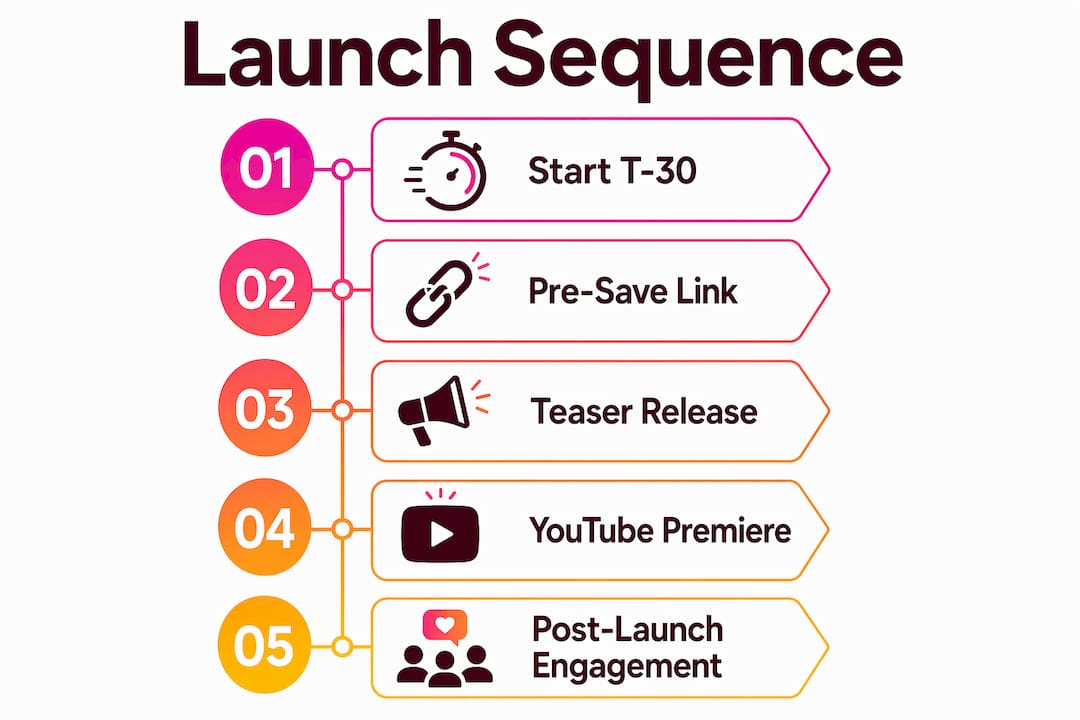
A 30-day launch timeline with milestones at T-30, T-21, and T-3 days is the standard framework for indie artists. Here is how each milestone functions in practice:
- T-30 days. Set up your distributor, whether that is DistroKid, TuneCore, or CD Baby, and get your pre-save link live. Your song needs to be submitted to distribution at least 30 days before release to avoid technical complications on premiere day.
- T-21 days. Produce your short-form promotional clips. This is when you edit your 15-second and 30-second teasers from the video shoot footage. Do not wait until T-7 to start editing.
- T-14 to T-3 days. Begin your social media posting cycle. Post teasers on TikTok, Instagram Reels, and YouTube Shorts on a staggered schedule, roughly every two to three days.
- T-0 (Launch day). Activate your YouTube Premiere. Engage in the live chat in real time.
- T+3 to T+14 days. Sustain momentum with behind-the-scenes clips, lyric breakdowns, and fan reaction content.
The table below compares the three primary timing strategies for releasing a music video relative to the audio single.
| Strategy | Timing | Best For |
|---|---|---|
| Same-day release | Video and audio drop together | Maximum initial impact, fewer press windows |
| Delayed video release | Video drops 2–4 weeks after audio | Extends promo cycle, creates second press opportunity |
| Video-first release | Video drops before or with audio | Visual-led artists, strong narrative concepts |
Each timing approach creates distinct promotional windows and press opportunities, so your choice should align with your specific goals, not just convenience.
What promotional assets should you prepare before launch?
The most effective music video campaigns are built from a single shoot day, not multiple production sessions. Building a bank of 12–15 short-form clips from your shoot, organised into lyric, performance, and behind-the-scenes families, gives you the raw material for a full month of content without returning to set.
Here is how to structure your asset bank:
- Lyric clips. Overlay key lyrics on performance footage. These work particularly well on Instagram Reels and YouTube Shorts because they give context to first-time listeners.
- Performance clips. Raw or lightly edited shots of you performing. These feel authentic and travel well on TikTok.
- Behind-the-scenes clips. Candid moments from the shoot day. These build parasocial connection and generate curiosity about the full video.
- Teaser edits. Short, incomplete cuts that withhold the chorus or the visual payoff. These are your anticipation drivers.
Pre-save links are critical and must be live before any teaser goes out. Teasing without a pre-save link means you are generating interest with nowhere to direct it. The link anchors your audience to the streaming platform and converts casual viewers into committed listeners before the release date.
Pro Tip: Develop multiple content families from one shoot day. This allows you to run varied promotion for weeks without additional filming costs, and it keeps your feed from feeling repetitive.
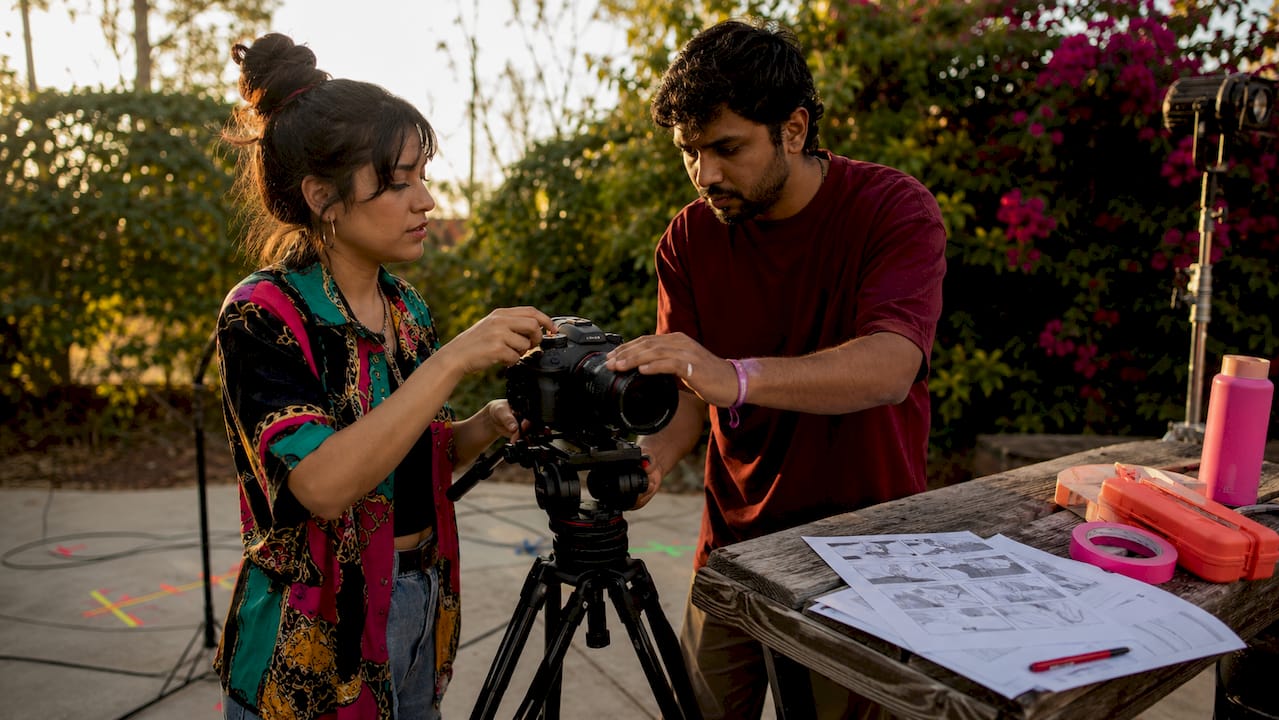
Repurposing across platforms requires minor adjustments, not full re-edits. A vertical 9:16 crop for TikTok and Reels, a square crop for Instagram feed posts, and the original 16:9 for YouTube Shorts covers all major surfaces from a single clip. For more creative content ideas that work across platforms, the Musicvideomarketplace blog has specific frameworks for producers at every stage.
How do platform tools shape your launch sequence?
YouTube Premieres are the most underused tool in independent music video marketing. A Premiere is not simply a scheduled upload. It is a live event with a countdown page, a live chat, and a shared viewing experience that transforms passive viewing into an interactive community moment. That distinction matters for the algorithm.
Scheduling a Premiere 24–48 hours in advance and posting countdown reminders increases the number of fans who set a reminder and attend live. More live viewers means more simultaneous engagement signals, which YouTube’s algorithm reads as a quality indicator.
Here is how to use platform tools effectively across your launch sequence:
- Set your YouTube Premiere at least 24 hours before the live event and share the countdown link across all platforms.
- Post reminder stories on Instagram and TikTok at T-24 hours and T-1 hour before the Premiere goes live.
- Stay active in the YouTube live chat during the Premiere. Respond to comments, call out usernames, and ask questions. This is not optional.
- Cross-post the Premiere link to your email list, Discord server, and any fan communities you manage.
- After the Premiere ends, pin a comment on the video directing viewers to your pre-save or streaming link.
Active response to fan comments in the first hours after launch significantly improves engagement metrics. Platforms reward content that generates conversation, and your replies count as engagement signals too.
Pro Tip: Schedule your Premiere for a Tuesday or Wednesday evening in your primary audience’s time zone. Mid-week evenings consistently outperform weekend slots for live event attendance on YouTube.
For a detailed breakdown of how to boost video engagement through YouTube-specific tactics, Musicvideomarketplace has published proven methods that apply directly to music video launches.
What mistakes undermine a song video launch sequence?
Most launch failures are not creative failures. They are logistical ones. The following mistakes are the most common, and each has a direct fix.
- Leaving distribution to the last minute. Submitting your video to a distributor a week before release is a frequent and costly error. Last-minute distribution leaves no time for pitching to editorial playlists or resolving technical issues. Submit at T-30 days, not T-7.
- Dropping the music video on the same day as your short-form clips. Releasing the full video simultaneously with your teaser content removes the incentive to click through to YouTube. Short-form clips should drive curiosity toward the full video, not compete with it.
- Starting teasers too early or too late. The optimal teaser window is 2–3 weeks before the premiere. Earlier than that and interest fades before launch day. Later than that and you have not built enough anticipation.
- Ignoring fans immediately after launch. The first two hours after a video goes live are the highest-leverage engagement window you have. Disappearing after posting is a missed opportunity that directly affects algorithmic reach.
- Failing to verify asset readiness before launch day. Check every link, every scheduled post, and every platform upload at T-1 day. A broken pre-save link on launch day cannot be fixed retroactively.
“Leaving distribution preparation to the last minute is a frequent and costly error that undermines launch success.” — Symphonic Blog
The corrective strategy for all five mistakes is the same: build your checklist at T-30 days and work backwards. Every asset, every link, and every post should be prepared and verified before the teaser phase begins.
Key takeaways
A well-sequenced music video launch requires a 30-day phased approach, a bank of pre-produced assets, and active platform engagement from premiere to post-launch.
| Point | Details |
|---|---|
| Start at T-30 days | Set up distribution and activate your pre-save link before any teaser goes live. |
| Build an asset bank | Produce 12–15 short-form clips from one shoot day, organised into lyric, performance, and behind-the-scenes families. |
| Use YouTube Premieres | Schedule 24–48 hours in advance and engage actively in the live chat during the event. |
| Stagger your release | Avoid dropping the full video on the same day as teaser clips; a delayed video release extends your promotional cycle. |
| Engage immediately post-launch | Respond to fan comments within the first two hours to maximise algorithmic reach and fan loyalty. |
What i have learnt from watching hundreds of music video launches
The musicians who get sequencing right share one habit: they treat the launch plan as a production document, not an afterthought. They build their content bank before they book the shoot, because they know what they need to capture on the day. The ones who struggle treat the video as the finish line. It is actually the starting gun.
The advice to post every day during launch week sounds right in theory. In practice, it burns through your asset bank in days and leaves you with nothing to sustain momentum in weeks two and three. Pacing matters more than volume. Two well-timed posts per week in the sustain phase outperform seven rushed ones in the launch week.
The staggered release approach, where the audio single drops first and the video follows two to four weeks later, is underused by independent artists. It creates a second press cycle, a second algorithmic boost, and a second reason for fans to share your work. That is not a small advantage. For artists without a label’s promotional budget, it is one of the most effective tools available.
Analytics tell you what your audience actually responded to, not what you thought they would. If a behind-the-scenes clip outperforms your polished teaser, that is data. Adjust your sustain-phase content accordingly. The plan is a starting point, not a contract.
— Music
How Musicvideomarketplace can support your launch
Planning a phased video launch takes time, and the asset creation side is where most independent artists lose momentum. Musicvideomarketplace is built specifically for this problem. The platform enables musicians to create a long-form video in minutes, ready to upload directly to YouTube, and then build an ad campaign around that video without needing a separate agency or production team.

If you are working through your first structured launch sequence, Musicvideomarketplace gives you the production and promotion infrastructure in one place. From YouTube ad campaigns to song promotion best practices, the resources are built for independent musicians who want professional results without a label’s budget. Visit Musicvideomarketplace to explore the full suite of tools for your next release.
FAQ
What is the optimal teaser window before a music video launch?
The optimal teaser window is 2–3 weeks before the premiere. Starting earlier risks losing audience interest before launch day; starting later fails to build sufficient anticipation.
Should i release my music video on the same day as the audio single?
A same-day release maximises initial impact but reduces your promotional window. A delayed video release, dropping 2–4 weeks after the audio, creates a second press cycle and extends momentum.
How many short-form clips should i prepare before launch?
Aim for 12–15 short-form clips organised into lyric, performance, and behind-the-scenes families. This gives you enough material to sustain promotion for four to six weeks without returning to set.
How far in advance should i schedule a YouTube premiere?
Schedule your YouTube Premiere 24–48 hours in advance and post countdown reminders across your social platforms. This increases reminder-setting and live attendance during the event.
When should i submit my video to a distributor?
Submit your video to your distributor at least 30 days before the release date. Early submission gives marketing teams time to prepare pitches and prevents technical issues on premiere day.
Recommended
- How to create song visuals: a 2026 guide | Music Video Marketplace Blog
- Top 6 music video generators for djs 2026 | Music Video Marketplace Blog
- Music Video Creation Guide for Quick YouTube Launch | Music Video Marketplace Blog
- Why video boosts song exposure for musicians in 2026 | Music Video Marketplace Blog
Read next
 Instant Music Videos-the fastest way to growInstant music videos help artists release faster, save money, and grow their fanbase. Upload your song, find the perfect visual match, and share your video instantly with Music Video Marketplace.
 Label digital asset organisation checklist for UK labelsEnsure smooth music distribution with our label digital asset organization checklist. Follow essential steps for accurate asset management.
 Label roster promotion checklist: the complete campaign guideBoost your music release with this essential label roster promotion checklist and a strategic week-by-week campaign timeline.
 How to repurpose music videos for maximum reachDiscover how to repurpose music videos for maximum reach! Unlock new audiences and boost your views with these effective strategies.
Turn the idea into a finished music video.
Drop your track into the Studio and build your visual in minutes.