
 Try the Workspace
Music video rollout guide for independent artists
Discover the ultimate music video rollout guide for independent artists. Learn strategies to maximize views and engagement for your next release!

Music video rollout guide for independent artists
TL;DR:
- A music video rollout is a multi-phase strategy designed to maximize views and engagement for independent artists.
- Proper planning four to eight weeks before release ensures asset readiness and effective distribution setup.
A music video rollout guide is a structured, multi-phase strategy that helps independent artists launch and promote their videos to maximise views, engagement, and streaming impact. Without a plan, even a well-produced video gets lost. The standard industry term for this process is a “release rollout,” and it covers everything from asset preparation to post-launch promotion. Artists who follow a structured release strategy consistently outperform those who upload and hope. Planning should begin 4–8 weeks before release, with larger audiences requiring the full eight weeks. Musicvideomarketplace helps artists create long-form videos quickly and build YouTube ad campaigns around them, making structured rollouts accessible regardless of budget.
What preparation is needed before your music video rollout?
Preparation is the foundation of every successful release rollout. Artists who skip this stage announce before their assets are ready, which leads to messy, momentum-killing rollouts. The goal is to have every clip, thumbnail, caption, and link ready before you post a single teaser.
Building your asset library
Your primary shoot should produce far more than one finished video. Shooting from wide, medium, and tight angles across multiple performance passes generates 30–60 edit-ready moments from a single day. That volume of footage fuels weeks of social content without returning to set.
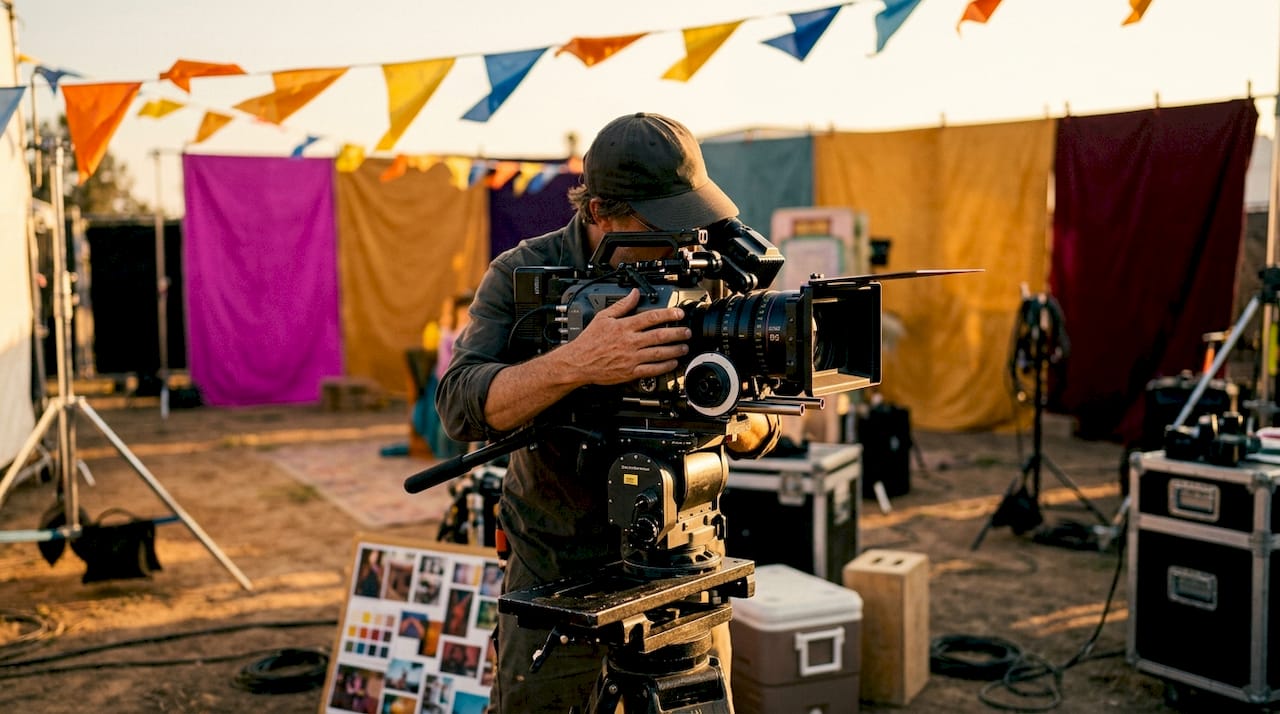
Vertical coverage is non-negotiable. Either shoot dedicated 9:16 takes or frame your 16:9 shots to allow a clean crop to vertical without zooming. Zoomed post-production crops look soft and unprofessional on TikTok and Reels.
| Asset type | Format | Platform use |
|---|---|---|
| Full music video | 16:9 horizontal | YouTube |
| Short performance clips | 9:16 vertical | TikTok, Reels, Shorts |
| Lyric video | 16:9 horizontal | YouTube, Facebook |
| Behind-the-scenes clips | 9:16 vertical | Stories, TikTok |
| Teaser trailer | 9:16 or 16:9 | All platforms |
| Thumbnail image | 1280×720 px | YouTube |
Setting up distribution and scheduling
Lock your YouTube premiere before you announce anything publicly. Scheduling a premiere 24–48 hours in advance lets fans set reminders, which drives a concentrated audience to your video at the moment it goes live. Set up pre-save or pre-add links through your distributor at the same time, so every promotional post has somewhere to send people.
Pro Tip: Use a transcript-based editing workflow to cut your vertical clips. AI-assisted transcript editing lets you search footage by spoken words or lyrics rather than scrubbing a timeline manually. For a three-minute song, this can reduce clip selection time from hours to minutes.
How should you structure your rollout timeline?
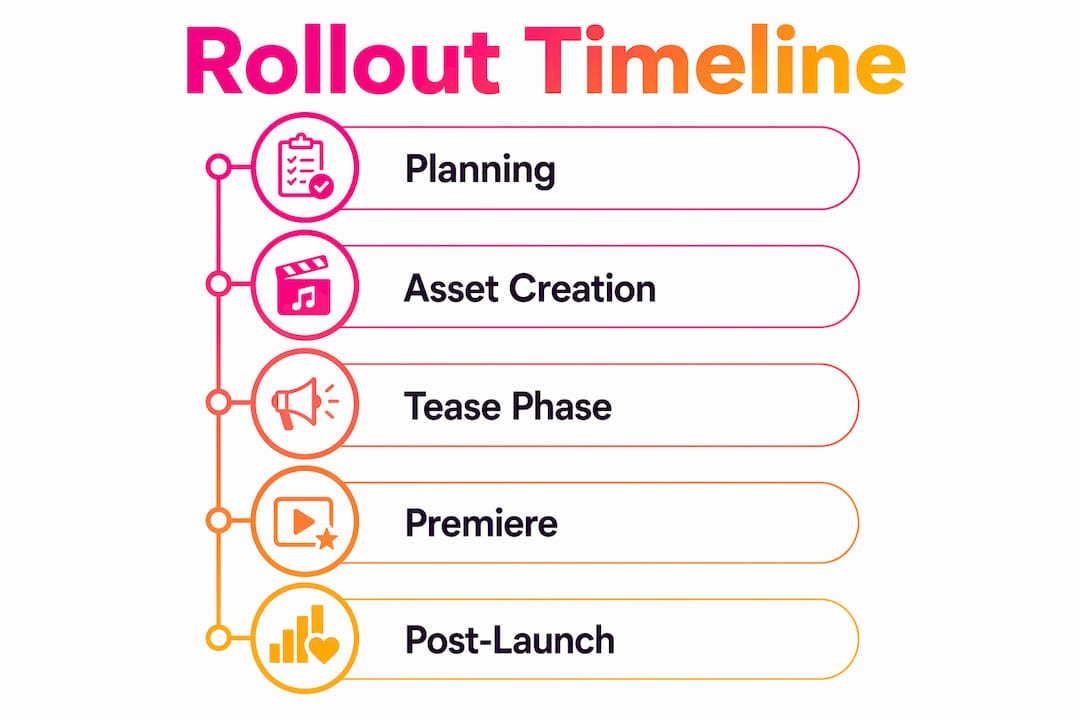
The four-phase rollout is the industry standard for music video promotion. Each phase has a distinct purpose, and collapsing them together dilutes impact.
- Tease phase (2–3 weeks before release). Drop short, curiosity-driven clips with no release date. Show atmosphere, colour, or a single striking image. Keep this phase under three weeks or anticipation turns to indifference.
- Announce phase (1 week before release). Reveal the release date, drop a proper trailer, and open your YouTube premiere for reminders. Post the pre-save link on every platform.
- Launch phase (premiere day through week 1). Publish the full video. Respond to every comment within the first two hours. Active comment interaction in this window is critical for algorithmic reach on YouTube.
- Sustain phase (weeks 2–4 and beyond). Release behind-the-scenes content, reaction clips, and new performance edits. This is where most artists stop too early and leave reach on the table.
Pro Tip: Keep your tease phase to a maximum of three weeks. Longer teases bleed momentum and train your audience to ignore your posts before the video even arrives.
The table below shows how rollout length and content volume scale with budget and audience size.
| Rollout type | Duration | Weekly clip volume | Best suited for |
|---|---|---|---|
| Minimal | 4 weeks | 3–5 clips | New artists, small budgets |
| Standard | 6–8 weeks | 8–10 clips | Growing artists, mid budgets |
| Full campaign | 10–12 weeks | 12–15 clips | Established artists, larger budgets |
A standard rollout targets 12–15 vertical clips across Shorts, TikTok, and Reels per week during peak phases. That volume sounds high, but a single shoot day with multi-angle coverage makes it achievable. Learn more about sequencing your video launches to plan each phase with precision.
What platform strategies maximise reach and engagement?
Each platform rewards different behaviour. Posting the same content everywhere at the same time is one of the most common video marketing mistakes independent artists make.
YouTube
YouTube functions as a search engine, not a social feed. Optimising titles, thumbnails, descriptions, and tags for viewer search queries matters more than upload frequency. Avoid generic titles like “Official Music Video.” Write titles that match what listeners actually search for, such as the song name plus genre or mood. Pin a comment on launch day with a clear call to action, such as “Watch the full video and set a reminder for the next drop.” Use the YouTube distribution workflow to keep metadata consistent across releases.
Short-form platforms
TikTok, Instagram Reels, and YouTube Shorts each reward native vertical content. Posting uniform formats across platforms reduces engagement sharply. Never post the full music video on TikTok. Post short clips instead, each with a hook in the first two seconds. Use TikTok’s native sound library to attach your track to the clip so it appears in sound-based searches. On Instagram, mix Reels with Stories. Stories work well for countdowns, polls, and behind-the-scenes moments that feel personal rather than promotional.
Platform do’s and don’ts
- Do schedule your YouTube premiere 24–48 hours early and promote the reminder link.
- Do shoot vertical coverage during your primary shoot. Read why premieres build momentum before your launch day.
- Do include a clear call to action on every post, such as “Watch now” or “Stream the full track.”
- Don’t post the full video on TikTok. Use 15–30 second clips instead.
- Don’t use horizontal video on TikTok or Reels. It signals low effort to both the algorithm and the viewer.
- Don’t go silent after launch day. The sustain phase drives long-term discovery.
Pro Tip: Shoot dedicated vertical takes during your primary production day. Reframing a horizontal shot in post always loses quality. A few extra minutes on set saves hours of poor-quality cropping later.
What mistakes derail a music video rollout?
Most rollout failures come from the same small set of errors. Recognising them before launch is far easier than fixing them mid-campaign.
- Announcing before assets are ready. Locking a release date before the final video, metadata, and clips are complete forces rushed decisions. Incomplete assets at announcement damage audience trust and create logistical chaos.
- Dropping short-form content and the full video simultaneously. This splits attention and removes the tension that drives premiere views. Release teaser clips first, then the full video.
- Ignoring the sustain phase. Most engagement growth happens in weeks two and three, not on launch day. Artists who stop posting after day one lose the compounding benefit of algorithmic momentum.
- Neglecting vertical clip preparation. Horizontal-only footage limits your short-form output. Short-form video promotion is now central to music discovery, not optional.
- Overspending on cameras, underspending on lighting. Well-lit footage on a phone outperforms unlit footage from a cinema camera. Lighting and shot stability deliver more visible quality improvement per pound than any camera upgrade.
Pro Tip: Before your shoot, test your lighting setup on the phone or camera you plan to use. If the image looks flat or harsh, fix the light. Do not buy a new camera.
Key takeaways
A successful music video rollout requires structured preparation, a four-phase timeline, platform-specific content, and sustained posting well beyond launch day.
| Point | Details |
|---|---|
| Start planning early | Begin your rollout 4–8 weeks before release to build assets and schedule distribution. |
| Build a clip factory | Shoot multi-angle footage to generate 30–60 edit-ready moments from one production day. |
| Follow the four phases | Tease, Announce, Launch, and Sustain each serve a distinct purpose. Never collapse them. |
| Tailor content per platform | Vertical clips for TikTok and Reels, optimised metadata for YouTube. Never post one format everywhere. |
| Prioritise lighting over gear | Good lighting on any camera produces better results than expensive equipment in poor light. |
What I have learned from watching rollouts succeed and fail
The artists I see consistently outperform their peers are not the ones with the biggest budgets. They are the ones who treat the rollout as a production in itself, not an afterthought. They plan their clip library before they plan their shoot. They know exactly which moment from which angle will become their TikTok hook before they press record.
The camera debate is a distraction. I have watched beautifully lit phone footage drive tens of thousands of views while expensive, poorly lit productions sink without a trace. Lighting is a craft decision. Camera choice is a gear decision. Craft wins every time.
What surprises most artists is how much the sustain phase matters. The algorithm on YouTube and TikTok rewards content that keeps generating engagement over time, not just on day one. Artists who post consistently through weeks two and three often see their biggest view spikes after the initial launch excitement fades. That is the compounding effect of a proper rollout, and it is entirely within your control.
My honest advice: match your rollout scale to your actual audience size. A twelve-week campaign with fifteen clips per week is the right plan for an artist with a large, active following. For a newer artist, a focused four-week rollout with five strong clips per week will outperform a bloated campaign that runs out of steam. Ambition is good. Realism is better.
— Music
How Musicvideomarketplace supports your release
Getting a video produced and promoted used to require a team. Musicvideomarketplace changes that for independent artists by letting you create a long-form video in minutes and build a YouTube ad campaign around your song without needing a label or an agency.

Whether you are planning your first release or your tenth, having the right production and promotion tools in place before launch day makes the difference between a video that builds an audience and one that disappears. Visit Musicvideomarketplace to create your video, set up your campaign, and put your music in front of the right listeners from day one.
FAQ
How far in advance should I plan a music video rollout?
Independent artists should begin planning 4–8 weeks before their release date. Larger audiences and more complex campaigns benefit from the full eight weeks.
How many clips should I create from one music video shoot?
Aim for 30–60 edit-ready moments by shooting multiple performance passes from wide, medium, and tight angles. This gives you enough material for a full multi-week social campaign.
Should I post my full music video on TikTok?
No. Post short clips of 15–30 seconds instead. Posting the full video on TikTok removes the incentive for viewers to seek out the full release on YouTube.
What is the most important factor in music video quality?
Lighting and shot stability improve perceived quality more than any camera upgrade. Well-lit footage shot on a phone consistently outperforms unlit footage from expensive cinema cameras.
When should I schedule my YouTube premiere?
Schedule your YouTube premiere 24–48 hours before the release time. This gives fans the chance to set reminders and creates a concentrated audience at the moment your video goes live.
Recommended
- Guide to YouTube music uploads for indie artists 2026 | Music Video Marketplace Blog
- Music Video Creation Guide for Quick YouTube Launch | Music Video Marketplace Blog
- Creative video campaign examples for independent musicians | Music Video Marketplace Blog
- Explaining music release strategies: your 2026 guide | Music Video Marketplace Blog
Read next
 Music Video Template Licenses: 8 Clauses Musicians Must CheckCheck 8 license clauses before using a music video template, separate visual rights from song clearance, and learn when ads or broadcast need more.
 Why Musicians Need Video Content for GrowthDiscover why video content is essential for musicians: key types, promotional impact on YouTube, and common pitfalls in digital marketing strategy.
 Optimise your YouTube music distribution workflowMaster YouTube music distribution with this step-by-step workflow guide. Learn how independent artists optimise uploads, Content ID, and promotion for maximum reach and revenue in 2026.
 Music Video Marketing Guide for Independent MusiciansFollow this step-by-step music video marketing guide to create, promote and advertise your song effectively, boosting your music’s online presence and reach.
Turn the idea into a finished music video.
Drop your track into the Workspace and build your visual in minutes.