
How to create long-form music video tutorials on YouTube
Unlock the power of a long form video tutorial! Learn to create engaging YouTube music tutorials that build loyal audiences and boost your reach.

How to create long-form music video tutorials on YouTube
TL;DR:
- Long-form tutorials help musicians build loyal audiences based on trust rather than fleeting attention. Proper preparation, quality setup, and strategic filming ensure content effectively converts casual viewers into fans. Optimizing titles, thumbnails, and engagement metrics like watch time and CTR enhances YouTube success and audience growth.
Short-form clips might dominate feeds right now, but musicians who commit to long-form tutorials are quietly building something far more valuable: loyal audiences who trust them. For independent artists, building long-form video tutorials requires deliberate strategy, not just more content. This guide walks you through every stage, from pre-production planning to post-upload analytics, so you can create tutorials that actually convert casual viewers into genuine fans and give your music a lasting home on YouTube.
Table of Contents
- What you need to prepare before filming
- Step-by-step: Filming your long-form music tutorial
- Optimising your tutorial for YouTube success
- Common mistakes and troubleshooting
- Measuring results and improving over time
- From tactics to transformation: the real value of long-form tutorials
- Ready to take your music videos further?
- Frequently asked questions
Key Takeaways
| Point | Details |
|---|---|
| Start with a clear plan | Good music and audio fundamentals are the foundation for engaging tutorials. |
| Hook viewers quickly | Capture attention in the first ten seconds with compelling content and visuals. |
| Integrate Shorts effectively | Use short-form content to funnel viewers towards your long-form tutorials. |
| Optimise for retention | Analysing view duration and audience comments helps refine your content. |
| Consistency trumps perfection | Regular publishing and incremental improvements grow your loyal fan base over time. |
What you need to prepare before filming
With your goals in mind, let’s make sure you have all the essentials ready before you hit record.
The most common reason tutorials fail has nothing to do with talent. It comes down to poor preparation. Before you set up a single camera angle or open your recording software, you need to think carefully about what your audience genuinely wants to learn. Browse the comments on your previous videos, look at what questions appear in music forums, and pay attention to recurring themes. Does your audience want to understand your chord progressions? Your production decisions? Your lyric-writing process? Choosing the right subject is not a guessing game.
Audio and visual setup
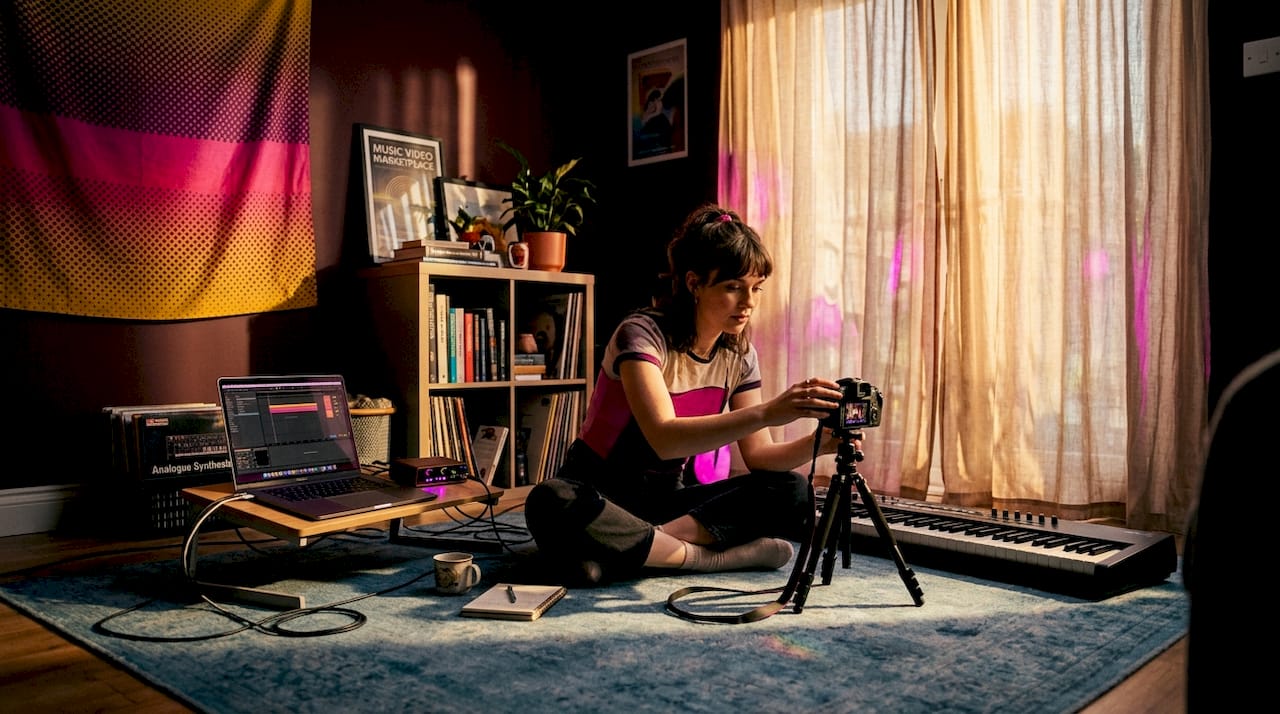
Audio quality and basic recording practices have a greater impact than expensive gear for YouTube tutorials. A well-placed microphone beats an expensive one poorly positioned every time. Keep your microphone between 15 and 25 centimetres from your mouth or instrument. Drape a duvet over a clothes rail behind you to reduce flutter echo, and place a rug on the floor. These zero-cost fixes make a dramatic difference to perceived production value.

For visuals, film in 16:9 aspect ratio for your main video. If you plan to create companion Shorts, film additional material in 9:16 at the same time to keep your workflow efficient. Consistency in your music video production workflow pays dividends over time.
| Setup element | Budget option | Upgraded option |
|---|---|---|
| Microphone | USB condenser (e.g. Blue Snowball) | XLR dynamic microphone |
| Camera | Smartphone at 1080p | Mirrorless camera |
| Acoustic treatment | Cushions, rugs, curtains | Foam panels, bass traps |
| Lighting | Daylight from a window | LED ring light or softbox |
| Recording software | Audacity (free) | Logic Pro or Ableton Live |
Before you film anything, run a 10-second test recording and listen back on headphones. You will catch hiss, clipping, or background noise before it ruins a full take. This simple habit, referenced in the production guide for musicians, prevents the most common and costly errors.
Pro Tip: Record the test at the same volume you would actually play or sing at. Many musicians do a whisper test, then perform at full volume during the actual take, only to discover clipping halfway through.
Your pre-filming checklist:
- Subject chosen based on audience questions
- Microphone positioned at correct distance
- Test recording reviewed on headphones
- Lighting set and even across the frame
- 16:9 aspect ratio confirmed in camera settings
- Phone notifications silenced
- Script or outline visible but off-camera
Step-by-step: Filming your long-form music tutorial
Once you have your tools and an organised plan, it is time to film with purpose using an efficient process.
The sequence matters. Jumping straight to camera without finalising your audio arrangements leads to constant retakes and confusion. Follow this order consistently and filming becomes far more predictable.
- Write and shape your music first. Lock the arrangement, tempo, and key before you even look at a camera. If you are explaining a technique, know exactly which moments you will highlight.
- Do a full audio check. Run through the section you are teaching and listen to the playback. Adjust mic position, levels, and room acoustics before filming.
- Arrange your camera visuals. Frame your shot so the instrument or relevant action is clearly visible. Clean the lens. Check the background is not distracting.
- Record the complete long-form video. Do not interrupt for shorts or social content yet. Start with the complete song, shape the sound, then create video content, with aspect ratio and content planning factored in for Shorts integration afterwards.
- Clip your Shorts from the recorded footage. Pull the most compelling 30 to 60 seconds from your long-form video rather than filming them separately.
- Upload the long-form video first. Publish it before any Shorts go live. Then link those Shorts back to the full tutorial to build your content funnel. This upload workflow for musicians keeps your content ecosystem coherent.
| Workflow type | Strengths | Weaknesses |
|---|---|---|
| DIY filming | Full creative control, low cost, flexible scheduling | Time-consuming, steep learning curve for editing |
| Outsourced production | Professional result, faster turnaround | Higher cost, less creative ownership |
| Hybrid approach | You direct, editor handles post-production | Requires briefing time and trust-building |
Pro Tip: If you are teaching a technique, film two versions of the demonstration. One at performance speed, and one slowed down. Audiences consistently praise tutorials that show both, and it gives you extra footage to work with in editing without any additional setup.
The YouTube launch creation guide reinforces this sequence and offers additional insights on structuring your first upload campaign.
Optimising your tutorial for YouTube success
Great content is only half the battle. Let us make sure your tutorial reaches and resonates with the right people.
YouTube is a search engine as much as it is a social platform. That means the decisions you make around titles, thumbnails, and structure directly affect whether your video gets discovered at all. Driving short-form viewers to long-form content, building playlists, and using strong hooks in the first 10 seconds significantly boost long-form success.
The first 10 seconds rule
Your opening moment decides everything. Do not begin with a logo animation or a long intro. Instead, state immediately what the viewer will learn and why it matters to them. “In this video, you will see exactly how I wrote the chord progression for my latest single, and why it works” is infinitely more compelling than “Hey guys, welcome back to my channel.”
Key optimisation tactics:
- Write titles that answer a specific question (e.g. “How to write a chord progression that actually sounds emotional”)
- Design thumbnails with strong contrast, minimal text, and a clear focal point
- Add timestamps in your description so viewers can navigate to sections they care about
- Build playlists grouped by theme so viewers binge multiple tutorials naturally
- Link your published Shorts to the long-form tutorial using YouTube’s Shorts integration feature
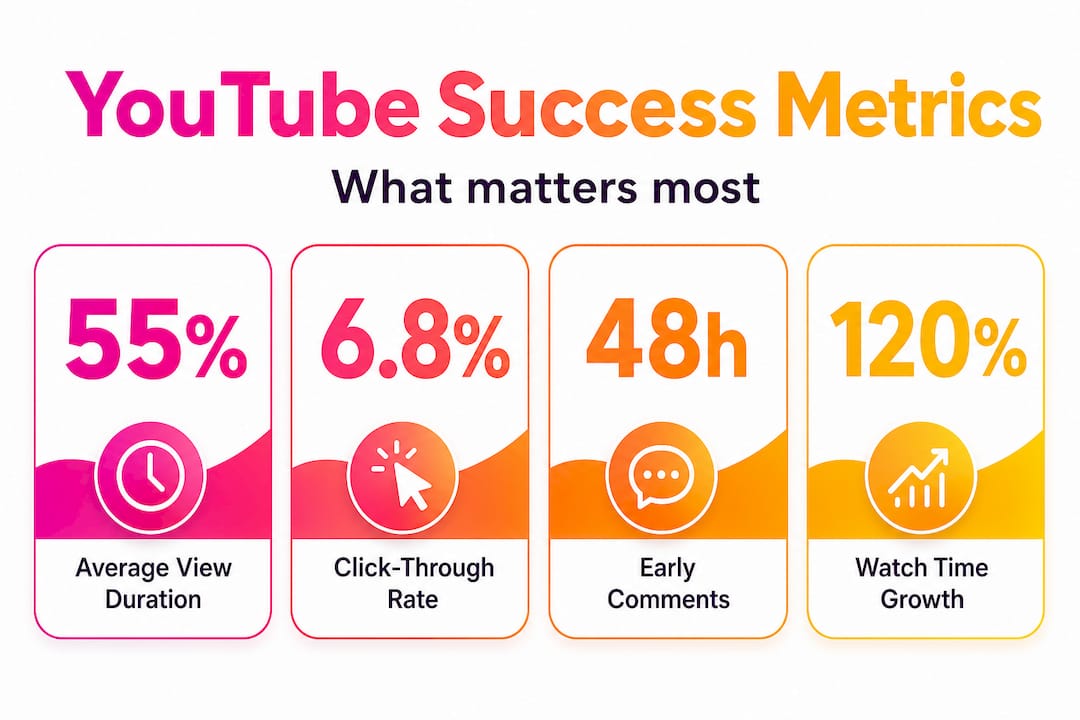
Stat to remember: Long-form video retention metrics such as average view duration, and packaging metrics like CTR from thumbnails and titles, are the key indicators for long-form success. If either metric is low, that is your signal to investigate and adjust.
For practical examples of what works in action, the guides on boosting song reach and video engagement tips provide additional tactics grounded in platform behaviour.
Pro Tip: Respond to every comment in the first 48 hours after publishing. YouTube’s algorithm interprets high comment engagement as a signal that the video generates real conversation, which in turn boosts distribution. It also tells future viewers that you are present and approachable.
Common mistakes and troubleshooting
Even with a solid process, avoid these common mistakes to ensure your video performs as intended.
Most long-form tutorial problems are predictable and solvable. Knowing what to watch for saves hours of frustration.
- Uploading too frequently. Posting long-form videos too frequently or without spacing uploads can result in suboptimal reach and videos competing with each other for the same audience.
- Ignoring Shorts as a funnel. Many musicians treat Shorts as a separate effort when they are actually your most efficient discovery tool. Clip them, link them back, and let them do the work.
- Skipping analytics review. If you upload and never look at retention or CTR data, you are flying blind. Even a five-minute analytics check after each video teaches you something actionable.
- Poor audio on otherwise strong tutorials. Echo, clipping, or low volume can cause viewers to abandon a video in the first minute despite excellent content.
- Overly long introductions. Viewers click away if value is not delivered quickly. Keep preamble under 30 seconds.
“The gap between musicians who grow on YouTube and those who stagnate is rarely talent. It is almost always consistency, feedback loops, and willingness to adjust.”
For uploading long music videos without technical issues, there are platform-specific steps worth reviewing before you publish a file over 20 minutes in length.
The fix for most audio problems is simple: close windows, hang a blanket behind you, move the microphone closer, and run a test. Spending 10 minutes troubleshooting audio before filming prevents an hour of re-recording later.
Measuring results and improving over time
After publishing, true growth comes from reviewing your results and adjusting your future videos.
Publishing is not the finish line. It is the starting point for learning. Each tutorial you release is a data point that tells you something specific about what your audience values.
- Open YouTube Studio within 72 hours of publishing. Look at average view duration and note at which point most viewers drop off.
- Check your CTR. A CTR below 2% usually signals a weak thumbnail or title. Above 5% is strong.
- Read every comment. Cluster recurring questions into themes. Those themes are your next video topics.
- Compare your metrics to your own previous videos, not to influencer benchmarks. Your channel’s trajectory is the most relevant data set you have.
- Adjust format and length based on patterns. If your 12-minute tutorials consistently outperform your 20-minute ones, that tells you something concrete.
Use retention and CTR metrics to guide improvements after several uploads, and let recurring audience comments inform the curriculum and topics you cover next. Your channel can become a curriculum, evolving from data and recurring viewer questions rather than from your own assumptions about what people want.
| Metric | What it tells you | Healthy benchmark |
|---|---|---|
| Average view duration | How engaging your content is | 40% or more of total video length |
| Click-through rate (CTR) | How compelling your title and thumbnail are | 2% to 5% is typical; above 5% is excellent |
| Subscriber growth per video | How well you convert viewers to fans | Any positive trend over time |
| Comment volume | Audience engagement and topic resonance | More comments than likes is a strong signal |
For a broader view of why video content matters in 2026, and how to develop a sustainable video content strategy over time, those resources offer a solid foundation. The Shorts vs long-form comparison is also worth reviewing to understand how both formats complement rather than compete with each other.
From tactics to transformation: the real value of long-form tutorials
If you follow the guide so far, you will be ahead of most independent musicians on YouTube. But here is what truly sets lasting artists apart in the long-form game.
Most musicians approach long-form tutorials as a task to complete. Film it. Upload it. Move on. That mindset misses the entire point. Long-form content is not a content type. It is a relationship-building mechanism. Every tutorial you publish is a sustained conversation with your audience, one that short-form content physically cannot replicate.
The artists who build durable YouTube presences are not necessarily the most technically gifted teachers. They are the ones who listen. They read comments from two years ago and notice patterns. They refine their explanations based on what confused people the first time. They respond to a question asked once and then build an entire video around it. That is not just good content strategy. That is genuine respect for your audience.
There is also a confidence trap worth naming. Many musicians wait until their setup is perfect, their editing is polished, or their room is treated before they publish. The truth is that your tenth video will be better than your first regardless of when you start. Consistency builds skills faster than preparation ever will. Imperfect videos published regularly outperform perfect videos published rarely, and that is not an opinion. It is what the data shows, every time.
The video strategy perspectives we have seen across independent artist channels confirm this repeatedly. Start now. Improve continuously. Your audience will grow with you.
Ready to take your music videos further?
You now know how to plan, film, and optimise your tutorials. Here is how to level up your music video journey even further.
Creating consistent long-form video content is powerful, but doing it efficiently is what separates artists who sustain momentum from those who burn out after three uploads. That is exactly where a dedicated platform makes all the difference.

At Music Video Marketplace, we enable independent musicians to create a long-form video in minutes and go straight to launching an ad campaign for their song. No expensive production team required. No weeks of editing. Just a streamlined workflow built specifically for artists who want their music seen, heard, and remembered. If you are ready to move from learning to doing, this is your next step.
Frequently asked questions
How long should a YouTube music tutorial be?
The ideal length is the one your audience actually watches most, often between 8 and 20 minutes, but video length should match what performs best for your specific viewers after several uploads.
What is the best posting frequency for long-form tutorials?
One or two videos per week works well for most channels. Space your videos 3 to 4 days apart to avoid self-competition and give each video time to gain traction.
How can I improve audio quality without expensive equipment?
Position your microphone 15 to 25 centimetres away, reduce room echo with soft furnishings, and always run a test recording before filming. Closer mic distance and testing resolve the vast majority of common audio problems.
Why should I link Shorts to my long-form tutorial?
Shorts are excellent for discovery but cannot build the deep engagement that long-form content does. Linking Shorts to long-form videos extends fan viewing sessions and moves viewers through your content funnel naturally.
What are the most important YouTube metrics for tutorial success?
Average view duration and click-through rate are the two metrics that matter most. Average view duration and CTR together tell you whether your content is resonating and whether your packaging is compelling enough to earn the click in the first place.
Recommended
- How to upload long music videos to YouTube easily | Music Video Marketplace Blog
- Complete Youtube Music Upload Workflow for Musicians | Music Video Marketplace Blog
- Video Length for Music – Boosting YouTube Impact | Music Video Marketplace Blog
- Music Video Production Workflow for YouTube Success | Music Video Marketplace Blog
Read next
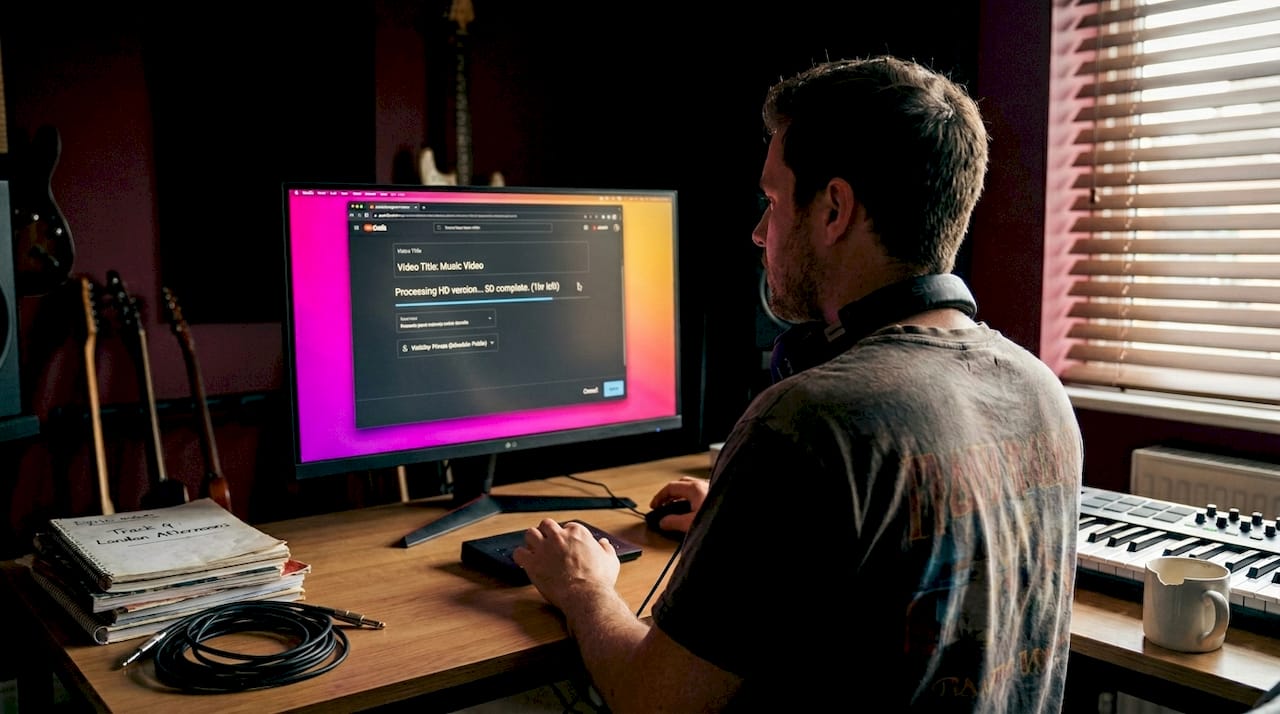 How to upload long music videos to YouTube easilyMaster the art of step by step YouTube upload for long music videos. Avoid common pitfalls and showcase your talent effortlessly!
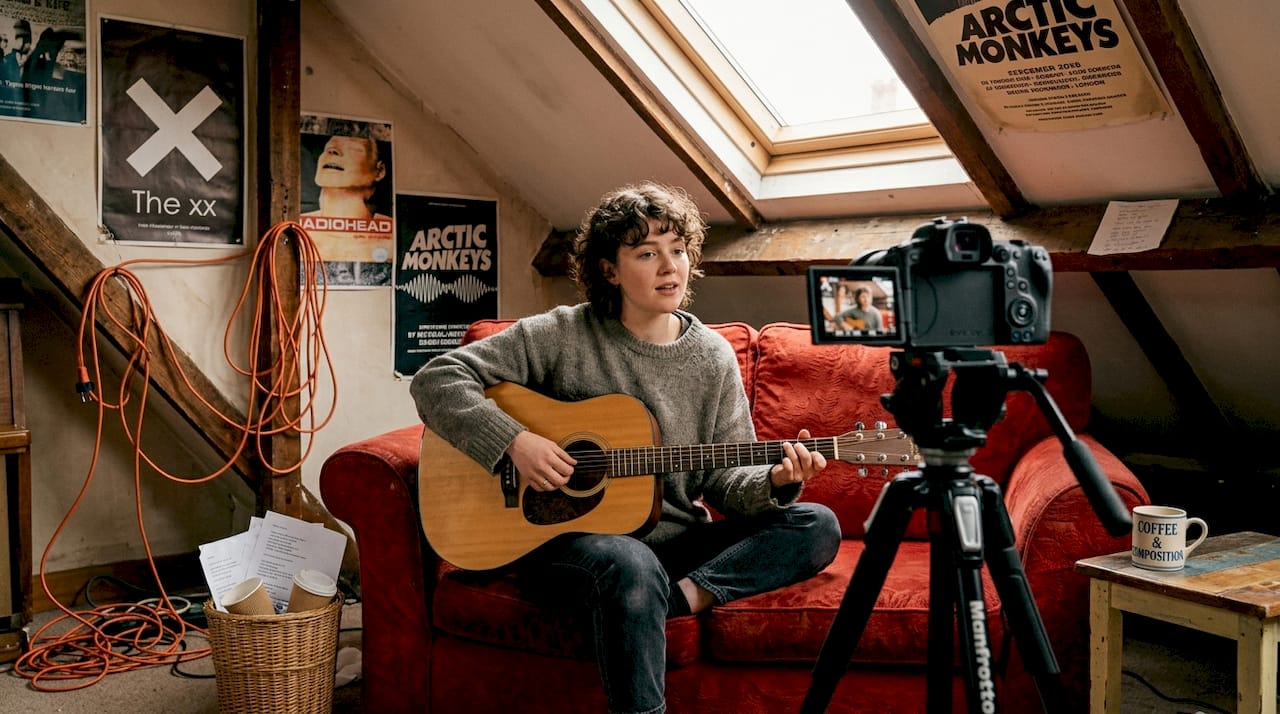 Key advantages of YouTube for musicians in 2026Discover why YouTube offers musicians superior reach, revenue, and growth in 2026. Learn the content strategies and monetisation advantages that build sustainable music careers.
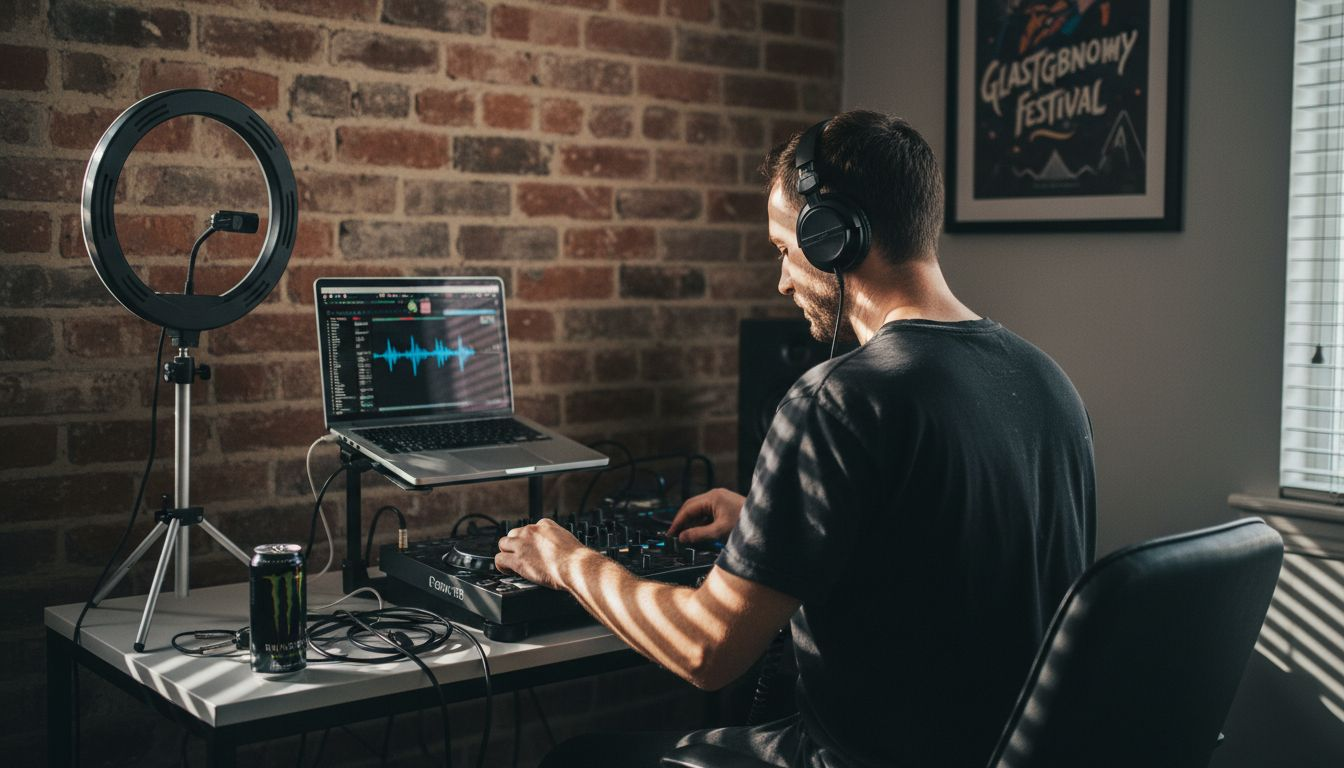 Master DJ video marketing to grow your fanbase in 2026Discover strategic DJ video marketing techniques to amplify your music promotion, boost YouTube visibility, and grow a loyal fanbase with targeted video campaigns in 2026.
 How independent musicians monetise video content effectivelyDiscover what is video monetization and how independent musicians can turn views into income. Learn effective strategies for success!
Turn the idea into a finished music video.
Drop your track into the Studio and build your visual in minutes.