
The role of influencers in music advertising
Discover the crucial role of influencers in music advertising and learn how to leverage them for profitable campaigns. Don't miss out!
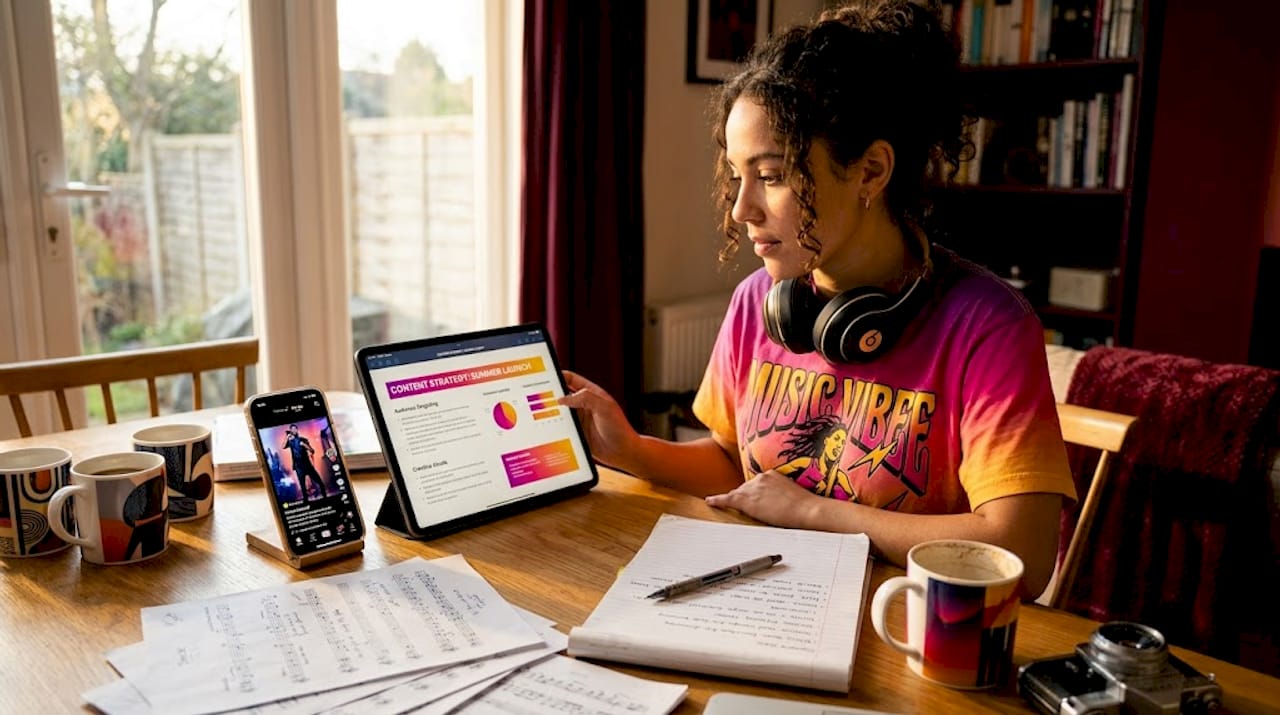
The role of influencers in music advertising
TL;DR:
- Influencers now serve as the primary drivers of music discovery, especially among under-35 audiences, and often generate lasting fan engagement.
- Effective campaigns require long-term measurement, proper disclosure, diversified platform use, and systems-based tracking to maximize ROI and legal compliance.
Music fans do not wait for radio to tell them what to listen to anymore. The role of influencers in music advertising has shifted from a peripheral experiment to the primary engine of discovery, particularly for artists trying to reach audiences under 35. Yet many musicians and marketers still treat influencer campaigns as a bolt-on tactic rather than a structured system. The result is poor measurement, missed conversions, and a misplaced belief that influencer spend does not work. This article cuts through those misconceptions and gives you a clear framework for using influencers strategically, legally, and profitably.
Table of Contents
- Key takeaways
- The role of influencers in music advertising today
- Measurement and long-term ROI
- Compliance and disclosure rules
- Platform diversification and influencer selection
- My perspective on influencer campaigns in music
- Take your music further with Musicvideomarketplace
- FAQ
Key takeaways
| Point | Details |
|---|---|
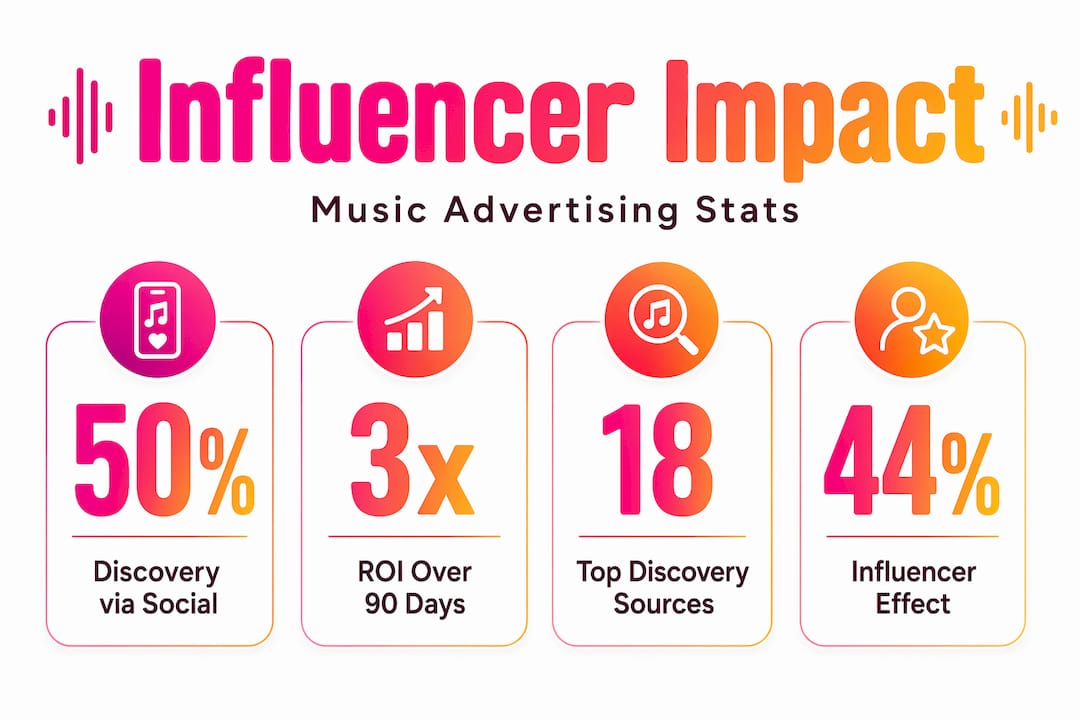
| Influencers drive discovery | Around 50% of music discovery now happens via social media, rising to 73% among Gen Z. |
| Short-term ROI is misleading | Campaigns that look unprofitable at 30 days often show strong returns when measured over 90 to 180 days. |
| Compliance is non-negotiable | FTC disclosure rules require transparent labelling of paid partnerships in every influencer post. |
| Platform diversity is required | No single channel dominates music discovery, so your influencer mix should span multiple platforms. |
| Measurement needs structure | Assigning unique campaign IDs to influencer posts turns scattered activity into a trackable, repeatable system. |
The role of influencers in music advertising today
Social media has fundamentally changed how fans find new music. About half of fans discover music through social media, with that figure climbing to 73% among Gen Z. That is not a trend to watch. It is the current reality shaping where music marketing budgets need to go.
Influencers sit at the centre of this discovery process. They are not simply distributors of content. They are tastemakers whose opinions carry genuine social weight with dedicated communities. When a creator shares a track in the context of a video their audience already trusts, the song benefits from that trust by association. That is qualitatively different from a banner advertisement or a pre-roll on streaming platforms.
The mechanism works like this. An influencer posts content featuring a track. Their audience engages. A portion then goes elsewhere to consume the full song, add it to a playlist, or search for the artist. 44% of fans discover music on social media and then move to another platform to listen properly. The influencer post is the spark. The follow-on streaming, saves, and ticket purchases are the fire.
Here is what separates influencer marketing in music from most other categories. Music fans are unusually loyal once converted.
- Around 80% of consumers identify as fans of at least one entertainment category, including music, and those fans watch and spend more over time.
- Creator-led content actively converts casual listeners into engaged community members, not just one-time streamers.
- Gen Z and millennials rely on creators for entertainment recommendations in a way that older media formats simply cannot replicate.
This is why the importance of music influencers extends well beyond the initial discovery moment. A single well-placed collaboration does not just generate a spike in streams. It plants a fan who may buy merchandise, attend live shows, and follow an artist for years.
Pro Tip: When briefing an influencer, prioritise creators whose existing content already features music naturally. Forced integrations feel inauthentic, and audiences notice immediately.
Measurement and long-term ROI
One of the biggest problems in influencer marketing in music is how campaigns are evaluated. Most teams look at a 30-day window after launch. The numbers often look underwhelming. Conversions are slow, streaming bumps are modest, and the spend looks difficult to justify. This leads to the wrong conclusion that influencer campaigns do not work.

The reality is that influencer campaigns frequently appear unprofitable at 30 days but show genuinely positive ROI when measured over 90 to 180 days once retention and lifetime engagement are factored in. A fan acquired through an influencer post does not stop listening to your music at day 31.
The fix is extending your measurement window and building a proper tracking system from the start. The table below shows the core metrics every music influencer campaign should monitor, along with the timeframe at which each becomes meaningful.
| Metric | What it measures | When it becomes meaningful |
|---|---|---|
| Reach | Total unique accounts exposed | Week 1 to 2 |
| Engagement rate | Likes, comments, saves per post | Week 1 to 4 |
| Conversion rate | Click-throughs to streaming or purchase | Week 2 to 8 |
| Cost per engagement (CPE) | Spend divided by total engagements | Month 1 to 3 |
| Return on ad spend (ROAS) | Revenue generated per pound spent | Month 3 to 6 |
| Lifetime value (LTV) | Long-run revenue from a converted fan | Month 6 onwards |
Post-level tracking using unique campaign IDs assigned to each influencer is the operational backbone of a well-run programme. It tells you exactly which creator drove which result, so you can reinvest in what works and cut what does not. Without it, you are guessing.
Pro Tip: Set your reporting cadence before the campaign launches. Commit to a 90-day review window as your primary success checkpoint. Share this expectation with any internal stakeholders who will be judging results early.
To measure the impact of influencers on music effectively, plan the full funnel before you spend a pound. Define what action you want fans to take after seeing an influencer post, whether that is saving a track, following a profile, or clicking through to a pre-save link. Build that call-to-action into the creator brief so the discovery-to-action pathway is clear from the start.
Compliance and disclosure rules
The legal side of influencer music campaigns is not optional, and it is not complicated if you build it into your workflow from day one. The FTC requires clear disclosure of any material connection between a brand and an influencer. In music advertising, that means any paid partnership, gifted placement, or sponsored post must be clearly labelled as such.
The updated guidance from the FTC emphasises that disclosure cannot be buried in a long caption or hidden beneath a “more” click. It needs to be visible without effort. Here is what good practice looks like in music influencer campaigns:
- Label paid posts with clear language such as “#Ad” or “#Sponsored” at the beginning of the caption, not the end.
- For video content, include a spoken or on-screen disclosure at the start of the video, not just in the description.
- Brief every influencer partner on your disclosure requirements before they post, and review content before it goes live.
- Keep records of all influencer agreements and posted content for your own legal protection.
Non-compliance carries real risk. Beyond the reputational damage of appearing to deceive fans, brands and creators both face potential enforcement action. For artists building a long-term career, credibility is everything. A single poorly disclosed partnership can undermine years of trust-building with an audience.
Pro Tip: Include a short compliance checklist in every influencer brief. Make it a standard part of your workflow rather than an afterthought reviewed after content is already posted.
You can explore how music ad campaign compliance integrates with broader promotional strategy in more detail if you are building out a full campaign framework.
Platform diversification and influencer selection
A common mistake is treating TikTok as the only platform that matters for music promotion through influencers. TikTok is genuinely powerful for music discovery. However, 18 discovery options rank in the top three for at least 5% of listeners, which makes relying on any single platform a strategic liability.
The most effective influencer mixes in 2026 span multiple platforms, matching creators to the audiences most likely to convert in each environment. Here is a practical order for building your platform strategy:
- Identify where your existing fans already spend time. Use streaming platform analytics and social listening tools to establish a baseline before spending on influencer placements.
- Map influencer options to those platforms. A creator who performs well on TikTok may have a completely different audience profile to a YouTube long-form creator, even if their follower counts are similar.
- Combine short-form and long-form content. TikTok and Instagram Reels drive discovery moments. YouTube Shorts and full-length YouTube videos deepen engagement and extend the fan relationship.
- Test with smaller budgets before scaling. Run two or three creators per platform with a fixed budget, measure results at 60 days, and double down on the highest-performing channel and creator combination.
- Include community-driven platforms. Reddit music communities, Discord servers, and Spotify playlist placements through micro-influencers can reach niche audiences that mainstream platforms miss entirely.
Diverse influencer selection and test-and-learn cycles consistently produce better audience targeting and more efficient spend than committing the full budget to one channel from the outset.
Matching influencer platform to audience behaviour also matters when considering celebrity endorsements in music versus micro-influencer placements. A major celebrity endorsement generates broad awareness but often at very high cost per genuine fan conversion. Micro-influencers with 10,000 to 100,000 highly engaged followers frequently deliver better conversion rates because their audiences trust their recommendations more deeply. The role of social media in music advertising rewards trust over reach.
For a deeper look at how to structure digital music promotion across these channels, the digital promotion strategies guide on the Musicvideomarketplace blog provides a detailed breakdown.
My perspective on influencer campaigns in music
I have seen too many musicians treat influencer campaigns as a short sprint. They brief a creator, watch the post go live, check the streams over the next two weeks, and declare the experiment inconclusive. Then they move on. That approach wastes money and misses the point entirely.
What I have found from working closely with how music promotion through influencers actually functions is this: the campaigns that generate real, compounding returns are the ones built around systems, not moments. When you assign unique tracking IDs to every post, review performance at 90 days rather than 14, and brief creators around clear discovery-to-action pathways rather than vague “use this track” instructions, influencer marketing stops feeling like a gamble and starts behaving like a genuine acquisition channel.
The other lesson I keep coming back to is that fan engagement strategies need to be baked into the influencer brief itself. It is not enough to get someone to hear a track once. The influencer content needs to give fans a reason to seek the artist out further, whether that is a compelling hook in the caption, a link to a pre-save, or a creator who is genuinely enthusiastic rather than visibly performing enthusiasm for a fee. Audiences can tell the difference.
The brands and artists I have seen get this right treat influencer spend the way a data-driven advertiser treats paid search: with specific goals, tracked conversions, and an iterative mindset that improves with each campaign cycle. That is not complicated. It just requires discipline from the start.
— Music
Take your music further with Musicvideomarketplace
Understanding the role influencers play is one thing. Having the right video content to support those campaigns is what converts discovery into fans.

Musicvideomarketplace lets you create a long-form promotional video for your song in minutes and immediately launch it as a YouTube ad campaign. No production delays, no agency overhead. You control the creative, you set the budget, and your music starts reaching audiences the same day. When an influencer drives someone to search for your track, a professional video ad waiting on YouTube turns that curiosity into a follow. Start your campaign today and give your influencer spend the conversion layer it needs to perform at full potential.
FAQ
How do influencers help with music discovery?
Influencers act as tastemakers, sharing tracks with their audiences in contexts those audiences already trust. Around 44% of fans discover music on social media before moving to another platform to consume it fully.
How long should a music influencer campaign run before judging results?
At minimum, evaluate results at the 90-day mark rather than 30 days. Campaigns measured over 90 to 180 days consistently show stronger ROI once fan retention and lifetime engagement are included in the calculation.
Do influencer music posts need to be disclosed as paid partnerships?
Yes, without exception. The FTC requires clear disclosure of any material connection, meaning paid or gifted placements must be labelled visibly at the start of the post or video, not buried in captions.
Is TikTok the only platform worth using for music influencer campaigns?
No. While TikTok leads for short-form music discovery, 18 separate discovery sources each rank in the top three for at least 5% of listeners. A well-structured campaign spans TikTok, Instagram, YouTube, and niche community platforms.
What metrics matter most when tracking music influencer campaigns?
Start with engagement rate as the leading indicator, then track conversion rate and ROAS over 90 to 180 days. Post-level tracking using unique campaign IDs for each creator is the most reliable method for attributing results accurately.
Recommended
- Music ad campaigns: expert strategies for real results | Music Video Marketplace Blog
- Examples of song ad campaigns for independent musicians | Music Video Marketplace Blog
- Video Ads in Music Promotion: Power for Indies | Music Video Marketplace Blog
- Role of YouTube in Music: Powering Indie Artist Success | Music Video Marketplace Blog
Read next
 Tips for effective song ads: your 2026 guideUnlock success with tips for effective song ads! Learn how to amplify your music through strategic ad spending and organic engagement.
 Types of Video Ads for Musicians: Boosting ReachTypes of video ads for musicians, including YouTube, Meta, and TikTok formats. Learn best practices, real-world examples, and how to avoid common pitfalls.
 Top video ad campaign tips for independent musiciansDiscover proven video ad campaign tips for independent musicians. Learn how to set goals, choose formats, and optimise spend to grow your YouTube audience.
 The role of creative storytelling in brand engagementDiscover the role of creative storytelling in brand engagement. Learn how narratives enhance brand value and drive audience action.
Turn the idea into a finished music video.
Drop your track into the Studio and build your visual in minutes.