
Label fan engagement programmes: the complete guide
Discover the essential types of label fan engagement programs that boost audience loyalty and drive sales in the music industry.

Label fan engagement programmes: the complete guide
Record labels that grow audiences in 2026 run structured fan engagement programmes, not one-off campaigns. The most effective types are: loyalty and membership programmes (convert casual listeners into repeat buyers), gamification and competitions (drive repeat visits and social sharing), exclusive content and subscriptions (gate value to reward the most committed fans), live and hybrid experiences (create emotional peaks that anchor long-term loyalty), community platforms (give fans a permanent home), streaming-platform activations (reach new listeners at scale via Spotify and Apple Music), merch drops and limited releases (generate urgency and social proof), UGC and street-team campaigns (turn fans into distribution), and video-led programmes (scale content across every channel from a single asset).
- Loyalty/memberships — convert casual listeners into repeat purchasers
- Gamification — increase repeat visits and measurable social sharing
- Exclusive content/subscriptions — reward committed fans with gated value
- Live and hybrid experiences — create emotional peaks that sustain loyalty
- Community platforms — give fans a permanent, moderated home
- Streaming activations — reach new audiences via Spotify Campaign Kit and Apple Music
- Merch and limited drops — generate urgency, social proof and direct revenue
- UGC and street teams — turn fans into measurable advocates
- Video-led programmes — scale content repurposing from a single production
Key takeaways
The most effective label fan engagement programmes pair a clear objective with the right programme type, measure three KPIs from day one, and repurpose every asset across multiple channels to maximise return on each production.
| Point | Details |
|---|---|
| Match programme type to objective | Use the decision matrix: loyalty for retention, streaming activations for growth, merch drops for monetisation. |
| Discovery Mode drives new listeners | Spotify reports 58% of first-time artist discoveries for selected tracks come via Discovery Mode among overseas listeners. |
| Repurpose video across all programmes | One long-form video feeds subscriber hubs, social clips, ad campaigns and live event content without additional spend. |
| GDPR compliance is non-negotiable | Double opt-in, documented lawful basis and a data retention policy must be in place before any fan data is collected. |
| Musicvideomarketplace accelerates production | Ready-made, editable music videos let label teams produce YouTube videos, social clips and ad creative from a single session. |
Table of Contents
- Why labels invest in engagement programmes and how to pick the right type
- 1. How loyalty and membership programmes work for labels
- 2. Gamification and competitions that drive repeat engagement
- 3. Exclusive content and subscription models that retain your most committed fans
- 4. Live and hybrid experiences that convert attendance into lasting loyalty
- 5. Community platforms and fan hubs — Discord, Patreon and branded apps
- 6. Streaming-platform activations — Spotify Campaign Kit, Discovery Mode and Apple Music
- 7. Merch drops and limited releases as engagement drivers
- 8. UGC campaigns, street teams and fan-driven advocacy
- 9. Measurement, data capture and privacy for fan programmes
- 10. A video-led engagement playbook for labels using marketplace assets
- A label marketer’s checklist — what to pilot first and how to brief teams
- Musicvideomarketplace speeds up video-led fan engagement
- Sources
Why labels invest in engagement programmes and how to pick the right type
Fan engagement programmes exist because streaming royalties alone rarely build the direct audience relationship a label needs for long-term revenue. The core label objectives these programmes serve are: audience growth, retention, monetisation, first-party data capture, and catalogue revival. Each objective maps to a different programme type, and picking the wrong one wastes budget.
| Label objective | Recommended programme type |
|---|---|
| Audience growth | Streaming activations (Discovery Mode, Campaign Kit), UGC campaigns, social challenges |
| Retention | Loyalty/membership tiers, community platforms, exclusive content subscriptions |
| Monetisation | Merch drops, tiered memberships, live VIP experiences |
| First-party data capture | Email-gated downloads, loyalty sign-ups, competition entry forms |
| Catalogue revival | Gamification (trivia, anniversary campaigns), curated archive content subscriptions |
Loyalty programmes, UGC marketing and fan engagement platforms form a reinforcing participation loop: loyalty fuels UGC, UGC boosts engagement, and engagement strengthens loyalty. That compounding effect is why the most effective label marketing programmes stack multiple types rather than running them in isolation.
Pro Tip: Pilot two low-cost programme types (a Discord community and an email-gated download) before committing budget to a branded app or a full loyalty platform. You will learn your audience’s actual behaviour in four to six weeks for a fraction of the cost.
1. How loyalty and membership programmes work for labels
Loyalty programmes for labels reward fans for both revenue actions and engagement actions. A fan earns points for buying merch, purchasing a ticket, referring a friend, hitting a streaming milestone or signing up to an email list. Points accumulate toward tier upgrades that unlock progressively better benefits.

A workable three-tier model looks like this: Listener (entry, free to join) gets early access to single announcements and a birthday discount; Supporter (mid-tier, reached by points or a small subscription fee) gets pre-sale ticket access, exclusive B-side downloads and a monthly newsletter; Superfan (top tier) gets VIP event invitations, signed merchandise, direct artist messages and input on setlists or artwork votes.
Modern loyalty platforms integrate with merch stores, ticketing systems and CRM tools to automate points allocation and tier upgrades, which means a label team does not need to track this manually. That integration is what makes the model scalable across a full roster.
Principal business benefits and KPIs to track:
- Lifetime value (LTV): average revenue per loyalty member versus non-member
- Repeat purchase rate: percentage of members who buy merch or tickets more than once per year
- Tier progression rate: percentage of members who move from entry to mid-tier within 90 days
- Direct contact growth: size of the opted-in email and SMS list generated through sign-up
- Churn rate: percentage of members who disengage or unsubscribe per quarter
2. Gamification and competitions that drive repeat engagement
Gamification works because it gives fans a reason to return on a schedule rather than waiting for a release. Light-touch formats are the easiest entry point: a weekly artist trivia quiz, a bracket prediction game around a tour setlist, or a “guess the sample” challenge tied to a new release. These require minimal build and can run entirely through a label’s existing social or email channels.
Deeper mechanics include seasonal leaderboards (fans accumulate points across multiple interactions over a campaign window), tournament brackets (fans vote on favourite tracks from a catalogue, advancing rounds weekly), and prediction games tied to chart positions or award nominations. These sustain engagement across a six-to-twelve-week campaign window rather than generating a single spike.
For implementation, the sequence is: define the mechanic, set the prize (exclusive content, signed merch, a meet-and-greet), build the entry mechanic (a form, a hashtag, a platform quiz tool), set moderation rules, and plan prize fulfilment before launch. Audience targeting matters here: a trivia quiz about a legacy catalogue will not land with a new-listener acquisition campaign. Match the mechanic to the audience segment.
Ammedia Digital recommends automating leaderboards and badge awards through a fan engagement platform rather than updating them manually, which keeps the experience credible and reduces admin load.
Pro Tip: Keep the prize tier proportional to the effort required. A 30-second quiz should reward with a free download; a six-week leaderboard competition earns a VIP experience. Mismatched effort-to-reward ratios kill participation mid-campaign.
3. Exclusive content and subscription models that retain your most committed fans
Gated exclusive content is the most direct way to monetise a label’s most engaged fans without relying on streaming platforms as the intermediary. The formats that perform consistently are: early audio (a track or demo released 48–72 hours before public streaming), behind-the-scenes video (studio sessions, tour diaries, production breakdowns), private playlists (curated by the artist, updated monthly), email-gated downloads (stems, instrumentals, alternate mixes), and archive content (live recordings, early demos, unreleased material from catalogue artists).
Platform options range from patron-style subscription platforms (where fans pay a monthly fee for access to a creator’s exclusive feed) to a label’s own subscription hub (a gated section of the label website, managed through a CMS and email platform). The patron-style route is faster to launch; a label-owned hub gives more control over data and branding.
KPIs that prove value for labels:
- Subscriber growth rate: new subscribers per release or campaign window
- Churn rate: monthly cancellations as a percentage of total subscribers
- Average revenue per user (ARPU): total subscription revenue divided by active subscribers
- Engagement frequency: average number of content pieces consumed per subscriber per month
- Content completion rate: percentage of subscribers who finish a long-form video or audio piece
Patreon is the most widely recognised patron-style platform for music, with tiered membership tools built in. For labels managing multiple artists, a white-label subscription hub often makes more sense because it consolidates the data and avoids splitting audiences across separate creator pages.
4. Live and hybrid experiences that convert attendance into lasting loyalty
Live experiences sit at the top of the emotional intensity scale, which is why they convert casual fans into committed ones more reliably than any digital programme. The key is structuring them in tiers so the label can serve different audience segments without over-investing in every event.
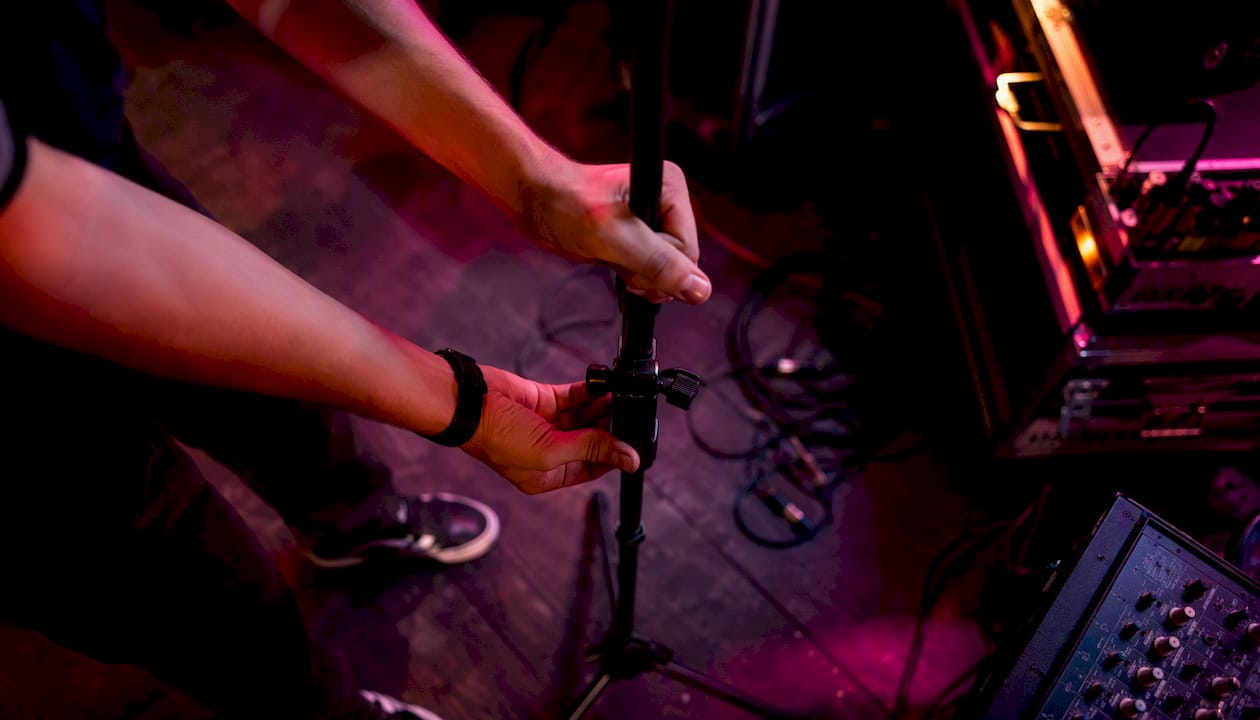
Public events (free listening parties, in-store performances, live-streamed album playbacks) are acquisition tools. They introduce new fans to an artist in a low-barrier setting and generate social content. Ticketed VIP events (intimate shows, Q&A sessions, pre-show soundcheck access) reward existing fans and generate direct revenue. Invite-only listening parties (for press, superfans and playlist editors) build word-of-mouth and editorial relationships simultaneously.
Content capture during events is non-negotiable. Every live moment should produce assets for repurposing: short clips for social, a full recording for subscriber-only release, behind-the-scenes footage for a loyalty newsletter. Reusable video assets produced for long-form but sliced into short clips produce more enduring engagement than ad-only creative because the same asset fuels subscriptions, socials and event promos.
Operational best practices: confirm access control and guest list management before tickets go live, communicate fulfilment timelines clearly (especially for physical VIP packages), and send a post-event survey within 24 hours to capture sentiment while it is fresh. Attribution is straightforward: track streaming uplifts and merch sales in the 72-hour window following each event.
Pro Tip: Record every invite-only listening party, even with a single camera. That footage becomes the most credible content in your subscriber hub because it is genuinely exclusive and time-stamped to a real moment.
5. Community platforms and fan hubs — Discord, Patreon and branded apps
The choice between an off-the-shelf community platform and a branded hub comes down to speed, control and budget. Each category has a distinct functional profile.
Real-time chat platforms (Discord): Discord gives fans a permanent, moderated space with channels for different topics (general chat, setlist debates, fan art, release news). It is free to set up, supports role-based access (which maps neatly onto loyalty tiers), and has a large existing user base in music communities. The limitation is that Discord sits outside the label’s data stack, so fan behaviour data stays on Discord’s servers.
Patron-style platforms (Patreon and equivalents): These combine content hosting with subscription billing and community features. They are faster to monetise than Discord but offer less real-time interaction. Patreon’s tiered membership structure maps directly onto a label loyalty model.
White-label branded apps: A custom app gives full data ownership, deep CRM integration and a branded experience. The trade-off is cost and time. Buying a white-label platform can get a label to market in 8–12 weeks, but integrations with CRM and ticketing are often necessary before the platform delivers its full value.
Community management checklist:
- Assign a dedicated moderator (or moderation rota) before launch
- Set a content cadence: at minimum, one label-initiated post per week
- Define community rules and pin them in a visible location
- Build reward flows for active members (role upgrades, exclusive content drops)
- Review engagement metrics monthly and adjust content mix accordingly
6. Streaming-platform activations — Spotify Campaign Kit, Discovery Mode and Apple Music
Streaming activations are the fastest route to new-listener acquisition at scale, and they sit within platforms fans already use daily. For labels, the two primary channels are Spotify and Apple Music.
Spotify’s Campaign Kit bundles Discovery Mode, playlist pitching and in-app display campaigns into a single release-promotion toolkit. That figure makes it one of the highest-leverage activations available for breaking an artist in a new territory.
Apple Music for Partners gives labels a centralised workflow for pitching priority releases to Apple’s editorial team, uploading press imagery, generating social templates and creating QR codes for campaign assets. It is less algorithmic than Spotify’s toolkit and more relationship-driven, but editorial placement on Apple Music carries significant weight for catalogue credibility and press coverage.
Quick setup checklist for streaming activations:
- Confirm ISRC codes and distributor delivery timelines before pitching
- Prepare a one-paragraph artist bio, hi-res press photo and track description for each platform
- Submit Discovery Mode selections at least two weeks before release date
- Set up Apple Music for Partners access through your distributor or direct label account
- Define your KPI window: measure playlist adds, listener growth and stream uplift over a 28-day post-release period
KPIs to track: playlist adds, new listener count, first-time discovery rate, stream uplift during campaign window, and save rate (saves to library as a proxy for intent to return).
For a deeper look at how these activations fit into a broader release plan, the music release strategies guide covers sequencing and timing in detail.
7. Merch drops and limited releases as engagement drivers
A well-executed merch drop is not a retail transaction. It is a participation event. Scarcity mechanics (limited run sizes, timed windows, numbered items) create urgency and social proof simultaneously: fans who secure a piece share it, fans who miss out talk about it, and both groups pay attention to the next drop.
The most effective drops tie directly to a release moment or a fan milestone. A limited pressing of a vinyl single released on the same day as the digital version, a numbered tour poster available only to ticket holders, or a capsule collection tied to an album anniversary all give the drop a narrative that extends its marketing life beyond the sale window.
Operational checklist for a successful drop:
- Set production quantities before announcing (never promise what you cannot fulfil)
- Open a pre-order window to gauge demand before committing to final print runs
- Communicate sizing, shipping timelines and returns policy clearly at checkout
- Send a dispatch confirmation and tracking link within 48 hours of shipping
- Follow up with a post-purchase email that includes exclusive content (a thank-you video, a download code)
KPIs: sell-through rate (units sold as a percentage of units produced), repeat buyer rate (percentage of purchasers who have bought from a previous drop), conversion rate from drop announcement emails, and average order value.
8. UGC campaigns, street teams and fan-driven advocacy
User-generated content campaigns turn fans into distribution. When a fan posts a cover, a reaction video or a lip-sync clip, they are reaching an audience the label cannot buy access to. The label’s job is to make that behaviour easy, rewarded and measurable.
A short playbook for UGC campaigns:
- Brief: define the creative ask clearly (a specific hashtag, a specific song section, a specific visual format)
- Incentivise: offer a reward proportional to effort (a repost from the artist account, exclusive content, a competition entry)
- Collect: monitor the hashtag or submission form daily during the campaign window
- Amplify: reshare the strongest UGC across label and artist channels, crediting the creator by name
- Recognise: announce winners or featured creators publicly to close the loop and motivate future participation
Street teams operate on the same principle but in physical or local digital spaces. A street team member distributes flyers, posts in local Facebook groups, or seeds content in niche online communities. Reward mechanics for street teams work best when they mirror the loyalty programme: points for verified actions (a photo of a poster placed, a screenshot of a post), redeemable for merch or event access.
The participation economy approach, where fans co-create value through UGC and referrals, compounds marketing ROI more sustainably than one-off paid campaigns. The social media tactics that support this are covered in detail in this social media in music guide.
KPIs: total UGC volume (posts using the campaign hashtag), reach generated by UGC (impressions from fan posts), referral conversions (new sign-ups or purchases attributed to a referral link), and street team verified actions per member per week.
9. Measurement, data capture and privacy for fan programmes
Every fan engagement programme generates data. The labels that extract the most value from that data are the ones that define their KPIs before launch, not after.
| KPI | Definition | How to calculate |
|---|---|---|
| Engagement rate | Percentage of fans who interact with a piece of content | (Interactions ÷ reach) |
| Retention rate | Percentage of members still active after 90 days | (Active members at day 90 ÷ members at day 1) |
| Conversion rate | Percentage of engaged fans who complete a purchase | (Purchases ÷ unique engaged fans) |
| ARPU | Average revenue per loyalty member | Total revenue ÷ active members |
| Referral conversion rate | Percentage of referred fans who complete a target action | (Referred conversions ÷ total referrals sent) |
Data capture best practices: use a double opt-in for email sign-ups (a confirmation email after initial sign-up) to ensure list quality and GDPR compliance. Place a clear consent banner on any competition or loyalty sign-up form. Use anonymised analytics for behavioural data (page views, content consumption) where personal identification is not required. Store personal data only for as long as the programme requires, and document your retention policy.
GDPR checklist for fan programmes:
- Lawful basis documented for every data collection point (consent or legitimate interest)
- Privacy notice linked from every sign-up form
- Double opt-in active for email marketing lists
- Data retention periods defined and enforced
- Subject access request process in place
- Third-party platform data-sharing agreements reviewed
Pro Tip: Build a monthly one-page dashboard for stakeholder reporting: top-line engagement rate, retention rate, conversion rate and revenue attributed to the programme. A single consistent format makes it easy to spot trends and brief senior stakeholders without a lengthy meeting.
10. A video-led engagement playbook for labels using marketplace assets
Video is the highest-leverage content format for fan engagement because a single production can feed multiple programmes simultaneously. A long-form music video produced for YouTube becomes a subscriber-exclusive behind-the-scenes cut, a series of short social clips, a visual backdrop for a live event, and a paid ad creative, all from one shoot.
The playbook runs in four stages:
- Brief: define the primary output (a full-length music video for YouTube), the secondary outputs (15-second and 30-second social clips, a 60-second ad), and the exclusive content cut (a behind-the-scenes edit for subscribers). Set usage rights and platform specifications at this stage.
- Produce and store: use ready-made, editable video assets from a marketplace to reduce production time and cost. Upload the artist’s audio and branding, export the YouTube-ready version, and store all raw and edited files in a shared asset library accessible to the marketing team.
- Launch: publish the full-length video on YouTube with a targeted ad campaign. Simultaneously release the short clips across TikTok and Instagram. Gate the behind-the-scenes cut behind a loyalty tier or email sign-up.
- Repurpose: at weeks two, four and eight post-launch, release additional cuts (a lyric video, a live-session version, a fan-reaction compilation) to sustain engagement without additional production spend.
A content repurpose timeline:
- Week 0: full-length YouTube video + paid ad campaign launch
- Week 1: short social clips (TikTok, Instagram Reels, YouTube Shorts)
- Week 2: behind-the-scenes cut released to loyalty subscribers
- Week 4: lyric video or visualiser published to YouTube
- Week 8: fan-reaction compilation or anniversary post using UGC
Automation and reusable video assets are consistently highlighted as the most cost-efficient way to scale multiple engagement ideas simultaneously. Labels that build this repurpose cadence into their production workflow ship more content per release without proportionally increasing spend.
Pro Tip: Brief the repurpose plan before production begins, not after. Knowing you need a 15-second vertical clip means you capture the right framing on the day. Retrofitting a landscape video into a vertical format after the fact costs time and usually looks wrong.
For more on why video sits at the centre of label marketing budgets, the label video content guide covers the strategic rationale in full.
A label marketer’s checklist — what to pilot first and how to brief teams
The gap between a label that runs effective fan engagement programmes and one that does not is usually not budget. It is sequencing and clarity of brief. Most teams try to do too much at once and measure nothing well.
A first-pilot checklist:
- Define the objective first: growth, retention, monetisation or data capture. One objective per pilot.
- Pick one programme type that maps to that objective (use the decision matrix in section two).
- Set three KPIs before launch and agree how you will measure them (platform analytics, CRM reports, sales data).
- Write a one-page brief covering the mechanic, the audience segment, the reward or content offer, the timeline and the budget.
- Choose your tools: a Discord server, an email platform, a loyalty plugin, or a streaming activation. Start with what you already have access to.
- Set a review date at four weeks and six weeks. Do not extend a pilot without data.
- Assign ownership: one named person is responsible for each programme. Committees do not ship campaigns.
Pro Tip: The minimum viable test for any fan engagement programme is four weeks, one channel, one clear mechanic and one KPI. If you cannot measure it in that frame, the programme is not ready to launch. Complexity is the enemy of learning.
For a broader view of how these programmes fit into a full fan engagement strategy, the Musicvideomarketplace blog covers the tactical detail across channels.
Musicvideomarketplace speeds up video-led fan engagement
Producing enough video content to fuel a full engagement programme is where most label teams stall. Musicvideomarketplace cuts that bottleneck by giving you access to a library of human-made, ready-to-edit full-length music videos. Upload your audio and branding, export a YouTube-ready video, generate short social clips, and launch a paid ad campaign for a song, all without a production crew or a post-production queue.
For labels running subscriber hubs, loyalty tiers or streaming activations, that means you can produce the long-form video, the social cuts and the ad creative from a single session. The independent artist promotion playbook outlines how this kind of asset efficiency translates into faster campaign cycles. Browse the Musicvideomarketplace library at Musicvideomarketplace and select a video template that fits your next release.
Sources
- Spotify for Artists — Campaign Kit
- Loop Fans Music — fan loyalty programmes and music revenue
- Loop
- 25 fan engagement ideas that actually move the needle in 2026 | Life Inside
- Fan rewards that increase community engagement — Ammedia Digital
Recommended
- Fan engagement strategies that power your music marketing | Music Video Marketplace Blog
- The song marketing funnel explained for indie artists | Music Video Marketplace Blog
- Définir l’engagement des fans sur YouTube : guide 2026 | Music Video Marketplace Blog
- Qué es audience engagement en música: guía 2026 | Music Video Marketplace Blog
Read next
 Label reporting dashboards: the UK guide for 2026Discover the essential types of label reporting dashboards for 2026. Learn how each dashboard enhances your operation and decision-making.
 What is audio branding: a guide for marketersDiscover what is audio branding and how it shapes brand identity. Learn to leverage sound to enhance recognition and emotional connection.
 What is long form music content: a 2026 guideDiscover what long form music content is and how it engages audiences. Learn its benefits for artists in our 2026 guide!
 DJ audience demographics in the UK: who you're really playing toDiscover the types of DJ audience demographics in the UK, from Gen Z trends to insights on the 25-44 age group engaging with dance music.
Turn the idea into a finished music video.
Drop your track into the Studio and build your visual in minutes.