
 Try the Workspace
The song marketing funnel explained for indie artists
Learn how to explain song marketing funnel concepts that truly resonate with today's listeners. Boost your fanbase and engagement now!

The song marketing funnel explained for indie artists
TL;DR:
- Modern music funnels no longer follow a straight line; listeners interact non-linearly across platforms over time.
- Independent artists should build a sustained, ecosystem-based approach focusing on consistency, owned channels, and targeted content for each funnel stage.
Most independent musicians think of a song marketing funnel as a straight line: stranger hears your track, likes it, follows you, buys your merch. Done. But that model is wrong, and it’s costing artists real fans every day. If you want to explain song marketing funnel concepts that actually reflect how listeners behave in 2026, you need to understand that modern music funnels no longer follow a straight line. Listeners drift in, disappear, resurface, and eventually commit on their own timeline. This guide will show you exactly how to build a funnel that works with that reality, using video content and targeted ads to turn casual listeners into genuine fans.
Table of Contents
- Understanding the fan engagement funnel stages
- A modern approach to the funnel: non-linear and ongoing journeys
- Using video content and ad campaigns at each funnel stage
- Timing and budgeting your song marketing funnel campaign
- Connecting your funnel steps with platforms and owned channels
- Rethinking the song marketing funnel for sustainable fan growth
- How Music Video Marketplace helps you build an effective song marketing funnel
- Frequently asked questions
Understanding the fan engagement funnel stages
Now that we’ve introduced the funnel, let’s explore each stage in detail so you understand how listeners become lifelong fans.
The fan engagement funnel has four stages: discovery, engagement, relationship, and advocacy, each one representing a deeper level of fan involvement. Think of it less like a tube water flows through and more like a series of fires you’re lighting, each one burning brighter than the last.
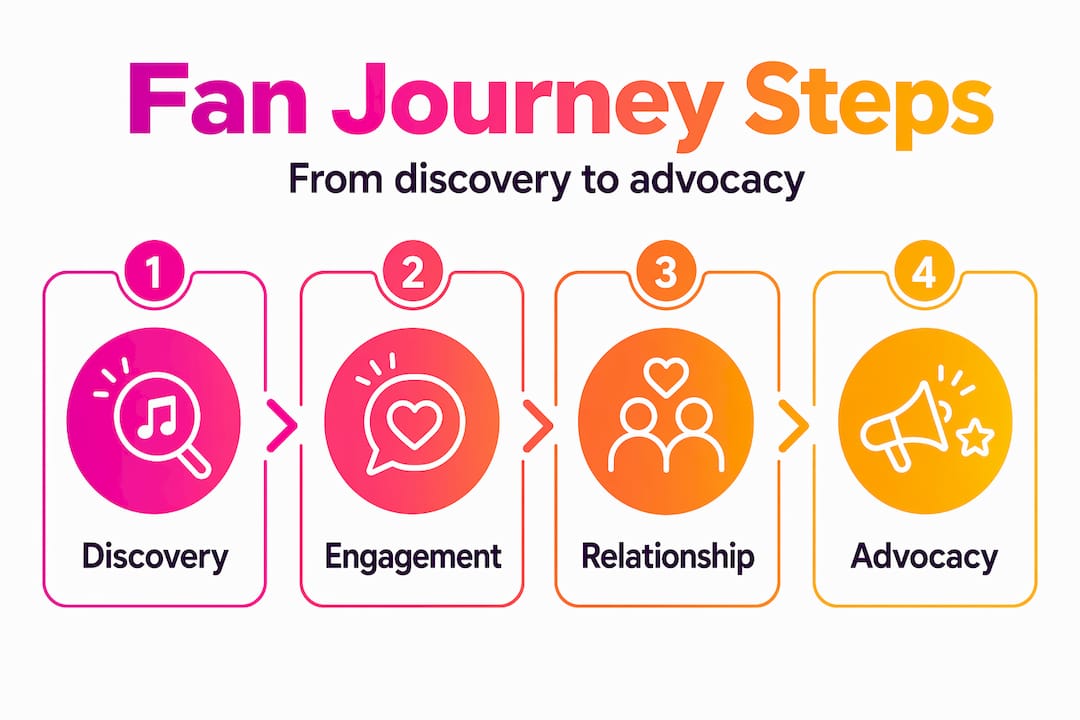
Discovery is the moment someone first encounters your music. A short clip on TikTok, a song recommendation from Spotify’s algorithm, a friend sharing a reel. Your only job here is to stop the scroll long enough to create curiosity.
Engagement is where things get meaningful. The listener saves your track, follows your account, or watches your video to the end. These are signals that something stuck. Without a strategy targeting this stage, most potential fans evaporate right here.
Relationship is the stage most independent artists completely skip. It means building direct lines of communication: an email list, a Discord community, regular replies to comments. This is where casual interest transforms into real loyalty.
Advocacy is when fans start doing your marketing for you. They share your music without being asked, attend your shows, buy merchandise, and tell their friends. Reaching this stage requires patience, but it’s where a sustainable music career is built.

Here’s how the four stages compare across key dimensions:
| Stage | Fan mindset | Your goal | Primary tools |
|---|---|---|---|
| Discovery | “Who is this?” | Capture attention | Short-form video, paid ads |
| Engagement | “I quite like this” | Prompt an action | Pre-saves, follows, saves |
| Relationship | “I follow this artist” | Build direct connection | Email, community groups |
| Advocacy | “You need to hear this” | Reward and retain | Exclusives, early access |
Key things to keep in mind as you build each stage:
- Every stage requires different content and a different tone
- Skipping stages is the single biggest funnel mistake independent artists make
- Fan engagement strategies should be tailored to where each audience segment sits in the funnel
- Moving fans through stages takes weeks or months, not days
A modern approach to the funnel: non-linear and ongoing journeys
Having detailed the funnel’s stages, it’s important to see why a static path doesn’t work and how to adopt a flexible, sustained funnel approach.
Here’s the uncomfortable truth about understanding music funnels in 2026: your listeners are not following the path you drew for them. Someone might discover your song today, ignore it for three months, then hear it again via a playlist, save it, and finally check your Instagram six weeks after that. Listeners engage non-linearly over months and across platforms, so your funnel should function more like an ecosystem built on repeated exposure and familiarity than a direct route from A to B.
“A funnel should be thought of as an ecosystem focused on repeated exposure and familiarity, not a fixed path from discovery to purchase.” This framing changes everything about how you plan campaigns.
What this means practically:
- Consistency beats intensity. Posting every day for one week does less than posting regularly for three months.
- Branding cohesion matters enormously. If someone encounters you on TikTok, then finds you on Spotify, the visual and sonic identity must feel instantly familiar.
- Don’t measure funnels by immediate conversions. Track familiarity metrics: saves, profile visits, follower growth over time.
- Build your presence first, then amplify. Paid ads on thin content don’t work. Digital music promotion strategies work best when they push content that has already proven it can hold attention organically.
The biggest mental shift: stop thinking “how do I push fans through the funnel?” and start thinking “how do I keep showing up in their world until they’re ready?”
Using video content and ad campaigns at each funnel stage
Understanding non-linear funnels is helpful, but how does this translate into tactics using video and ads? Let’s break that down by funnel stage.
Short-form vertical video is the strongest discovery tool available to independent artists right now. A 15-second clip with a strong hook, used to test which moments of your song create the most reaction, is more valuable than a polished four-minute video that nobody watches. Once you know what hooks people, you build longer conversion assets around it.
Here’s how to match your content and ads to each funnel stage:
-
Discovery stage. Post short clips on TikTok, Instagram Reels, and YouTube Shorts. Use video content for musicians that leads with the emotional peak of the track, not the intro. Run cold audience ads targeting genre or artist interest categories to extend reach beyond your existing followers.
-
Engagement stage. Switch to slightly longer content: a 60-second visual story, a behind-the-scenes clip, or a lyric video. Create a warm audience from people who watched 50% or more of your short clips, then retarget them with a clear CTA such as “pre-save now” or “follow for the full track.”
-
Relationship stage. Move fans off social platforms and into owned spaces. A YouTube full-length video, a newsletter, a Patreon post, or a private community. This is where depth counts. Music ad campaign strategies at this stage should feel personal, not broadcast.
-
Advocacy stage. Treat your funnel as audience segmentation: give superfans exclusive offers and early access, prompt engaged fans to share or pre-save, and serve casual listeners through playlist placements and paid promotions. Each tier gets a different message, not the same post pushed to everyone.
Pro Tip: Before spending a penny on ads, run your short clips organically for five to seven days. Whichever clip gets the highest watch-through rate is the one you put money behind. Paying to amplify something that’s already working is a completely different proposition to hoping paid traffic will rescue weak content.
Timing and budgeting your song marketing funnel campaign
Now that we know how to plan content and ads, let’s look at how to schedule your campaign timeline and budget realistically.
One of the most common mistakes independent artists make is treating a release like a single moment rather than a campaign. Effective campaigns span 6 to 12 weeks including pre-release, release day, and post-release phases. That’s not a record label luxury: it’s simply how music discovery works at scale.
Here’s a realistic campaign structure by phase:
| Phase | Duration | Key activities |
|---|---|---|
| Pre-release | 2 to 4 weeks | Tease content, build pre-saves, warm up audiences |
| Release day | 1 to 3 days | Full drop, ads live, push all channels simultaneously |
| Post-release | 2 to 6+ weeks | Sustain attention, retarget, pitch playlists, build community |
On budget, independent releases from professionally executed campaigns cost between $3,000 and $15,000 when combining production, PR, and paid media. However, your marketing-only ad spend can range from $250 for a genuinely DIY approach up to around $3,000 for a full ads campaign. The number matters less than the principle: amplify what works, don’t fund what doesn’t.
Key budgeting principles to apply:
- Allocate roughly 60% of your ad budget to the post-release phase, where streams and discovery compound
- Pre-save and conversion assets must be ready at least one to two weeks before release, not the morning of
- Song promotion strategies that sustain activity across weeks consistently outperform one-day spending bursts
Pro Tip: Set a small daily budget across the full campaign period rather than a large budget on release day alone. Algorithms reward sustained engagement signals, not spikes followed by silence.
Connecting your funnel steps with platforms and owned channels
After planning your campaign schedule and budget, it’s critical to ensure each stage connects smoothly across platforms to keep fans moving forward.
The biggest invisible leak in most independent artists’ funnels isn’t bad content. It’s bad handoffs between platforms. TikTok drives discovery, Spotify builds depth through pre-saves and streams, and Instagram fosters community that keeps fans engaged over time. Each platform plays a specific role. The problem is that most artists treat them as separate worlds instead of connected stages.
Here’s how to think about each platform’s role:
- TikTok and Reels: Awareness and hook testing. Your entry point for cold audiences who’ve never heard of you.
- Spotify: Engagement and depth. Pre-save campaigns, playlist adds, and follower growth signal genuine fan intent.
- Instagram: Relationship and loyalty. Direct messages, story replies, and comment engagement build the trust that turns a listener into a fan.
- Email list: The most powerful owned channel you have. Social platforms rent you their audience. An email list is yours permanently.
A common bottleneck is a weak transition between platforms. If your TikTok is performing but your Spotify profile looks abandoned, you’re losing fans at the handoff. The advice is direct: spend 90 days strengthening your weakest platform before running paid campaigns. A broken link in the chain stops the whole thing working.
Pro Tip: Add a single clear CTA to every piece of content. Not two, not three. One. “Follow on Spotify.” “Join the newsletter.” “Pre-save the track.” Fans who like your music will take one step. They rarely take three. Use music promotion essentials to audit where your audience drops off and fix that first.
Rethinking the song marketing funnel for sustainable fan growth
Here’s a perspective that most “how to market a song” guides won’t give you: the funnel is a useful map, but it’s not the territory. Real fan relationships don’t follow diagrams. They follow repeated experiences of feeling like an artist understands them, surprises them, or gives them something worth sharing with a friend.
Success comes from consistent presence and building familiarity that converts long-term, not from forcing funnel conversions on a fixed timeline. We’ve seen artists obsess over their streaming numbers in week one of a release and conclude the campaign failed, when in reality the real fan relationships were quietly forming over the following six weeks as people kept encountering their music in different contexts.
The metric that matters most isn’t streams. It’s returning listeners. Someone who plays your track ten times in a month is worth far more to your career than ten people who each played it once. And returning listeners come from lasting fan impact through participation and experiences, not from chasing trending audio formats.
Build your owned infrastructure first: your email list, your YouTube channel, your community space. These are the assets that survive algorithm changes, platform shifts, and the inevitable moment when the social media landscape looks completely different in three years. Fan engagement strategies built on owned channels are the only ones that compound over time without requiring you to keep paying to reach your own audience.
The artists with long-term careers aren’t the ones who went viral once. They’re the ones who kept showing up, kept creating, and kept giving their fans reasons to stay.
How Music Video Marketplace helps you build an effective song marketing funnel
You understand the stages. You know the timeline. You know video is the engine that drives discovery and keeps fans moving through the funnel. The practical question is: how do you get that video content made quickly, affordably, and to a quality that doesn’t hurt your credibility with new listeners?
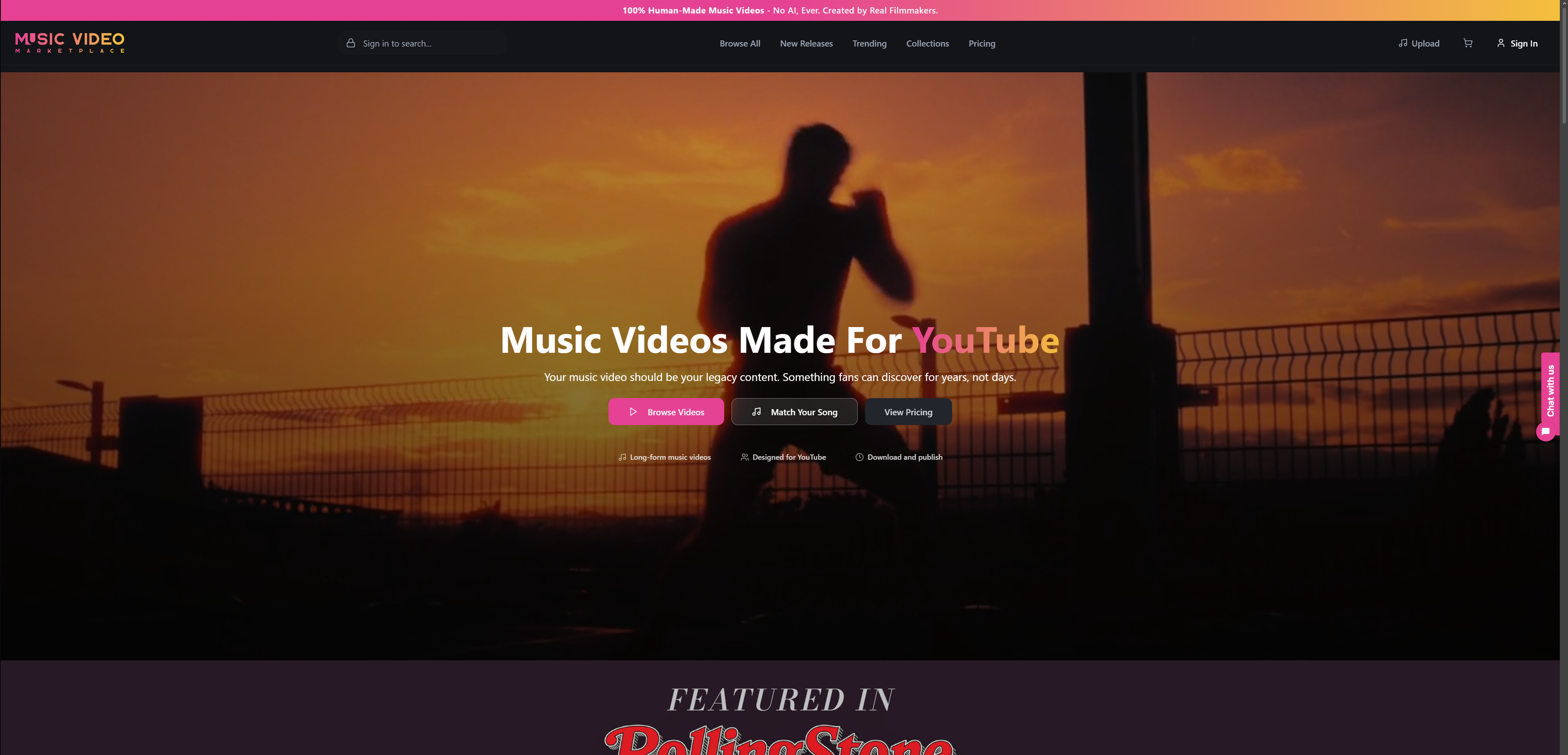
Music Video Marketplace was built for exactly this situation. As an independent artist, you can create a long-form video in minutes, upload it directly to YouTube, and launch a targeted ad campaign for your song without needing an agency, a director, or a four-figure production budget. The platform supports every stage of the funnel, from discovery-ready short clips to deeper engagement content that moves warm audiences towards genuine fandom. When your visuals match the quality of your music, your ad spend goes further and your funnel starts working the way it’s supposed to.
Frequently asked questions
What is a song marketing funnel for independent artists?
It’s a framework describing how listeners move from first hearing your music to becoming dedicated fans who actively support and promote you. The fan engagement funnel guides listeners through discovery, engagement, relationship, and advocacy stages, each requiring different content and different calls to action.
Why don’t traditional marketing funnels work well for music?
Listeners behave non-linearly, engaging at different times and on various platforms, so a rigid linear funnel doesn’t capture how fans actually connect with music. Listeners discover, disappear, and re-engage unpredictably, which is why funnels are better understood as ecosystems built on repeated exposure rather than a fixed route.
How should independent musicians use video in their marketing funnel?
Use short-form vertical video to create discovery and test hooks, then produce longer content for engagement, and convert warm fans through targeted retargeting ads. Short-form clips are the strongest discovery tool available right now, and the best ones show you what to build your paid campaign around.
What is a realistic budget and timeline for promoting a song independently?
Campaigns typically span 6 to 12 weeks, with budgets ranging from a few hundred pounds for a DIY approach to mid-thousands for a full production and paid media push. Professionally executed campaigns combine production, PR, and paid media and require sustained activity across all three release phases to be effective.
How do I connect discovery on TikTok to listeners on Spotify and fans on Instagram?
Ensure every piece of content includes a single clear CTA directing fans to the next platform, invest time in whichever platform feels weakest, and build owned channels like an email list to bridge the gaps between rented audiences. Fixing bottlenecks by spending 90 focused days on your weakest platform will strengthen your entire funnel more than any single campaign.
Recommended
- Music industry marketing explained: strategies for indie artists | Music Video Marketplace Blog
- Promote your music online: essentials for indie artists | Music Video Marketplace Blog
- Fan engagement strategies that power your music marketing | Music Video Marketplace Blog
- Proven strategies to promote your songs online in 2026 | Music Video Marketplace Blog
Read next
 Try Before You Buy, Affordable music videosGet a professional, ready-made music video for just £99 or $99. Try before you buy and promote your music fast with Music Video Marketplace
 Types of artist income diversification that actually payExplore effective types of artist income diversification to build multiple revenue streams and avoid the feast-or-famine cycle.
 Understanding copyright in music videos: a 2026 guideLearn essential copyright rules for music videos in 2026. Understand licensing, fair use limits, and practical protections to avoid legal issues and monetise your content legally.
 The role of storytelling in DJ marketingDiscover the crucial role of storytelling in DJ marketing. Learn techniques to engage audiences and leave a lasting impact beyond the music.
Turn the idea into a finished music video.
Drop your track into the Workspace and build your visual in minutes.