
 Try the Workspace
The role of branding in music industry success
Discover the vital role of branding in music industry success. Learn how to craft your unique identity to stand out and connect with fans.

The role of branding in music industry success
TL;DR:
- Effective music branding combines visual, sonic, narrative, and operational elements to build recognition and emotional connection. It influences audience perception, increases revenue, and cultivates fan loyalty through consistent identities and storytelling. Most artists overlook the importance of structured branding systems, which are essential for sustained career growth and recognition.
Branding in the music industry is the deliberate process of crafting and sustaining a unique artistic identity across every fan-facing touchpoint, from album artwork to live performance aesthetics, to build recognition, emotional connection, and commercial leverage. With roughly 100,000 new tracks uploaded to streaming platforms every single day, music alone no longer guarantees discovery. The artists who cut through are not always the most technically gifted. They are the most recognisable. Understanding the role of branding in music industry contexts means treating your identity as a system, not a logo, and that distinction changes everything about how you build a career.
What does effective music branding encompass?
Music branding is not a single visual decision. It is an interconnected system of elements that, when working together, create an unmistakable presence across every platform and release. Think of it as a grid system that allows creative flexibility while maintaining clear operational consistency. The components fall into four distinct categories.
Visual identity is the most immediately legible layer of any artist brand. It includes:
- Colour palettes that recur across releases, social media, and merchandise
- Typography choices that signal genre, era, and personality
- Photography style, lighting direction, and art direction principles
- Logo usage and iconography that travels across formats
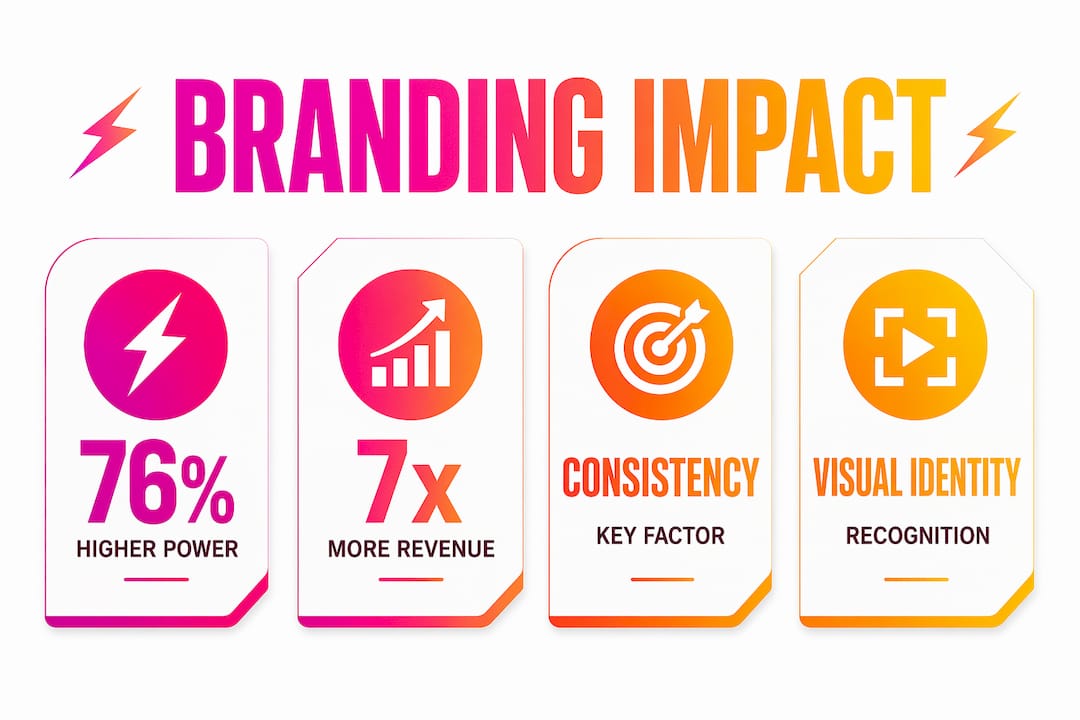
Sonic branding goes beyond the music itself. Brands and artists using strong sonic assets achieve 76% higher brand power and 138% higher perceptions of advertising strength. Sonic logos containing a brand name are nine times more effective than pure musical cues. This means the audio signature of your artist project, whether a recurring melodic motif, a production fingerprint, or a branded intro on video content, carries enormous commercial weight.
Narrative and storytelling define the emotional promise of an artist. Your origin story, your stated values, the recurring themes in your lyrics and interviews: these form the connective tissue between releases. Without a clear narrative, each project feels like a debut rather than a chapter.
Operational consistency is where most independent artists fall short. A complete brand kit covering precise guidelines on lighting, tone of voice, typography, and file management allows collaborators to maintain consistency without constant oversight. Without it, each new designer, photographer, or social media manager introduces visual drift that quietly erodes recognition.
Pro Tip: Build your brand kit before your next release, not after. Document your hex codes, font files, approved photography filters, and tone-of-voice guidelines in a single shared folder. This one step removes the most common source of brand inconsistency for independent artists.
How does branding impact audience perception and commercial success?
The impact of branding on music extends well beyond aesthetics. It directly shapes how listeners perceive value, how much they are willing to spend, and how deeply they integrate an artist into their personal identity.

Visual identity creates immediate recognition and emotional interpretation before a single note is heard. A consistent colour palette and photographic style trains the audience’s eye to associate a visual signal with a feeling. This pre-listening emotional priming is why artists like Beyoncé, Tyler, the Creator, and Billie Eilish can release album artwork and generate cultural conversation before the music drops. The visual does the first 30 seconds of work.
The commercial data is equally compelling. Consumers pay nearly seven times more when music fits a brand identity, and highly engaging music in marketing contexts boosts ROI by 32%. For musicians, this translates directly: a coherent brand identity makes your music feel worth more to the listener before they have consciously evaluated it.
Fan identity is the third lever. Fans who feel their fandom reflects their personal identity are more than 50% likely to purchase merchandise. Strong artist brands allow fans to express who they are through what they wear, share, and attend. This is the mechanism behind the cultural weight of artists like Kendrick Lamar or Lana Del Rey. Their audiences do not just listen. They affiliate.
| Branding element | Commercial impact |
|---|---|
| Sonic assets and sonic logos | 76% higher brand power; 9x attribution effectiveness |
| Music-brand congruence | Consumers pay up to 7x more for aligned identity |
| Fan identity resonance | 50%+ increase in merchandise purchase likelihood |
| Engaging music in marketing | 32% boost in marketing ROI |
“The future of music is artists operating as brands and cultural entrepreneurs, controlling narratives and owning audiences independently.” — The artist as a brand
What challenges do musicians face in building a brand?
The most persistent obstacle in music branding is not a lack of resources. It is a set of deeply held misconceptions about what branding actually means for an artist.
The most damaging myth is that branding equals selling out. Branding is actually narrative control. Without a deliberate identity, algorithms, journalists, and playlist curators will define you by default, usually in ways that limit rather than expand your reach. Taking ownership of your story is the opposite of compromising your artistry.
Beyond mindset, the structural pitfalls are equally common:
- Visual inconsistency. Switching designers, filters, or colour schemes between releases signals instability to the audience’s subconscious. Recognition requires repetition.
- Treating branding as a one-time task. Many artists complete a logo and a press photo and consider the job done. A brand is a living system, not a Canva phase.
- Disconnected sonic identity. A well-built sonic system defines musical boundaries and principles that maintain coherence across multiple campaigns. Most independent artists have no such system, which means their audio identity shifts with each producer or collaborator.
- Authenticity anxiety. The tension between a curated public persona and genuine self-expression is real. The resolution is not to choose one over the other, but to build a brand that is a true extension of your values rather than a performance of someone else’s.
Pro Tip: Audit your last six months of social media posts, press photos, and release artwork. If a stranger could not identify a consistent visual or tonal thread, your brand has drift. Identify the three elements that feel most authentically yours and standardise them first.
How can musicians build a recognisable, ownable brand?
Building a music brand that lasts requires treating identity as an operational discipline, not a creative afterthought. Here is a structured approach that works for independent artists and label-signed acts alike.
- Define your brand parameters. Before any visual work, articulate your musical DNA: the three to five words that describe your sound, your emotional territory, and the audience you are speaking to. This brief becomes the filter for every creative decision.
- Build a brand kit. Document your visual identity with precision. Hex codes, approved typefaces, photography direction notes, and tone-of-voice guidelines should all live in one accessible location. This is the foundation of operational consistency across releases, social content, and live performance.
- Develop a sonic branding system. Identify the production elements that recur across your catalogue. A signature drum sound, a recurring chord voicing, a consistent tempo range. These become your audio fingerprint. Document them so collaborators can honour them.
- Build a personal ecosystem. Successful independent musicians develop integrated communities, content channels, and merchandising to own their audience rather than rely on labels for discovery. A Substack, a Discord, a Patreon: these are not optional extras. They are the infrastructure of a sustainable career.
- Collaborate with specialists. Photography, graphic design, and video production are not areas to cut corners on. A single well-executed visual campaign, consistent with your brand kit, does more for recognition than twelve months of inconsistent content.
For a deeper look at how to put these principles into practice, the music branding guide at Musicvideomarketplace covers the full process from identity definition to release execution.
| Approach | Outcome |
|---|---|
| Ad hoc visual decisions per release | Inconsistent recognition; audience confusion |
| Documented brand kit with guidelines | Consistent identity across all collaborators |
| No sonic system | Audio identity shifts with each producer |
| Defined sonic parameters | Recognisable sound across campaigns and markets |
Pro Tip: When working with song promotion in 2026, treat every promotional asset as a brand touchpoint. Your YouTube thumbnail, your Spotify canvas, and your Instagram grid should all feel like they belong to the same world.
Key takeaways
Effective music branding is a system of visual identity, sonic consistency, narrative control, and operational discipline that directly determines an artist’s recognition, fan loyalty, and commercial value.
| Point | Details |
|---|---|
| Branding is a system, not a logo | Visual identity, sonic assets, narrative, and operations must work together to build recognition. |
| Sonic assets carry commercial weight | Artists with strong sonic branding achieve 76% higher brand power and 9x attribution effectiveness. |
| Fan identity drives revenue | Fans who affiliate personally with an artist are over 50% more likely to buy merchandise. |
| Operational consistency is the gap | Most independent artists lose brand equity through inconsistent visuals and disconnected collaborators. |
| Narrative control is self-defence | Without deliberate branding, algorithms and media define an artist’s identity by default. |
Why branding is the craft most musicians overlook
I have spent years watching genuinely talented artists plateau while less technically accomplished peers build careers that compound. The difference is almost never the music. It is the clarity of identity. The artists who grow are the ones who understand that brand-fit music and imagery outperform broadly popular choices precisely because they are ownable. Generic appeal is not an advantage. Specificity is.
The conversation I have most often with musicians is about the fear of appearing calculated. There is a persistent belief that a deliberate brand is somehow less authentic than an unmanaged one. This gets it exactly backwards. An unmanaged identity is not authentic. It is just unexamined. The artists I most respect, the ones who sustain careers across decades, are the ones who have thought deeply about what they stand for and made sure every touchpoint reflects it. That is not selling out. That is craftsmanship applied to the full scope of what it means to be an artist in public.
The operational side is where most people stop reading, but it is where the real work lives. A brand kit is not glamorous. Documenting your hex codes and tone-of-voice guidelines does not feel like art. But it is the difference between a career that compounds and one that resets with every release. Build the system once. Let it do the work for you.
— Music
Put your brand on screen with Musicvideomarketplace
A strong brand identity needs a visual home, and nothing communicates an artist’s world more immediately than video. Musicvideomarketplace enables musicians to create a long-form branded video in minutes, ready to upload to YouTube and activate as a paid ad campaign for their song.

Whether you are launching a new single or building music industry brand awareness around an existing catalogue, a professionally framed branded music video puts your visual identity in front of the right audience at scale. For artists who want to see what a video campaign looks like in practice, this artist identity video demonstrates how Musicvideomarketplace brings a brand to life on screen. Your brand is already built. Now give it somewhere to live.
FAQ
What is the role of branding in the music industry?
Branding in the music industry is the process of building a consistent, recognisable identity across visual, sonic, and narrative touchpoints. It differentiates artists in a market where 100,000 new tracks are uploaded daily and determines how audiences perceive, remember, and spend money on an artist.
How does branding affect a musician’s commercial success?
Strong branding directly increases revenue potential. Consumers pay up to seven times more when music aligns with a coherent brand identity, and fans who personally identify with an artist are over 50% more likely to purchase merchandise.
Is branding the same as selling out?
Branding is narrative control, not commercialisation. Without a deliberate identity, algorithms and media define an artist by default, often in ways that limit reach and misrepresent their work.
What should a music brand kit include?
A brand kit should document colour palettes, approved typefaces, photography direction, tone-of-voice guidelines, and file management conventions. These allow designers, photographers, and collaborators to maintain consistency without constant oversight.
How does sonic branding differ from just making music?
Sonic branding is the deliberate use of recurring audio elements, such as a signature production sound or a branded intro, to create recognition beyond individual tracks. Artists with defined sonic systems achieve 76% higher brand power than those without one.
Recommended
- Estrategias de branding musical para artistas en 2026 | Music Video Marketplace Blog
- Music marketing trends shaping success for independent artists | Music Video Marketplace Blog
- Music industry marketing explained: strategies for indie artists | Music Video Marketplace Blog
- Music ad campaigns: expert strategies for real results | Music Video Marketplace Blog
Read next
 The role of content in artist growth: 2026 guideDiscover the role of content in artist growth. Learn how strategic content can deepen audience engagement and build your brand in 2026.
 The role of storytelling in DJ marketingDiscover the crucial role of storytelling in DJ marketing. Learn techniques to engage audiences and leave a lasting impact beyond the music.
 The song marketing funnel explained for indie artistsLearn how to explain song marketing funnel concepts that truly resonate with today's listeners. Boost your fanbase and engagement now!
 The role of analytics in music marketingDiscover the vital role of analytics in music marketing to grow your fanbase, improve campaigns, and understand listener engagement. Click to learn more!
Turn the idea into a finished music video.
Drop your track into the Workspace and build your visual in minutes.