
 Try the Workspace
Maximise your music income: a guide to smart monetisation
Learn how independent musicians can build sustainable income in 2026 with practical strategies across streaming, sync, video, and direct-to-fan sales.

Maximise your music income: a guide to smart monetisation
TL;DR:
- Most independent musicians earn income from multiple streams including streaming, sync licensing, direct sales, merchandise, and videos.
- Building a sustainable music career requires ongoing effort, system-building, and diversified income sources rather than relying on viral moments.
- Video content, especially YouTube, plays a crucial role in long-term monetization and audience growth.
Most musicians dream of a viral moment changing everything. One video blows up, streams pour in, and suddenly the income follows. The reality is far more complicated. Only 15% of artists who go viral on TikTok see a meaningful, sustained increase in Spotify streams four months later. That gap between fame and income is where most independent musicians get stuck. This guide cuts through the noise and gives you a clear, honest picture of how music monetisation actually works in 2026, covering every major revenue stream and the strategies that genuinely build lasting income.
Table of Contents
- What music monetisation really means in 2026
- Comparing top music monetisation streams
- The realities of streaming income
- Building sustainable income: diversification and video promotion
- The uncomfortable truth about music monetisation
- Ready to monetise smarter? Let Music Video Marketplace help
- Frequently asked questions
Key Takeaways
| Point | Details |
|---|---|
| Diversify income channels | Relying on one revenue stream limits your earning potential and increases risk. |
| Streaming pays less than you think | Expect £3.41 per 1,000 streams on average, so explore additional options. |
| Sync licensing can be a game changer | A single sync placement can out-earn months of streaming, making it a high-impact opportunity. |
| Direct-to-fan sales keep more income | Platforms like Bandcamp give you up to 90 percent of revenue, supporting music careers directly. |
| Video content multiplies promotion | Smart use of video amplifies all earning channels and builds a loyal audience. |
What music monetisation really means in 2026
For a long time, “making money from music” meant one thing: royalty cheques from radio plays and record sales. That world is gone. Today, music monetisation for independent artists is a multi-channel operation, and understanding each channel is the first step to earning from any of them.
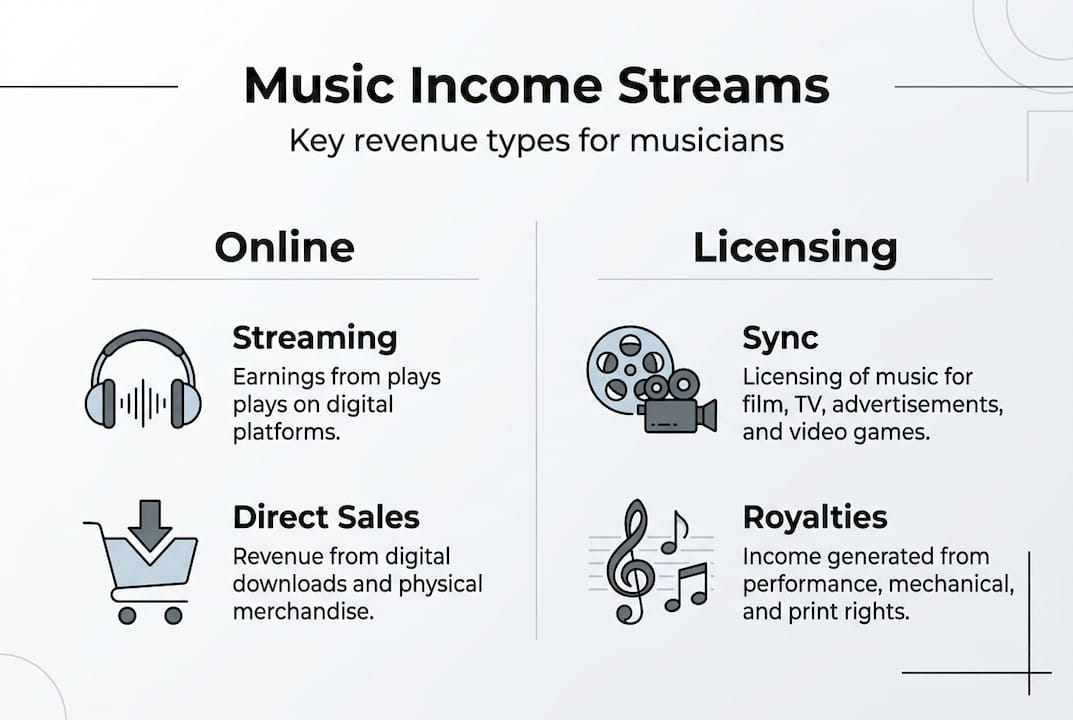
At its core, monetisation is about converting your creative output into income through multiple touchpoints. These touchpoints broadly fall into two camps: platform-driven income and direct-to-fan income. Platform-driven income includes streaming royalties, YouTube ad revenue, and sync licensing, where a third party controls the distribution and pays you a share. Direct-to-fan income includes Bandcamp sales, Patreon subscriptions, merchandise, and live shows, where you deal with your audience without a middleman taking most of the margin.
The main income sources for independent artists in 2026 include:
- Streaming royalties from platforms like Spotify, Apple Music, and Amazon Music
- YouTube ad revenue and channel memberships, which you can explore further in this YouTube monetisation explained guide
- Sync licensing, where your music appears in films, adverts, TV shows, or video games
- Direct sales via platforms like Bandcamp or your own website
- Merchandise, from physical products to digital downloads
- Live performance fees and ticketing income
The evolution here is significant. Key advantages of YouTube now go well beyond just views, including memberships, Super Chats, and merchandise shelves built directly into the platform. Independent artists who treat their music career like a business with multiple income lines are the ones building real financial stability.
“The smartest independent musicians in 2026 are not chasing one big break. They are building systems where every piece of content, every release, and every fan interaction has a path to revenue.”
Streaming royalties average $3.41 per 1,000 streams for independent artists, which means streaming alone is rarely enough. The artists who thrive are the ones who layer these income sources deliberately.
Comparing top music monetisation streams
Now that you know the main avenues for earning, let’s dig into how each performs and what independent musicians actually take home from each route.
Here is a straightforward comparison of the five major monetisation channels:
| Revenue stream | Average payout | Effort level | Sustainability |
|---|---|---|---|
| Streaming | $3.41 per 1,000 streams | Low (passive) | Medium |
| Sync licensing | £500 to £5,000+ per placement | High (pitching) | High |
| Direct sales (Bandcamp) | 85 to 90% of sale price | Medium | High |
| Merchandise | 30 to 60% margin | Medium | Medium |
| YouTube video income | Variable (CPM based) | Medium | High |
Let’s make this concrete. 100,000 Spotify streams yield roughly £240 to £400 after conversion, which sounds decent until you consider the promotional work, distribution fees, and time involved in reaching that number. A single sync placement in a mid-tier TV advertisement, by contrast, can pay anywhere from £500 to several thousand pounds for one use of your track. One sync deal can cover a month’s rent or more, something that would take millions of streams to replicate.
This is why sync licensing is consistently underrated by emerging artists. It requires more upfront work, including registering with a performing rights organisation, creating high-quality stems and instrumental versions, and pitching to music supervisors. But the return per placement is dramatically higher than streaming.

For direct sales, Bandcamp remains one of the most artist-friendly platforms available. When a fan buys your album there, you keep the vast majority of the revenue rather than fractions of a penny per stream.
Pro Tip: Always produce an instrumental version of every track you release. Music supervisors frequently need clean instrumentals for sync placements, and having them ready instantly doubles your licensing opportunities without any additional recording costs.
Video content sits across multiple income streams simultaneously. A well-produced YouTube video can earn ad revenue, drive traffic to your Bandcamp page, promote merchandise, and build the audience that makes live shows viable. Explore the detailed video monetisation guide to understand exactly how this works in practice. Combining YouTube content strategies with a consistent release schedule is one of the most effective ways to multiply the impact of every song you put out.
The realities of streaming income
Comparison is essential, but it is just as important to understand the unique economics and traps of streaming itself.
Here is how the major platforms compare on per-stream payouts in 2026:
| Platform | Estimated payout per 1,000 streams |
|---|---|
| Apple Music | $7.00 to $10.00 |
| Amazon Music Unlimited | $4.00 to $5.00 |
| Spotify | $3.00 to $5.00 |
| YouTube Music | $1.00 to $3.00 |
Apple Music pays noticeably more per stream than Spotify, yet Spotify’s sheer user base means most artists accumulate more total plays there. The platform you prioritise should depend on where your specific audience actually listens.
There are several common misconceptions that trip up independent artists:
- Big play counts do not always mean big pay. Spotify’s Discovery Mode, which promotes your track to new listeners, lowers your per-stream rate in exchange for that exposure. You trade income for reach.
- Niche genres can outperform mainstream ones. Niche genre artists earn approximately 8% more per 1,000 streams than mainstream artists, because their listeners are more engaged and less likely to skip.
- Short songs are not always a shortcut. The pro rata royalty model pays based on total streams, not listening time, which initially favoured very short tracks. However, streaming bots and artificial inflation of short tracks have led platforms to tighten their policies, and some genres suffer reputational damage from this approach.
- Viral moments rarely sustain income. As noted earlier, only 15% of TikTok viral artists see a lasting uplift in streams, which means building your catalogue and consistency matters far more than chasing trends.
Understanding song length and streaming income is also worth your time, particularly if you are producing content for both streaming platforms and YouTube simultaneously. The optimal length differs significantly between the two, and getting this right affects both your algorithmic reach and your earnings.
The user-centric royalty model, where your subscription fee goes to the artists you personally listen to rather than being pooled across all streams, benefits niche and long-form artists most. Some platforms are moving in this direction, which could meaningfully shift earnings for independent musicians over the next few years.
Building sustainable income: diversification and video promotion
Streaming is just a slice of the pie. To thrive long-term, let’s turn to real-world strategies for spreading your earning risk.
Here are five concrete ways to diversify your music income right now:
- Sell direct via Bandcamp. Direct-to-fan platforms keep 85 to 90% of your revenue in your pocket. Price your music fairly, offer exclusive bundles, and give fans a reason to buy rather than just stream.
- Launch a crowdfunding campaign. Platforms like Kickstarter or Patreon let your most loyal fans fund your next project in exchange for early access, credits, or exclusive content. This also validates demand before you spend money recording.
- Pursue sync licensing actively. Register with a performing rights organisation, upload your catalogue to sync licensing platforms, and pitch directly to music supervisors. Even one placement can generate more income than months of streaming.
- Play live and monetise the room. Merchandise sales at live shows consistently outperform online merch sales. Fans who have just experienced your music are far more likely to buy a physical item as a memory.
- Build a video content engine. Video is the multiplier that amplifies every other revenue stream. A YouTube video promotes your streaming profile, drives Bandcamp traffic, showcases merchandise, and builds the audience that fills venues. Read the online promotion essentials guide for a practical starting framework.
Video content is particularly powerful because it works across platforms simultaneously. Understanding video marketing trends helps you stay ahead of algorithm changes and audience behaviour shifts. When you combine consistent video output with targeted music ad campaign strategies, you create a promotional system that compounds over time.
Pro Tip: Create short, platform-specific clips from each long-form video you produce. A three-minute YouTube video can yield a 60-second Instagram Reel, a 15-second TikTok teaser, and a 30-second YouTube Short, each linking back to your main sales channels. This multiplies your reach without multiplying your workload.
The uncomfortable truth about music monetisation
Here is the perspective that seasoned musicians rarely share openly: most artists dramatically underestimate how much ongoing work is required after a track or video goes live. Releasing music is not the finish line. It is the starting gun.
The musicians who build genuinely sustainable income treat their careers like start-ups. They test different revenue streams, track what works, pivot when something does not, and reinvest their earnings into better tools, better promotion, and better content. They do not wait for a label, a viral moment, or a lucky placement. They build systems.
Holistic branding is what separates artists who earn consistently from those who earn occasionally. Your music, your videos, your social presence, and your merchandise are not separate things. They are one brand, and every element should reinforce the others. A fan who discovers you through a YouTube video should immediately understand who you are, what you stand for, and how to support you financially.
The YouTube distribution benefits go far beyond ad revenue. YouTube is a search engine, a social platform, and a long-term catalogue builder all at once. Artists who invest in consistent video content are building an asset that earns for years, not just the week after release.
Stop waiting for one big break. Start building one reliable system.
Ready to monetise smarter? Let Music Video Marketplace help
If reading this has made you realise that video content is the missing piece in your monetisation strategy, you are in the right place. At Music Video Marketplace, we help independent musicians create long-form videos in minutes, ready to upload to YouTube and pair with a targeted ad campaign for your song.

You do not need a production team or a big budget to start earning from video. You need the right tools and a clear strategy. Whether you are just starting out or looking to scale what is already working, explore the full guide to video monetisation to see exactly how video can become your most powerful revenue driver. Your next release deserves more than a single upload and a hope for the best.
Frequently asked questions
What is the average payout for music streaming in 2026?
Independent artists typically earn around $3.41 per 1,000 streams, though this varies considerably depending on the platform and whether you use promotional tools like Spotify’s Discovery Mode.
How does sync licensing compare to streaming revenue?
Sync licensing pays significantly more per placement than streaming, with a single TV or film licence potentially covering a month’s rent or more, something that would require hundreds of thousands of streams to match.
Which platforms let musicians keep the most income?
Direct-to-fan platforms like Bandcamp allow you to keep 85 to 90% of your sales revenue, which is dramatically higher than the fractions of a penny earned per stream on major platforms.
Do viral TikTok or YouTube hits really boost long-term earnings?
Rarely. Only 15% of artists who go viral on TikTok see a sustained increase in Spotify streams four months later, which is why consistent output and diversified revenue matter far more than chasing viral moments.
Recommended
- Video monetisation for musicians: complete guide 2026 | Music Video Marketplace Blog
- What is YouTube monetisation for musicians: a guide | Music Video Marketplace Blog
- Optimise your YouTube music distribution workflow | Music Video Marketplace Blog
- Music ad campaigns: expert strategies for real results | Music Video Marketplace Blog
Read next
 Master multi-channel music marketing for indie growthLearn how to sequence multi-channel music marketing for real growth. A practical guide for independent artists covering platforms, analytics, and proven tactics.
 Music Branding Through Video: Amplifying Artist IdentityMusic branding through video maximizes artist visibility, connects with fans, and powers YouTube ad campaigns. Learn visual branding essentials and strategies.
 Music distribution explained: how to get your songs heardDiscover what is music distribution and how it ensures your songs reach Spotify, Apple Music, and more. Get your music heard today!
 Label roster promotion checklist: the complete campaign guideBoost your music release with this essential label roster promotion checklist and a strategic week-by-week campaign timeline.
Turn the idea into a finished music video.
Drop your track into the Workspace and build your visual in minutes.